

Postdoctoral Scholar @UCSF-Ingraham lab. Studying estrogen regulation of hypothalamic non-neuronal and neuronal cells in different reproductive states.
Joined September 2022
- Tweets25
- Following56
- Followers96
- Likes33




Pinned Tweet
I am excited to share my first-author pre-print in songbirds, where we explore mechanisms of brain circuit restoration at the behavioral, neuronal, and transcriptomic level over time - a collaboration with @alfairhall, @lpachter and @neuroluebbert
biorxiv.org/content/10.1101/…

Zsofia Torok retweeted

Pretty stoked to share my postdoc work, now out in Science! 🎉
We show how estrogen ingeniously co-opts communication between gut epithelial cells to modulate pain.
science.org/doi/10.1126/scie…
🧵⬇️ THREAD (1/11)

Zsofia Torok retweeted
Thrilled to share our preprint -
A Cellular Basis for Heightened Gut Sensitivity in Females
biorxiv.org/content/10.1101/…
Why is GI pain more common in women?
Blame it on estrogen! It ramps up the cross-talk between L-cells and EC cells — making the gut more sensitive to pain signals.

Zsofia Torok retweeted

A fabulous team effort by Dr. J, @moolakaari, @sahmriAU, @ericfigueroaPhD (@SF_IRACDA ).
Might help explain why the low #LowFODMOP diet works in #IBS, #Gut.
Pretty exciting - made possible by taxpayers and funding from @NIH and @NIDDKgov.


Thrilled to share our preprint -
A Cellular Basis for Heightened Gut Sensitivity in Females
biorxiv.org/content/10.1101/…
Why is GI pain more common in women?
Blame it on estrogen! It ramps up the cross-talk between L-cells and EC cells — making the gut more sensitive to pain signals.
Zsofia Torok retweeted

1/10 Very excited to announce that my thesis project is now a preprint! We present the first detailed study of mental imagery in human ventral temporal cortex, bringing together the interests of @doristsao and @UeliRutishauser. biorxiv.org/content/10.1101/…

Zsofia Torok retweeted
A thread acknowledging the many contributions of the @UCSF @UCDavisHealth team for our study, out online at go.nature.com/3S0vrLC
1/7—We identify a new hormone, CCN3, produced in the hypothalamus to build bones and offset bone loss during lactation - a 5-year journey. One cover idea 👇.

ALT Our cover idea
Zsofia Torok retweeted
Scientists Discover a New Hormone that Can Build Strong Bones | UC San Francisco
Thank you @LauraKurtzman for a great summary of team effort with @dr_ambrosi ucsf.edu/news/2024/07/428011…

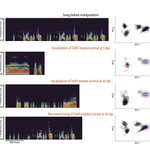
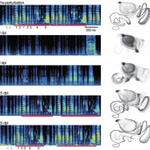
I am thrilled to share our work showcasing the remarkable recovery of a complex learned behavior in a predominantly unsupervised manner! This achievement is the product of a fantastic collaboration with @alfairhall and her exceptionally talented trainees.

Unsupervised restoration of a complex learned behavior, song production, after large-scale neuronal perturbation causing severe song degradation in zebra finches
nature.com/articles/s41593-0…
Zsofia Torok retweeted
A hunt, a surprise, and then clarity - Congrats to the team! Love 😍 it.
Brain-Derived CCN3 Is An Osteoanabolic Hormone That Sustains Bone in Lactating Females biorxiv.org/content/10.1101/…

Next, we set out to measure the cellular and transcriptomic changes underlying song recovery. Single-cell RNA sequencing of HVC during the height of circuit restoration (25 days) revealed elevated levels of microglia and MHC I (not seen in virus-injected control).

Our experiments reveal that the adult brain can overcome extended periods of E/I imbalance. The deployment of mechanisms typically employed during juvenile learning suggests that circuit plasticity may persist throughout adulthood, awaiting reactivation for circuit restoration.

ALT https://www.the-scientist.com/news-opinion/researchers-implant-memories-in-zebra-finch-brains-66527
Zsofia Torok retweeted

Super excited to share a preprint! At @Caltech, we build the first closed-loop brain-machine (#BMI) interface that is able to decode internal speech 💭. Check it out here: medrxiv.org/content/10.1101/…

Can a complex learned motor behavior recover after large-scale neuronal perturbation without behavioral feedback? Yes, it can! Excited to share my (co)first-author preprint in songbirds 🐥- a collaboration with Adrienne Fairhall’s lab @alfairhall. biorxiv.org/content/10.1101/… 🧵
Alison Duffy performed an in-depth analysis of the song degradation and recovery trajectory. Together with David Bell, they used modeling to characterize circuit organization paradigms that recapitulated our experimental findings.


I think this paper greatly exemplifies that “Science can advance at a faster pace when taking advantage of the synergy between theory and experimentation.” nature.com/articles/s43588-0…