






Pinned Tweet
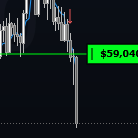
... I wonder if @LindaRaschke had a buy order @ 3982
I hope ♥️

Gold formed a three bar balance after a selling climax bar. A breakout above 3982 is the u-turn pivot. (Of course, a three bar can also break to the downside like Wheat did.)


330

Read this if you follow me.

Last week I got asked a very simple, great question on Topstep TV - What’s difference between a good trader and a bad trader?
Simple answer - Discipline.
People severely underestimate how disciplined one must be to find success in this business.
Many may argue that how much $$$ you make is the scoreboard that defines good trading, I can’t completely disagree, that’s somewhat fair..
However, making some money, even big money, is quite different than good trading, and it doesn't mean you're a good trader.
You can make a lot of dough, but you gotta be able to keep it.
I see a lot of traders out there have huge swings up and down, up and down, but come tax time they've nothing to show for it. Some traders can dazzle with the big numbers, but more commonly than not, it isn’t the special sauce.
Good trading is more commonly a bit vanilla. Consistent profitability, even if it’s small. A couple hundred here couple hundred there, more winning than losing. This is the stuff that adds up at the end of the year.
Might be a little less exciting in the day to day, but if you can produce that, you can scale that. If you can scale that… Well well well what do we have here?
The $$$ is a byproduct of good trading. Good trading isn’t the byproduct of $$$. Good trading will grow and keep $$$. If the $$$ scoreboard is all over the place there's room to improve.
3
377
Notice how LOGICAL all this sounds ... I like logic.

Market Wizard Linda Raschke's 12 Technical Trading Rules
1. Buy the first pullback after a new high. Sell the first rally after a new low.
2. Afternoon strength or weakness should have follow‑through the next day.
3. The best trading reversals occur in the morning, not the afternoon.
4. The larger the market gaps, the greater the odds of continuation and a trend.
5. The way the market trades around the previous day’s high or low is a good indicator of the market’s technical strength or weakness.
6. The previous day’s high and low are two very important “pivot” points, for this was the definitive point where buyers or sellers came in the day before. Look for the market to either test and reverse off these points, or push through and show signs of continuation.
7. The last hour often tells the truth about how strong a trend truly is. “Smart money” shows their hand in the last hour, continuing to mark positions in their favor. As long as a market is having consecutive strong closes, look for the up‑trend to continue. The up‑trend is most likely to end when there is a morning rally first, followed by a weak close.
8. High volume on the close implies continuity the next morning in the direction of the last half‑hour. In a strongly trending market, look for resumption of the trend in the last hour.
9. The first hour’s range establishes the framework for the rest of the trading day.
10. A greater percentage of the day’s range occurs in the first hour than was the case in the past, and thus it has become increasingly important to trade aggressively if there are early signs of a strong trend for the day.
11. There are four basic principles of price behavior which have held up over time. Confidence that a type of price action is a true principle is what allows a trader to develop a systematic approach.
The following four principles can be modeled and quantified and hold true for all time frames, all markets. The majority of patterns or systems that have a demonstrable edge are based on one of these four enduring principles of price behavior. Charles Dow was one of the first to touch on them in his writings.
Principle One: A Trend Has a Higher Probability of Continuation than Reversal
Principle Two: Momentum Precedes Price
Principle Three: Trends End in a Climax
Principle Four: The Market Alternates between Range Expansion and Range Contraction
In the world of money, which is a world shaped by human behavior, nobody has the foggiest notion of what will happen in the future. Mark that word – Nobody! Thus the successful trader does not base moves on what supposedly will happen but reacts instead to what does happen.

1
266


DC retweeted

Trading taught me 3 things:
1️⃣ I can't predict the market.
2️⃣ I can't control the market.
3️⃣ But I CAN control myself.
➥ If I do, I MAKE money.
➥ If I don't, I LOSE money.

DC retweeted

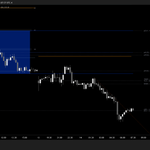
Please allow me to translate the profound message Linda is conveying. She is noting that the intraday price uptrend on Monday is very linear, such that even a very tight stop is not getting hit. Signal processing engineers would say that there is a high "signal to noise" ratio.
Smooth intraday trends typically happen when there is a large amount of money that needs to get put to work, but the big firms don't want to dump a large order into the market all at once and move prices. So their trading desks use algorithms to chop up the large slug of money into smaller pieces, doling orders out more slowly. This results in that linear form of the intraday chart plot.
The key takeaway, therefore, is that there must be a large amount of money deciding to move now, based on seeing footprints in the intraday plot which match the behavior of prices when that condition is in effect.

It’s the new normal … let’s gooo

Hey @MichaelPatak @TopstepBroker, how many $20k days on the broker so far?
Funded with @Topstep payouts. 🫡

818


