
!= 280 characters
New York, USA
Joined August 2012
- Tweets1.3K
- Following360
- Followers731
- Likes940


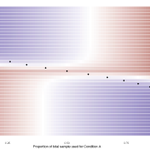


Neat work by @kapatsinskiV, showing that transformers perform (smart) partial pooling arxiv.org/abs/2602.03980. This also has interesting connections to hierarchical learning/memory models of the type developed by Tim O'Donnell mila.quebec/en/directory/tim…!

T. Florian Jaeger retweeted

NEW paper in eLife: Frequency-dependent modulation of foveal contrast sensitivity by fine-scale exogenously triggered attention. Co-authored by Yue Guzhang, Florian Jaeger, & Martina Poletti. @_hlplab_ @aplabUR
doi.org/10.7554/eLife.108788… #URochesterResearch

Faculty opening in computational neuroscience and cognition, including language, development, learning through the lifespan, etc.

We’re hiring a tenure-track Assistant Prof in Computational Neuroscience/Cognition at
@uor-braincogsci.bsky.social! Join a Simons-supported cluster across Math/Physics/Biology/BCS. Apply by Nov 1, 2025: sas.rochester.edu/bcs/jobs/f… #ComputationalNeuroscience #Cognition #FacultyJobs
New R library STM bsky.app/profile/hlplab.bsky… by Santiago Barreda implementing incremental vowel normalization & categorization (Nearey & Assmann's PSTM). New paper that describes & uses that STM to model vowel perception bsky.app/profile/hlplab.bsky…
The OSF repo also contains a vignette for the R library, as well as a walk-through of the bootstrap analyses we applied. Hopefully this will make it easy for others to apply this model to their own data! osf.io/tpwmv/. Feedback welcome.

(P)STM infers vowel & talker-specific normalization parameters from single observations, predicting listeners' perception far better than other common normalization models (incl. Lobanov or C-CuRE).
Very excited about this: putting distributional learning (DL) models of adaptive speech perception to a strong, informative test sciencedirect.com/science/ar… by Maryann Tan. We use Bayesian ideal observers & adapters to assess whether DL predicts rapid changes in speech perception 1/2

T. Florian Jaeger retweeted

🚨Exciting news! We now have the first-ever complete #EEGManyLabs replication. This large-scale multi-site study revisits a key debate in EEG & reinforcement learning. A thread! 🧵👇
📄 Full paper: doi.org/10.1016/j.cortex.202…
T. Florian Jaeger retweeted

More than 40 percent of #postdocs leave academia. Those who landed a coveted faculty position were more likely to have had a highly cited paper, changed their research topic between their #PhD and postdoc, or moved abroad after receiving their doctorate. pnas.org/doi/10.1073/pnas.24… @PNASNews -> nature.com/articles/d41586-0… #ScienceCareer

T. Florian Jaeger retweeted
Please share: Postdoctoral position available in high-resolution retinal imaging and video eye-tracking at the University of Rochester.
buff.ly/4ja5fKj
@aplabUR @CVSUoR @URNeuroscience @RochesterOptics @FlaumEye
For how long is information about past speech input available in short-term memory? What evidence would inform this question? What does (not) follow from previous work on this question? Delighted to see this work by @klintonbicknell @_wbushong_ in JML sciencedirect.com/science/ar…
Feedback welcome! & see @_wbushong_ 's thesis for more on this topic, and her very cool computational simulations--presenting a new effort to better understand what can be inferred from the types of data collected in studies on subcat infomaintenance during speech perception. /n
But Bayesian mixed-effect analyses also identify a previously undocumented tendency in all 4 datasets--unexpected under all existing accounts. We present initial simulations that suggests that a combination of attentional lapses & ideal integration might explain the data. /3
We show existing evidence is compatible with ideal maintenance & integration of uncertainty, and derive a stronger test of that hypothesis. 2 re-analysis & 2 new experiments find that the ideal observer's predictions fit listeners' behavior better than previous proposals /2
We revisit the classic work by Connine and colleagues, and show why its results are often misinterpreted. Using an ideal observer framework, we derive what would be expected if listeners maintained and integrated subcategorical information beyond word boundaries. /1
T. Florian Jaeger retweeted
A new study from co-author Chigusa Kurumada reveals that difficulties in adapting to changes in speech patterns may affect how adolescents with autism understand tone and meaning.
#URochesterResearch @UofR_Psych

Verbal communication isn’t just about words—it’s also about how we say them
Teens with autism can have a difficult time understanding changes in tone and timing in speech
A new study from Rochester neuroscientists reveals why
#URochesterResearch urmc.info/1Jr
Great, super accessible, 3-step tutorial for running experiments online sites.google.com/view/reo-tu… by Chigusa Kurumada (kinderlab.bcs.rochester.edu/) @UoR_BrainCogSci @UofR
Can't wait for this to arrive at my door! (t - 1.5 months)

Delighted to announce the upcoming release of my new book this fall, a culmination of my life and work to date:
us.macmillan.com/books/97803…
