
Research Intern @AdobeResearch, CS Ph.D. student @UWMadison | prev. intern: @AdobeResearch; @Krafton_AI
Madison, WI
Joined October 2023
- Tweets65
- Following683
- Followers138
- Likes407




Jaden Park retweeted

The reversal curse. Edits that don't suppress negations. Multi-hop updates that don't propagate. These look like separate bugs.
Our ICML 2026 spotlight argues they may share a common geometric origin, visible only when you study how representations move under updates 🧵
(1/11)

Jaden Park retweeted

Almost all "flagship" models are now MoEs.
But smaller models still prefer to be dense as they target memory-constrained scenarios where total params matter.
So we ask: Can we leverage an MoE to produce dense models without having to train them from scratch?
🧵👇

Jaden Park retweeted
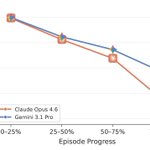
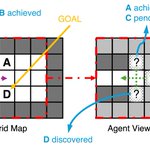
We all knew LLM agents struggle to explore, but we had to eyeball it 👀. We couldn't measure exploration errors. Until now. 🗺️🤖
We built a policy-agnostic metric to quantify exploration and exploitation errors in LLM agents.
Spoiler: Exploration error is what kills📉 agent performance in our setting 👇🧵(1/8)

Jaden Park retweeted

🔥 Upgrade your frozen vision encoders with <10 lines of code!
Single-scale inference throws away vital details. Enter MuRF 🚀: a simple, training-free plug-in for instant, massive gains in MLLMs, Seg & Depth. 🤯 1/6

Jaden Park retweeted

🚨New work with @Meta @RealityLabs
We introduce EGAgent, an agentic reasoning framework for very long video understanding powered by entity scene graphs
Why? With long multimodal data streams, agents must search and reason across multiple modalities!
🧵 (1/n)
Jaden Park retweeted

New paper out! 🚨 Introducing STTS: Unified Spatio-Temporal Token Scoring for Efficient Video VLMs. We tackle the massive token bottleneck in video models by jointly identifying the tokens that actually matter. The overall figure below breaks down the core problem! 🧵👇

Jaden Park retweeted
Hi ML Twitter!
My Summer 2026 internship unfortunately fell through last minute 😵💫
If your team is looking for interns, I’d love to connect - RTs appreciated 🙏
My website: aniketrege.github.io/

Jaden Park retweeted
1/ Pattern matching has been left ambiguous for so long.
Our precise formalization pinpoints its predictive power on composition tasks!
📣 Check out our ICLR 2026 paper:
1️⃣ Sharp sample complexity bound for 2-hop task;
2️⃣ Some unexpectedly hard composition tasks: CoT won’t help.

Jaden Park retweeted

(1/7) 📈 3.5% → 29.5% average success on Sokoban!
Even if the environment is perfectly known, LM agents can still:
- plan the wrong action
- execute a different action than intended
Under constraints, these errors compound, so how should we design LM agents?
We proposed TAPE🧵

Jaden Park retweeted

LLM as a judge has become a dominant way to evaluate how good a model is at solving a task, since it works without a test set and handles cases where answers are not unique.
But despite how widely this is used, almost all reported results are highly biased.
Excited to share our preprint on how to properly use LLM as a judge.
🧵
===
So how do people actually use LLM as a judge?
Most people just use the LLM as an evaluator and report the empirical probability that the LLM says the answer looks correct.
When the LLM is perfect, this works fine and gives an unbiased estimator.
If the LLM is not perfect, this breaks.
Consider a case where the LLM evaluates correctly 80 percent of the time.
More specifically, if the answer is correct, the LLM says "this looks correct" with 80 percent probability, and the same 80 percent applies when the answer is actually incorrect.
In this situation, you should not report the empirical probability, because it is biased. Why?
Let the true probability of the tested model being correct be p.
Then the empirical probability that the LLM says "correct" (= q) is
q = 0.8p + 0.2(1 - p) = 0.2 + 0.6p
So the unbiased estimate should be
(q - 0.2) / 0.6
Things get even more interesting if the error pattern is asymmetric or if you do not know these error rates a priori.
===
So what does this mean?
First, follow the suggested guideline in our preprint.
There is no free lunch. You cannot evaluate how good your model is unless your LLM as a judge is known to be perfect at judging it.
Depending on how close it is to a perfect evaluator, you need a sufficient size of test set (= calibration set) to estimate the evaluator’s error rates, and then you must correct for them.
Second, very unfortunately, many findings we have seen in papers over the past few years need to be revisited.
Unless two papers used the exact same LLM as a judge, comparing results across them could have produced false claims. The improvement could simply come from changing the evaluation pipeline slightly. A rigorous meta study is urgently needed.
===
tldr:
(1) Almost all LLM-as-a-judge evaluations in the past few years were reported with a biased estimator.
(2) It is easy to fix, so wait for our full preprint.
(3) Many LLM-as-a-judge results should be taken with grains of salt.
Full preprint coming in a few days, so stay tuned!
Amazing work by my students and collaborators.
@chungpa_lee @tomzeng200 @jongwonjeong123 and @jysohn1108


Jaden Park retweeted

Love this. We also saw benefits of replacing position encodings with NoPE + Mamba in ICL tasks for Mamba-Attn hybrids in arxiv.org/abs/2402.04248


Jaden Park retweeted

Super excited to present our new work on hybrid architecture models—getting the best of Transformers and SSMs like Mamba—at #COLM2025! Come chat with @nick11roberts at poster session 2 on Tuesday. Thread below! (1)

Jaden Park retweeted

🚨Our new paper: VisualToolAgent (VisTA) 🚨
Visual agents learn to use tools—no prompts or supervision!
✅RL via GRPO
✅Decoupled agent/reasoner (e.g. GPT-4o)
✅Strong OoD generalization
📊ChartQA, Geometry3K, BlindTest, MathVerse
🔗oodbag.github.io/vista_web/
🧵👇
Jaden Park retweeted

Public service announcement: Multimodal LLMs are really bad at understanding images with *precision*.
teapawt.org/lukeprog/status/191259…
A thread🧵: 1/13.


Jaden Park retweeted

NEW PREPRINT!
Interested in Mendelian randomization and proteomics?
We created a comprehensive multi-ancestry proteome-phenome-wide atlas of protein-disease associations in European, African, and East Asian ancestries!
medrxiv.org/cgi/content/shor…
Website: broad.io/protein_mr_atlas

Jaden Park retweeted

1/N) Are current large multimodal models like #GPT4o really good at video understanding?
🚀 We are thrilled to introduce TemporalBench to examine temporal dynamics understanding for LMMs!
Our TemporalBench reveals even the SOTA LMM #GPT4o achieves only 38.5, far from reaching the human performance 67.9.
With high-quality human annotations, our TemporalBench investigates
1). Action order (change the order);
(2). Action frequency (1 times v.s. two times);
(3). Action type (put v.s. pull);
(4). Motion magnitude (slightly v.s. intensively);
(5). Motion Direction/Orientation (forward v.s. Backward, circular v.s. back-and-forth).
(6). Action effector (cutting with left hand v.s. cutting with right hand)
Explore TemporalBench: temporalbench.github.io/

Jaden Park retweeted

Can Mamba Learn How to Learn?
A Comparative Study on In-Context Learning Tasks
paper page: huggingface.co/papers/2402.0…
State-space models (SSMs), such as Mamba Gu & Dao (2034), have been proposed as alternatives to Transformer networks in language modeling, by incorporating gating, convolutions, and input-dependent token selection to mitigate the quadratic cost of multi-head attention. Although SSMs exhibit competitive performance, their in-context learning (ICL) capabilities, a remarkable emergent property of modern language models that enables task execution without parameter optimization, remain underexplored compared to Transformers. In this study, we evaluate the ICL performance of SSMs, focusing on Mamba, against Transformer models across various tasks. Our results show that SSMs perform comparably to Transformers in standard regression ICL tasks, while outperforming them in tasks like sparse parity learning. However, SSMs fall short in tasks involving non-standard retrieval functionality. To address these limitations, we introduce a hybrid model, \variant, that combines Mamba with attention blocks, surpassing individual models in tasks where they struggle independently. Our findings suggest that hybrid architectures offer promising avenues for enhancing ICL in language models.
