

Assistant Professor at the Indian Institute of Science working on data driven modeling of biological dynamics
Bengaluru
Joined June 2016
- Tweets1K
- Following1K
- Followers419
- Likes1.8K




Pinned Tweet
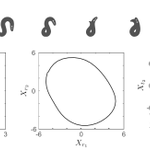
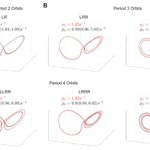
1/ Excited to announce that my Ph.D. work with @greg_stephens and @antoniocbscosta on the dynamics of C. elegans locomotor behavior is out now in Nature Physics! Here's a tweet thread about our primary contributions.

Capturing the continuous complexity of behaviour in Caenorhabditis elegans go.nature.com/2Sv6yIw
Tosif Ahamed retweeted

Many of my recent conversations with other neuroscientists revealed a common concern: the alarming proportion of essentially worthless systems neuroscience papers appearing in the top journals.
Not exactly fraudulent (real fraud is actually not that common), but a familiar combination of weak data, arbitrary interpretations, and elaborate statistical or computational analyses that create an illusion of rigor. Basically highly polished garbage, with a fashionable topic and a narrative designed to appeal to editors.
Of course, none of this is new, but it's getting worse and I don't think outsiders can even get an accurate picture of the latest systems neuroscience any more. As one colleague recently put it, if the public knew just how shaky much of the evidence really is, confidence in the entire field might collapse, and we might all go down if the public loses trust in the whole enterprise, especially now that AI seems to be improving so quickly.
The deeper problem is systemic: our mechanisms for evaluating, rewarding, and propagating scientific results are broken. Scientists who produce reliable work are often marginalized. Their progress is considered too slow, and because of their perceived lack of productivity, often they can't even secure enough funding to keep their labs running. Some can't even get a job. I have seen many examples of this over the years. People with integrity are essentially punished for being meticulous. Meanwhile, the most relentless storytellers and opportunistic careerists accumulate funding, prestige, and influence, as they expand their academic families and place their people throughout the field. Criticizing a member in one of these "Corleone families" carries enormous professional costs.
The result is not just a lot of bad papers. Entire research areas become saturated with unreliable findings and unsupported interpretations, reinforced by citation networks, press coverage, and awards. The longer this continues, the harder it will be to separate fact from fiction, and the greater the eventual damage to neuroscience itself.
Tosif Ahamed retweeted

✨ Welcoming Prof. Tosif Ahamed to Bioengineering, IISc!
His research bridges biology, mathematics, AI and computation to understand biological dynamics, spanning neuroscience, developmental biology, gene regulation, bioimaging and bioinstrumentation.
@_mlechha
@iiscbangalore

Tosif Ahamed retweeted

1/ Our paper appeared in @Nature today! nature.com/articles/s41586-0… @FieteGroup @KhonaMikail.
Explains emergence of multiple grid cell modules, w/ excellent match to data! Novel mechanism for applying across vast systems from development to ecosystems. 🧵👇

Tosif Ahamed retweeted

We’re excited to collaborate with @NCBS_Bangalore to launch the PRISM Fellowship (Promoting Research and Inclusion in STEM). It offers an unparalleled opportunity for students from disadvantaged backgrounds to gain research experience, academic skills & mentorship at NCBS.


Tosif Ahamed retweeted

Super excited to start my lab @NCBS_Bangalore in March 2025! The lab will primarily be powered by chemistry, and we will build chemical tools for biology with a strong focus on fluorescence imaging. We will collaborate widely and are open to any relevant areas of biology.

ALT A photo of NCBS campus
Tosif Ahamed retweeted

Delighted to see the main paper from my Phd, our work on the Dynamics of Dominance in 3D #ZebraFish fights, published today in PRX Life!
Also check out the great Physics Magazine Focus story from Philip Ball physics.aps.org/articles/v17…

This post is from an account that no longer exists. Learn more
Tosif Ahamed retweeted
🐛Janelia Theory Fellow Tosif Ahamed (@_mlechha) is part of a team that developed an AI model that simulates complex animal movements with exceptional accuracy.
Read about this new work, led by @greg_stephens @OISTedu & @antoniocbscosta @InstitutCerveau ➡️oist.jp/news-center/news/202…
Tosif Ahamed retweeted
When @willryu first shared his beautiful movies of a wiggling worm, I was blown away! But how can we both accurately and with interpretability capture the posture dynamics of an animal’s behavior?
Tosif Ahamed retweeted
Thus we’re pleased to share our @antoniocbscosta @_mlechha answer to this challenge using the nematode C. elegans
@PNASnews pnas.org/doi/10.1073/pnas.23…

Tosif Ahamed retweeted

📢NEW!!
We are excited to announce our expansion into a new and exciting form of science communication:
Theatre! 🎭
This dynamic medium has incredible potential to make a lasting impact.
If you are in Bengaluru on Sunday, 4th Aug
Sign up here: docs.google.com/forms/d/e/1F…


Anchehalli, a quaint village surrounded by forests and farms, faces a mystery. Manju, usually full of mischief, isn't his jolly self. What happened to him? Join the villagers as they tackle this mystery.
Sign up here: app.bitly.com/Bka75szKxW3/ht…
#science_theatre #play #scicomm

Tosif Ahamed retweeted
Anchehalli, a quaint village surrounded by forests and farms, faces a mystery. Manju, usually full of mischief, isn't his jolly self. What happened to him? Join the villagers as they tackle this mystery.
Sign up here: app.bitly.com/Bka75szKxW3/ht…
#science_theatre #play #scicomm
Tosif Ahamed retweeted

🚨Preprint‼️
1/ Predicting neural activity is notoriously difficult and requires complicated models. Here we develop simple “minimodels” which explain 70% of neural variance in V1! 🐭🐒 #neuroai @computingnature @marius10p @NunezKant
Paper: biorxiv.org/content/10.1101/…
Recording 🔬 :
Tosif Ahamed retweeted

How do bacteria grow and move in large groups where cells appear adhered to each other but can move freely? Using capillary forces from thin layers of water! Check out our new preprint with Matt Black, Chenyi Fei, @RicardAlert and Ned Wingreen: biorxiv.org/content/10.1101/…
Tosif Ahamed retweeted

A long journey by @JunMeng_elegans, @_mlechha and Wesley; a pleasure with the Shangbang and Thomas' groups; gratitude to the helpful inputs and warm support from Quan and Aravi science.org/doi/10.1126/scia…

Tosif Ahamed retweeted

Positions for remote work available to help us with #suite2p, #kilosort2 or #cellpose. Start date flexible.

Tosif Ahamed retweeted
The Kilosort4 paper is now published @naturemethods. We put a lot of work into building and properly documenting all things Kilosort (including for older versions). w/ @computingnature #kilosort
paper: nature.com/articles/s41592-0…
code: github.com/MouseLand/Kilosor…

Tosif Ahamed retweeted

Spike sorting with #Kilosort in #python w/ #pytorch + @pyqtgraph !
>>> pip install kilosort[gui]
To learn more, check out the docs (kilosort.readthedocs.io/en/l… by Jacob Pennington), or watch the talk (youtube.com/watch?v=LTSmoACr… by @marius10p
)

The Kilosort4 paper is now published @naturemethods. We put a lot of work into building and properly documenting all things Kilosort (including for older versions). w/ @computingnature #kilosort
paper: nature.com/articles/s41592-0…
code: github.com/MouseLand/Kilosor…
Beautiful work by @antoniocbscosta & colleagues on a biological basis for power laws in behavior. Slowly changing transition rates seems enough. The work is also a nice example of the power of integrating experiments, theory and theoretically motivated data analysis in biology.

Why are power laws and heavy-tailed distributions so widespread in animal behavior? We show how behavioral plasticity might be the minimal necessary ingredient w/ M Vergassola @LP_ENS_, Gautam Sridhar @wyartlab @ClaireWyart rb.gy/184fke (thread below) 1/12

Tosif Ahamed retweeted

Why are power laws and heavy-tailed distributions so widespread in animal behavior? We show how behavioral plasticity might be the minimal necessary ingredient w/ M Vergassola @LP_ENS_, Gautam Sridhar @wyartlab @ClaireWyart rb.gy/184fke (thread below) 1/12
This post is from an account that no longer exists. Learn more
Tosif Ahamed retweeted

We invite students & postdocs in #neurotheory to apply for this “by the students, for the students” workshop to discuss theoretical #neuroscience techniques, participate in detailed discussions, & network with peers
✈️Hotel, meals & travel fully covered
Learn more & apply by June 20 @ janelia.news/THE24
@ratecoding @_mlechha @michnard_ @HHMINews @HHMIJanelia
#neuroscience #neurosciences #theoreticalneuroscience #neurosciencepostdoc #neurosciencephd #HHMIJanelia #neurotwitter
