

MxM shapes landscapes of craft and integrity that strengthen our civic infrastructure. Founded by @bmaryman and @sjmelbourne
Seattle, WA
Joined October 2021
- Tweets79
- Following160
- Followers97
- Likes15



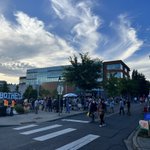


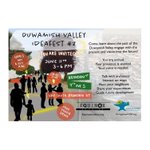

Katherine notes that Roger Millar has asked her to think about the bicycle superhighway for the regional trails system. No unifying entity for maintenance, for example, instead quite balkanized in terms of maintenance and user experience.
27
Katherine notes that @Meta and REI invested $1M each to help invest in the Northup Connector allowing a KC Council member to find the remaining $1.5M. That community support makes it so electeds can't ignore a project.
1
35
Katherine Hollis of @EastrailP notes that the East Trail project, with the opening of the Line 2 starter line, is the first direct light rail to trail connection in the region.
1
13
“We should not be designing for the average user, we should be designing for the people who are not represented here.” - Barkha R Patel
Double standards of agreeable and aggressive comes with double standards of a lot of emotional labor.
Work is bringing to the foreground what has been in the background. What has been in the margins to the center. Crosswalks to bike infrastructure.
1
29
For immigrant communities, careers are pushed because they are “proven” to be successful.
Career has daily micro aggressions. Tables have space with ppl that don’t look like me and that are having conversations that are not what I care about. No active healthy transportation.
1
20
Question re: Barka’s racial and gender identity in her field.
Recommends Bicycle Face’s Commencement Speech before answering m.youtube.com/watch?v=zMRcWj…
1
12
For communities that have been neglected, the worst thing you (government) can do is say, “ok, they don’t want bike lanes here.” The best thing is to keep showing up and to go on the transformation journey with them.
1
18
When we started VZ, it was so unimportant that it didn’t have a budget line item. But we did have a striping line item and we used it to create buffered bike lanes.
1
17
Sometimes the guidance (even NACTO) wasn’t perfectly aligned with Jersey City’s context. Even then, city innovated. E.g. two way cycle track on one side of the street.
1
14
Demonstration projects were key because lawyers and public safety folks couldn’t buy off on a full month trial, but could agree to 6-hours. That built an on-ramp to longer term implementation.
E.g. using parking lot to test curb extensions for fire trucks. (No parked cars)
1
15
Goal is to make Vision Zero a sustainable process that can last past any one of us staff members.
1
16
Requirement with studies: we have to test one of the proposals on the ground.
Never (only) say no; instead team will offer alternative (eg signal warrants>>>passive traffic calming). Now standard practice for department staff.
1
17
For Jersey City, innovation is the baseline. Our team knows that the first thing we need to do is consider the most vulnerable user. First thing we hand new employees is the Vision Zero Action Plan.
1
10
How do we take and ingrain the “New Normal?”
We have to get to the point where we make the new progressive thing boring. Need to create new systems that people can rely on to point in the right direction.
23
Building consensus for Vision Zero implementation was the long-game for our internal team members. Changing responsibility for traffic safety from personal behavior to systemic design challenge.
2
15
Also had it implemented as an executive order to allow more nimble, rapid implementation with partners.
Jersey City put out an annual report that some actions were done and others were not so that public could hold officials accountable.
19
Barkha R Patel from Jersey City (Vision Zero since 2022) notes the role of advocates in letting electeds know that there could be electoral consequences for not focusing on street safety.
2
21
Talking about what electeds can do to empower staff: @KccClaudia says electeds need to have discipline on what’s most important, otherwise staff are spinning.
1
34
Noting the importance of optics of who is advocating, @KccClaudia notes that Council needs to see people advocating who look like their conception of who their voters. Not dismissing the hard work of younger advocates, but recognizing the inherent biases of elected colleagues.
1
48