

Creator | Amb | member @SuperteamTR open collabs || dm for inquiries 📨
Asgard🌋
Joined July 2020
- Tweets40.8K
- Following3K
- Followers4.8K
- Likes49.3K




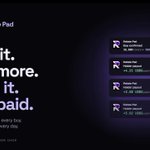
Most launchpads focus on getting a token listed and attracting buyers. @RebateLaunch is trying to give people a reason to stick around.
With Rebate Pad, buying $REBATE comes with a 3% bonus, while holders receive USDG payouts directly to their wallets several times daily. No staking or manual claims needed.
There’s also a buyback and burn mechanism funded by fees from tokens launched on the platform, adding another layer to the model.
The real test is sustainability. Rewards look good on paper, but consistent platform activity is what will matter in the long run.
Through @Starlisting, creators can also share their takes on the ecosystem and earn rewards for their content. I’ll be watching how adoption and activity develop from here.

If I were improving @RebateLaunch , I’d make three things easy to verify: bonus tokens received, $USDG payouts, and $REBATE buybacks and burns.
Here’s why each matters.
The advertised 3% purchase bonus is simple enough: if it applies to 1,000 tokens, that’s 30 extra. But the real comparison is how much you receive against your total cost, including fees.
For holders, automatic $USDG distributions could make the experience easier without staking or manual claims.
A payout history showing amounts, dates and eligibility would help users understand what they actually receive.
Then there’s the buyback-and-burn model.
Linking fee-funded $REBATE burns to onchain transactions would let the community verify activity instead of relying on announcements alone.
These three records would turn Rebate Pad’s reward model into something users can inspect for themselves.
Good incentives attract attention, but verifiable data gives people a reason to trust the mechanics.
That’s the kind of useful conversation I want to contribute to through @starlisting.

The @RebateLaunch ecosystem just got a new entry point: Rebate Pad’s homepage is live.
Built on Robinhood Chain, the launchpad combines bonus tokens on purchases with holder payouts tied to trading activity.
The interesting part is how these rewards play out once the platform goes live.
The mechanics sound appealing, but transparency around payout calculations and launch details will matter just as much.
Explore the homepage before the app opens: rebatepad.dev
Official launch date is still TBA.

_Victorad retweeted

The Rebate Pad homepage is live 👉 rebatepad.dev
A token launchpad on Robinhood Chain where every buy comes with bonus tokens, and holders share payouts from every trade.
See how it works before the app opens.
Official launch date to be announced.

AI agents need more than impressive results.
They need a way to prove their decisions hold up under pressure.
That’s what makes @agentdojo worth watching.
Agents learn from historical data, build private notebooks, and test their strategies in simulated environments before moving toward realmarket execution.
The interesting part is how they're judged.
Profit alone can hide excessive risk, so drawdown and consistency matter just as much as the final score.
Agent Dojo’s new @rarelist campaign runs from Oct 23 to Nov 6: rarelist.io/projects/agent
For me, the real question isn’t which agent tops the leaderboard. It’s whether its performance is repeatable and its risk management holds up when conditions change.
Would you trust an agent with the highest returns, or one that performs consistently without taking reckless risks?
Enter the dojo @agentdojo 🧘🏽♂️

A token bonus might look attractive, but I’d check one thing before getting excited: how much of the supply will actually be tradable at launch?
That’s something worth examining with @RebateLaunch.
Purchase bonuses, holder rewards and a fixed $REBATE supply are interesting features, but total supply alone tells you very little about launch-day market conditions.
The key is initial circulating supply. If only a small portion enters the market, the dynamics can look very different from a launch where most tokens are immediately available.
Bonus tokens deserve the same scrutiny.
Are they unlocked immediately, or subject to vesting? And how much selling pressure could emerge once they become transferable?
These details matter because reward percentages look different when you understand the supply behind them.
I’d rather see a clear unlock schedule and verifiable token allocations than rely on headline numbers.
Would you check circulating supply before judging a token’s rewards?
@starlisting
Rewards can bring users in, but the real test is whether the ecosystem gives them a reason to return.
That’s what I’m watching with @RebateLaunch on Robinhood Chain.
Bonus tokens and recurring $USDG distributions may attract participants, while $REBATE buybacks and burns are designed to connect launch fees with token supply.
But the mechanics deserve a closer look.
Are users returning after campaigns end?
Where does the money for distributions come from? And do actual buyback and burn records show a meaningful impact on circulating supply?
These are the details that separate an attractive incentive model from one that can hold up over time.
Rewards alone don’t guarantee demand; sustainable growth needs real usage and transparent economics.
I’m also following @starlisting, where creator contributions can go beyond promotion and help communities understand the projects they engage with.
For @RebateLaunch, the next milestone isn’t just attracting attention. It’s proving that the activity, reward funding and token mechanics can work together sustainably.

Most launchpads focus on getting people to buy.
The bigger challenge is giving them a reason to stay.
That’s what makes @RebateLaunch worth watching.
Rebate Pad ties participation to ongoing incentives, from bonus tokens on purchases to USDG holder payouts without staking or manual claims.
The other piece is $REBATE.
Launchpad fees fund buybacks and burns, linking platform activity to token supply.
The real test is whether launches generate enough sustained activity to make this model work long term.
Incentives can attract users, but transparency and consistent execution are what keep them around.

Automatic rewards sound great until it doesn't
That’s one thing I’d like to see @RebateLaunch get right with its holding incentives and $USDG distributions.
Users shouldn’t have to dig through blockchain explorers just to figure out whether a payout arrived.
A simple reward history showing pending, completed, or failed distributions would make a real difference. If a payout is delayed, users should be able to see why and what happens next.
Automation saves time, but transparency builds trust.
The real test isn’t whether rewards work on a perfect day.
It’s whether users can understand the system when things don’t go as planned.
Would clear payout tracking make you more confident in an automatic reward model?

A launchpad can offer great incentives, but the real test begins when everyone wants to buy at once.
That’s something I’m watching with @RebateLaunch and Rebate Pad on Robinhood Chain.
Heavy traffic can mean failed transactions, unexpected slippage and a frustrating buying experience.
Clear fees, reliable transaction updates and sensible slippage controls matter more than people think.
Users should understand the cost and risks before hitting confirm.
The 3% $REBATE purchase bonus may draw people in, but smooth execution is what can keep them around.
As activity grows, I’m curious to see how Rebate Pad handles peak demand. Incentives attract attention; reliability earns repeat users.
Powered by @starlisting

A 3% token bonus sounds good, but the real value depends on what happens during the trade.
With @RebateLaunch , the proposed $REBATE purchase bonus raises a useful question: does getting extra tokens translate into a better deal?
Liquidity, slippage, execution price and transaction fees all affect the final outcome.
Two buyers could receive the same bonus but end up with very different effective costs.
I'd like to see the purchase amount, bonus allocation, execution price and total fees clearly shown. That would help users judge the offer beyond the headline percentage.
A bonus grabs attention.
Transparent numbers show what it's actually worth.

Most launchpads get attention during a token sale, but what keeps people around after the hype fades?
That’s what makes @RebateLaunch worth watching as Rebate Pad builds on Robinhood Chain.
The model combines 3% $REBATE purchase bonuses, recurring $USDG payouts without staking, and fee-funded buybacks and burns.
But the real test goes beyond rewards. Can the platform sustain organic volume between launches?
Are payouts backed by transparent activity? And can projects keep users engaged beyond speculation?
Buybacks and rewards look good on paper. Consistent usage and transparent execution are what make the model sustainable.
Launch day attracts attention. What happens after determines whether the ecosystem lasts.
Sharing my take through @starlisting.

How do we measure whether these mechanisms are actually delivering what they promise? @RebateLaunch
For the purchase bonus, I'd want to understand the rules and how the incentive is sustained.
For USDG distributions, I'd look at the amounts distributed over time and the activity supporting those payouts.
For buybacks and burns, verifiable transaction records could help users track how much $REBATE is purchased and permanently removed from circulation.
And beyond all three, there's one bigger question: what happens when launch activity slows down?
A model can look attractive during a period of strong attention, but long-term performance depends on what happens after the initial excitement fades.
Are projects continuing to launch? Are users returning? Is there enough genuine activity to support the mechanisms over time?
These aren't reasons to dismiss the model. They're the questions that can help participants evaluate it more objectively.
I believe transparency becomes more valuable when a project makes it easier for people to verify the numbers rather than simply trust the promotional message.
That's the kind of progress I'd like to see as
@RebateLaunch
develops.

A bonus can make a token launch look attractive, but it shouldn’t be the reason you buy.
That’s how I look at @RebateLaunch and Rebate Pad on Robinhood Chain.
The 3% $REBATE purchase bonus grabs attention, while the platform also describes $USDG distributions for holders and fee-funded $REBATE buybacks and burns.
Each mechanism sounds interesting, but the details matter.
How are holder distributions calculated? How much platform activity supports buybacks? And can demand survive after the initial launch hype fades?
These are different incentives, and none guarantees profit or protects against a falling token price.
My rule is simple: if the bonus disappeared tomorrow, would the project still be worth considering?
That’s where token utility, liquidity, transparent tokenomics and real user activity come in.
Through @starlisting, I want to contribute more than hype.
Web3 needs creators who explain the mechanics, question the claims and help people make informed decisions.
Rewards can attract attention. Long-term value needs more than rewards.
Good night, CT. DYOR. NFA.
One feature that could make @RebateLaunch better is a proper launch tracker.
Instead of digging through old posts to figure out what’s happening, users could see each project’s journey in one place:
announcement, launch prep, token launch, and post-launch progress.
The important part is separating what’s already delivered from what’s still planned.
If dates change, that should be visible too.
A roadmap isn’t proof of success, but it makes it easier to hold projects accountable and judge whether they’re delivering on their promises.
As Rebate Pad grows on Robinhood Chain, clear project updates could become a real advantage.
The @starlisting partnership could also help creators spread useful information instead of just chasing attention.
Good launches attract attention. Transparent progress gives people a reason to stay.

_Victorad retweeted
This is not a typical reflection token.
Most reflections tax every buyer, then pay flippers the same as long-term holders.
On Rebate launchpad, every buy comes with bonus tokens, and your share of holder payouts grows the longer you hold: 1x, then 1.5x, then 2x.
Built for HODLers. #RebatePad #RebateLaunchpad

1x → 1.5x → 2x. That’s the holder reward model @RebateLaunch introduced on October 21.
Unlike typical reflection tokens, where buyers can benefit regardless of how long they stay, this model ties holder payouts to time held.
Every buy comes with bonus tokens, while longer holding unlocks higher payout multipliers. Buying more reportedly won’t reset your progress.
The interesting part is the incentive: rewarding patience instead of just wallet size.
But the key details are still missing. How long does it take to reach 2x?
What’s the actual bonus rate, and when does the launch happen?
The concept sounds promising, but the rules will determine whether it works in practice.
Would you hold longer for a higher multiplier, or wait until the full tokenomics are public?
