

3x founder / 2x father. Building Collider, a studio for network-driven products: Chatterday, StartOps, and more soon.
London
Joined August 2009
- Tweets1.5K
- Following2.4K
- Followers685
- Likes5.8K







Pinned Tweet
I’ve always been obsessed with two things: markets and communities.
These seem unrelated, but actually I think most communities are special kinds markets for things not settled in cash:
> Markets for favors
> Markets for status and social recognition
> Markets for non-public information and opinions
...And also just markets for *humanity*.
It feels good to share what you know. It feels good to help people. It feels good to pay it forward. Communities give you the surface area to give back to people you care about, in a way that would be difficult otherwise.
Norms can exist within the shelter of communities that would whither in the harsh winds of the outside world.
In a world flooded with AI, I suspect small/private communities will become the last bastions of alpha not possessed by the models, and some of the most human places left both offline and online.
I’ve been playing around a lot in this space lately, so if any of this resonates stay tuned :)
579
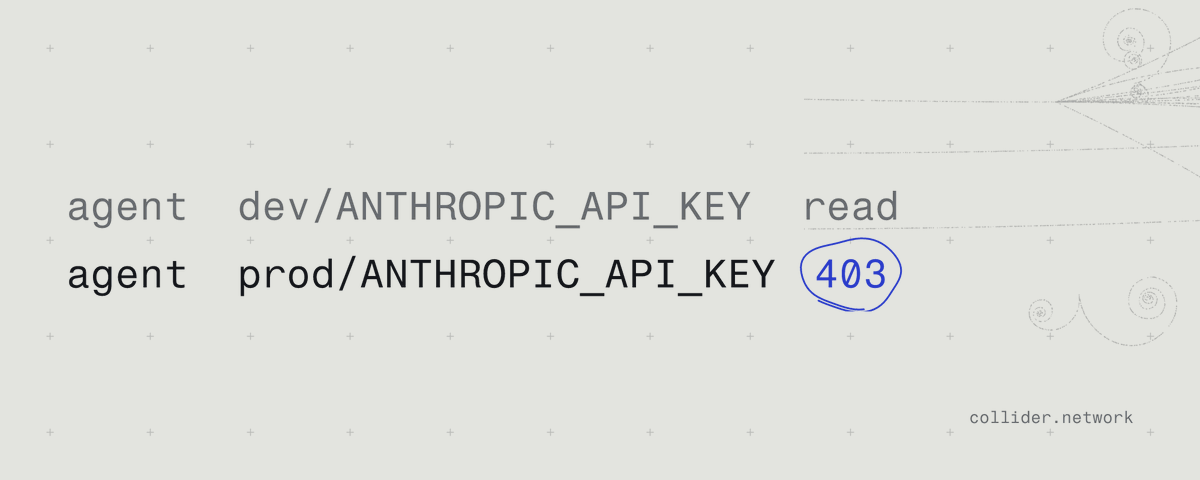
If you build with AI coding agents, your API keys are probably readable by anything that can trick your agent.
I locked this down across seven apps last week. The how-to: my stack, five steps, and a link you can hand straight to your coding agent.
5
2
406
This whole "other guys" interaction goes away next year with 1k+ tps streaming, and turn based/typing getting mogged by always on/voice

you shouldn’t have to prompt your agent
your agent should prompt you.
Today we are launching Roze, the personal agent designed to be proactive from the ground up. Our app connects to your email and calendar, figures out what needs doing, and comes back with suggestions you can pick with one tap.
Skip the prompting. Get early access below 👇
1
72
Thank god for @meetgranola
I used to get distracted on calls by taking notes
Now I'm free to get distracted by my agents instead
1
2
111


Whenever I find it hard to do stuff, I do this simple thing and it works every time:
"Hey Claude, do this thing for me"

Whenever I find it hard to do stuff (work, write, go to the gym), I do this simple thing it works every time
I used to think all high achievers had insane discipline. No. They just have good systems for getting stuff done. Here's mine.
It's called Newton's three laws of productivity.
1st law: An object at rest stays at rest, unless acted upon by an unbalanced force.
The hardest part is ALWAYS starting, so take the first step. Open the doc. Send one email. Put your running shoes on.
Once you've started, momentum does the rest.
2nd law: Force equals mass times acceleration.
The bigger and heavier the task, the more force required. So shrink the mass!
Writing a report might feel impossible, but writing the first sentence is easy.
Break big tasks into small ones and watch how fast you can accelerate.
3rd law: For every action, there's an equal and opposite reaction.
Every time you push toward focus, something pushes back. Like your phone notifications, Netflix, your TV in the corner.
So don't just push harder, but remove the forces against you. Curate your environment to remove all distractions to clear the resistance.
Works like a charm. Every. Single. Time.
2
130
Charles Cushing retweeted

Every founder I've talked to in SF this past week is actively working on owning their own hardware/assets (chips, shells, factories, etc), non-trivially moreso than before
Something happened recently and it's now clear that the new post-intelligence world order will be dictated by those who can aggregate and allocate capital the best
SF is relearning how small of an asset class venture is, and that legibility to capital will become everything in order to compete in this next industrial revolution
Charles Cushing retweeted

Scarcity can only be allocated three ways: price, queue, or lottery.
Pick your poison.

Today I realized: Disruption theory is dead.
If you grew up doing startups over the last 20 years, you probably have this mental model:
> Startups find a scrappy new way to attack a market
> Lumbering incumbents can't adapt their business and get surpassed
I just don't think this holds true anymore. Companies like @AnthropicAI and @tryramp are proving that even large AI-native orgs can move with startup speed.
Startups used to have some advantages:
- Smart people (due to more autonomy, better pay)
- More focus = better product
- Software scales with near-zero marginal cost
The big AI-native platforms now have all of this and SO much more:
- Smarter people (due to ungodly pay, social status, talent vortex)
- Decentralized management = lots of great products
- Lots of great products = ecosystem lock-in
- More scale = more/cheaper tokens
- If you're a frontier lab, throw in a monopoly on the best models.
What startup is safe from this? Any company that shows promise can be cloned or acquired from a position of incredible strength.
("But what about network effects?!" At scale they are a shield. At subscale they are a target on your back. Lots of promising network effects startups will be strangled in the cradle.)
Today the veil is coming down. The scaled AI-native players will compete in many products across many industries.
Competition from startups will be extremely value-accretive to them: until everyone catches on, other people's VC dollars will effectively fund their market research.
And the lumbering legacy players will still get disrupted. It just won't be by startups anymore.
🤖 Made with AI


1
2
252
Charles Cushing retweeted

next its probably Claude Calendar → Claude DocuSign → Claude Inbox → Claude Payroll → Claude Domains → Claude Cash
then it gets crazy, Claude OS → Claude Chips → Claude Classroom → Claude Medical → ClaudeX → Claude Conquest


I think what @steveruizok describes here is part of a greater phenomenon which I think of as
THE IMPENDING BATTLE FOR THE REAL WORLD TRUST GRAPH
> Early Facebook, LinkedIn etc. were a pretty accurate mirror of people's Real World Trust Graph (RWTG).
> Then came the Feed. Everyone's graph on the Big Platforms rapidly diverged from their RWTG.
> The fallback for RWTG became group chats and DMs for small trust circles, and Slack/Discord communities for larger ones.
> This was "good enough" for a pre-AI world.
> But now the paradigm is breaking hard, because your RWTG is:
- FRAGMENTED across 6 different messaging apps
- OWNED by apps that don't want to let your agent access the data, or want you to stay in their walled garden.
(E.g. No official WhatsApp MCP, Slack actively hostile to data export, etc.)
> This is a HUGE problem because it makes your RTWG illegible to your agents.
> Which massively limits how much your agents can really act for you.
So I think in the next 1-2 years, we'll see the New Default arise about how we all store a representation of our RWTG and how we make it accessible to our agents.
It's also going to be a massive and exciting battle:
Every personal agent will want to own your Real World Trust Graph — it's the perfect form of lock-in. You already see this happening, as personal agents try to join the group chat (the existing best digital proxy for your RWTG).
But as people rely more on their agents, many will wish to have their RWTG be sovereign and portable, just as they want their data to be sovereign and portable.
@steveruizok has the perfect example here of why: you might want to take your graphs into lots of different apps!
This is before we even talk about the technical difficulty.
> Letting agents persist identity and connect to each other securely is of course one big challenge (see pilotprotocol.network/).
> Representing your RWTG in code is perhaps even more gnarly, and is a partial subset of the question "How do you represent a human in code?"
(I suspect the latter may be what @komorama is trying to solve? But they're still in stealth so I can't tell for sure.)
My biggest open question about this space is whether the winning format will be:
> OPEN MULTIPLAYER - Network(s) like LinkedIn emerge where everyone confirms their relationships with each other + how their agents can mutually interact.
> CLOSED MULTIPLAYER - Similar to closed group chats and communities today, you exist on a bunch of micro-graphs that have their own rules but don't talk to each other. An example would be @ystrickler 's DFOS.
> SINGLE PLAYER - Your agent just keeps records of how you want to interact and share with each other person's agent. Essentially a specialized form of agent memory.
I'm guessing versions of all three will emerge for different use cases, but it's really just so early.
Anyway — exciting times ahead, and probably a few big (or at least influential) organizations to be built along the way.


There's a huge product opportunity downstream of Tailscale etc too. At @tldraw we've started designing for "high trust networks" and it's been a beautiful thing.
1. Features that would be a nightmare on the internet are okay on my computer and mostly okay on private networks. Websites that execute user-generated scripts, control production systems, allow for users to send desktop notifications, spend tokens, or directly prompt my agent. Crazy stuff that would only make sense if everyone was in a committed polycule.
2. When everyone on the server can be trusted to have _external_ reasons for good behavior (eg keeping their job, or maintaining friends, family, church, mafia org), the software can be designed in a default social way. Most apps default to isolation, low horizontal visibility, highly restricted collaboration. Makes sense if the social contracts are inside of the app, but if you can trust that they live outside of the app then you can get wild. Example being small group chat names as an emergent comedy phenomenon because anyone in the group can change the name.
3. This can work for commercial products, too, not just internal stuff. Security matters more than ever but the way we've seen that manifest is that more companies are more confident in their own solutions than anything we could provide, to the point where owning data and access is a better value proposition than having it managed. Always has been true for big companies but now even small companies can get a good secure network set up pretty easily, and the hooks we need to build are easy enough.
tldraw offline got us started down this road (and shout out to @pendev for first introducing me to the idea of desktop + mcp). We've been bringing that product to private networks and it's been exciting to see how much we can get away with. Keep an eye out
2
3
462
Games must be ENGAGING and FUN. These are ineffable qualities that resist templates.
I've built a bunch of games in the last few months, and I agree with @yishan's point: an agent can make your site look pretty, but it can't make your game fun.
Instead, you need to play it yourself, over and over, noticing and catching the gossamer threads of your intuition and feeding them back in.
Tuning a game to be fun also opens up your senses in a way that pure visual design does not.
> How do your fingers feel moving around the keyboard?
> What is your heart rate doing while you play?
> What's the moment in the game where you lose interest and stop?
> What emotional residue persists afterwards?
At least for now, creating a fun experiences is ~1000x harder than making something that merely looks good.
Once you've built games, you realize that many other life activities could be improved with a game dev mindset.
Every event you plan, every conversation you have, every app you build — even the emails you send are chances to create engaging experiences for others, if you're willing to put some creative thought into them.

I encourage anyone who doubts this to try and make a real AAA game and apply your own real critical game quality standards to it.
I am making one right now and while Opus 5.5 (Fable and Astra can't do it) can do many of the coding tasks, it simply isn't able to make gameplay design and UI design decisions at the level of detail and correctness demanded by a GAME.
My theory is that it's because the quality requirement in a game is ironically higher than for e.g. a SaaS application.
SaaS or other "work" applications provide economic value for using it, so as long as your economic value gained is high enough, you'll tolerate bugs and UI imperfections and lag, even outright illogical app behavior - as long as it does the thing you need it to do.
But when you're playing a game, your willingness to continue doing so rests entirely on the quality of the experience. And that's impacted by gameplay, fun, UI, story, etc. If there's any sort of "irritant" like a part of the interface is janky, or something consistently looks wrong, or the gameplay does something illogical, or it's laggy, etc - you don't have any incentive to keep going.
To keep someone playing a game, the experience has to be far better than that - maybe not perfect - but it still has to be great.
What I'm finding is the Opus 5.5 will make a game at roughly between 50% to 85% quality level. If you give it a lazy prompt, it'll puke out something with blocky graphics and barely-working gameplay: 50%. If you iterate a bit and give it more details, you can get it up to 85% or so - playable, can generate impressive screenshots and maybe even gameplay clips - but that last 15% or so still needs hand-tuning and human taste-making.
You can have it read every game design and UI/UX guide you can find, and it just won't build anything better than "kind of workable." And "kind of workable" is often enough for a work app. I have like a dozen vibe-coded utility apps that roughly do the thing I need them to do (track stuff, manage some kind of data, visualize something) but they're not worth polishing because they're good enough to perform the function.
But with games I can imagine someone else looking at it with the same critical eye that I would, if I were playing it:
- these buttons are a little out of place, the alignment isn't perfect
- why does this icon which does the same thing as this other one look different?
- this tree or shadow looks weird from this angle
- this game element acts a little janky under these conditions
- there's lag when stuff gets busy
In particular, AI doesn't seem to be able to create really good custom UIs. If you have a bunch of commonplace functions then yeah, it'll use a UI template. But if you have a game, and the game involves doing a bunch of unusual (fun!) things, you want the UI to engage the user's intuition about it, show the right responsiveness or progress of an action, act correctly in certain unusual corner cases (because fun often involves corner cases) etc, and AI can't quite get all of it right yet. It's workable, you can often see the vision - but it's not a game. No AAA game studio would ship what AI produces today.
Much of this seems to be about paying attention to the right details. Maybe subsequent models will be better (they often are). But right now a human still has to look at every little corner of the game, decide if it's acting just right, then specify in extensive detail exactly what should happen and why, and what overall effect is intended.
The good news is that one person can be the gameplay designer, the artistic director, the engine developer, the interface designer - you can do all of these jobs and let the AI carry out the tasks.
The bad news is that one person has to be the gameplay designer, the artistic director, the engine developer, the interface designer... and I'll probably have to be the marketing guy later when/if the game is released.
Consequently, I've had to quickly learn the fundamentals of all these disciplines. Unsurprisingly given my SWE background, the engine on my game is quite well-optimized even with tons and tons of moving things and physics. But the gameplay is another thing and I don't even know the right terminology to describe a lot of the art/graphics things I want to see, and... oh my god, UI design is an AI clusterfuck...
Back in the day, tech companies sort of had a hierarchy of respect when it came to technical staff - I'm a little ashamed to say - it was roughly:
1. backend engineer
2. frontend engineer
3. visual designer
4. UI/UX designer
Yes, the lowly UI/UX designer, at the bottom of the totem pole - not even considered "real" designers - they were ones responsible for deciding where to put the buttons and what fonts to use.
Well, today the AI does everything else but it still can't design a great interface worth a damn. So yeah, to the UI/UX designers I knew: I owe you an apology. I wasn't really familiar with your game.
Of all of the tasks, this is the one that AI can't seem to do - I have to tell it how to do things and it's extra hard when I don't even have the terminology. I can describe how I want things to work, but the AI doesn't have the interiority of a human user - there's a lot of intuition and feelings involved - it does boneheaded things, ignores critical details that would be obvious to a human, doesn't realize which things it absolutely mustn't overlook on a UI and worst of all: even when I feed it a precise sketch of the interface I want, it ignores critical details because it simply didn't realize those details were key.
(example: when I draw this thing next to this other thing, it literally means they need to be next to each other)
If anyone wants a benchmark: I've been working on a game for about 6 weeks now - coincidentally I got started right before Opus 5.5 came out (when attempts with Astra just couldn't cut it). Granted, I have a day job so a lot of that was after-hours and weekends but I'd estimate that I have gotten done the equivalent work of a 10-person studio working for ~6 months. So there's definitely leverage here, but there's definitely a lot more work to go before this is a real game.
93
