
PhD student in machine learning @ETH, @MPI_IS, and student researcher @GoogleAI | Previously MSc @EPFL_en and intern @RIKEN_AIP_EN.
Joined April 2019
- Tweets140
- Following622
- Followers701
- Likes969




Pinned Tweet
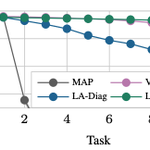
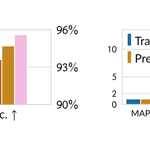
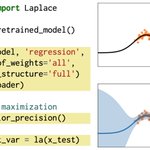
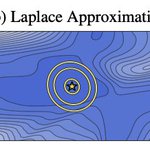
In our #NeurIPS2021 paper (arxiv.org/abs/2106.14806), we introduce laplace-torch for effortless Bayesian deep learning. Despite their simplicity, we find that Laplace approximations are surprisingly competitive with more popular approaches. youtu.be/nMONiYLWWOU
Alexander Immer retweeted

Once both sides define what they mean by Shampoo and Muon before debating their relationship, there will be nothing left to debate.

One motivation for me to add these optimizers was seeing @_arohan_, a senior researcher whose contributions I respect, repeatedly claim that Muon is Shampoo.
IIUC, his argument is that if we disable accumulation in both Muon and Shampoo, then they become...
4/6


Alexander Immer retweeted

I am looking to hire 1-2 interns to work with me in Tokyo at RIKEN, starting October 2026. Topics are in intersection of optimization, DL and Bayesian methods. The internships are fully funded.
More details here, please share with interested students: moellenh.github.io/variation…
Alexander Immer retweeted
1/14 Is Muon “better” than Shampoo?
We argue that their relationship parallels Adam's relationship with Signum. Analogous to @lukas_balles and Hennig’s (2018) decomposition of Adam into element-wise scaled Signum, we can decompose Shampoo as left- and right-adapted Muon.

Alexander Immer retweeted

KFAC is everywhere—from optimization to influence functions. While the intuition is simple, implementation is tricky.
We (@BalintMucsanyi, @2bys2 ,@runame_) wrote a ground-up intro with code to help you get it right.
📖 arxiv.org/abs/2507.05127
💻 github.com/f-dangel/kfac-tut…

Alexander Immer retweeted

In collaboration with HHMI Janelia & Harvard, we introduce ZAPBench, a whole-brain activity dataset and benchmark with single cell resolution of a larval zebrafish, which will enable development and comparison of more accurate brain activity models. →goo.gle/44rEpsn
Alexander Immer retweeted

How do you identify training data responsible for an image generated by your diffusion model? How could you quantify how much copyrighted works influenced the image?
In our ICLR oral paper we propose how to approach such questions scalably with influence functions.

Alexander Immer retweeted

Can we predict future brain activity in a small vertebrate?🤔
We're releasing ZAPBench⚡️(#ICLR2025 spotlight): a benchmark to forecast activity in a whole vertebrate brain🧠 at single-cell resolution!🐟 70k+ neurons, 3 TB of data & extensive baselines. Connectome is coming!
🧵👇
Alexander Immer retweeted

🎉 Excited to share that we've just hit a remarkable $76M funding milestone, with a $41M round led by @Cathayinnov.
We’re grateful to our incredible team, investors, and partners who believe in our mission to build the world's first universal AI foundation model for biology. 🚀
Alexander Immer retweeted

📢 Excited to present our work at #NeurIPS2024!
📄 "Shaving Weights with Occam's Razor: Bayesian Sparsification for Neural Networks using the Marginal Likelihood"
Read it here: arxiv.org/abs/2402.15978
Details in 🧵

Alexander Immer retweeted
1/7 Still using Adam?
If anyone wants to try a distributed PyTorch implementation of SOAP/eigenvalue-corrected Shampoo with support for low precision data types instead, here you go.
github.com/facebookresearch/…

Alexander Immer retweeted

🌟New work: Noether's razor⭐️ Our NeurIPS 2024 paper connects ML symmetries to conserved quantities through a seminal result in mathematical physics: Noether's theorem. We can learn neural network symmetries from data by learning associated conservation laws. Learn more👇. 1/16🧵

Alexander Immer retweeted

I'm on my way to Vienna to attend #AABI and #ICML2024!
Ping me if you want to have a chat :)
🧐 I also have an open #PhDPosition in the area of #causality/causal machine learning. Please reach out via DM/email if you think that you could be a good fit! 🔗rc-trust.ai/groups/causality
Alexander Immer retweeted

🚨 laplace-torch v0.2 has been released! It’s all about foundation models!
You can now easily do probabilistic inference on Huggingface’s LLMs and reward models 🤩
github.com/aleximmer/Laplace
New features! 👇 (1/6)
Great effort by @runame_ , @a1mmer, and contributors!

Alexander Immer retweeted

The @BayesDuality workshop starts tomorrow.
Full schedule (1 page) bayesduality.github.io/bdw24…
(webpage version with detailed abstract etc.) bayesduality.github.io/talks…
Register at the link in the tweet below to join!


It is my pleasure to announce the 2nd Bayes-Duality workshop, focusing on the design of AI that learns adaptively, robustly, and coninually, like humans.
bayesduality.github.io/works…
You can watch all 26 talks through zoom livestream (June 12-21). Register at c5dc59ed978213830355fc8978.d…

Alexander Immer retweeted
It is my pleasure to announce the 2nd Bayes-Duality workshop, focusing on the design of AI that learns adaptively, robustly, and coninually, like humans.
bayesduality.github.io/works…
You can watch all 26 talks through zoom livestream (June 12-21). Register at c5dc59ed978213830355fc8978.d…
Alexander Immer retweeted

Come to our poster session this Tuesday to learn about taming infinitely deep models! #iclr2024

1) Very excited to share our latest work on how to avoid gradient explosion in feedforward nets with BatchNorm to get around the limit of depth in training!
w/ amazing collaborators @alexmeterez @a1mmer @bremen79 @gxr & Hadi Daneshmand.
link: arxiv.org/abs/2310.02012

Alexander Immer retweeted

If you're coming to @eccvconf consider our freshly accepted tutorial on:
A Bayesian Odyssey in Uncertainty: from Theoretical
Foundations 📝 to Real-World Applications 🚀
w/ the amazing @GianniFranchi10 @_olivierlaurent @a1mmer @Pavel_Izmailov
More info coming soon #eccv2024

Alexander Immer retweeted
I'm thrilled to share that I'll be joining @RCTrustworthy at @TU_Dortmund to start a research group on Causality this summer!
📢Looking for #PhD students (link attached)! Feel free to reach out via email or dm #PhDposition #Causality #MachineLearning

ALT https://rc-trust.ai/groups/causality
Alexander Immer retweeted

Late announcement, but I'm excited to announce that my PhD thesis is publicly available! In it I give my thoughts on how to approach variational inference in Bayesian neural nets, deep GPs, including discussion on the marginal likelihood and symmetries.
arxiv.org/abs/2401.12418
Alexander Immer retweeted
⭐️New paper ⭐️ Excited to share 'The LLM Surgeon', accepted at ICLR 2024. We obtain SOTA pruning performance and even demonstrate structured LLM pruning of full rows and cols. Direct practical impact enabling compression up to 20-30% with negligible loss in performance.🧵1/9👇
