

Abakcus is the best curation site for math and science. Please subscribe my weekly newsletter! It is FREE! https://xitter.cf/t.co/uPkgdO2mwT
Joined June 2020
- Tweets1.1K
- Following285
- Followers98.6K
- Likes507




How to Learn Mathematics: A Self-Study Roadmap
abakcus.com/articles/how-to-…

Abakcus retweeted
Mathematical physicist Roger Penrose's journal is so beautiful. Some of it marks the road to a Nobel Prize, and some of it looks like the doodles you make while stuck on the phone with a boring person. 😍 abakcus.com/articles/penrose…


Mathematical physicist Roger Penrose's journal is so beautiful. Some of it marks the road to a Nobel Prize, and some of it looks like the doodles you make while stuck on the phone with a boring person. 😍 abakcus.com/articles/penrose…
I curated 223 free physics textbooks, written by the physicists who teach the courses and shared on their own pages, university sites and open archives. No sign-up, no paywall, no pirated copies. From high school mechanics to string theory. 👇
abakcus.com/book-lists/free-…

A Self-Learner's Roadmap Through 30+ Great Math Books👇
abakcus.com/book-lists/self-…

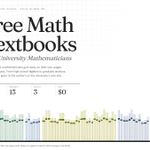
I curated 125 free math textbooks, written by the mathematicians who teach the courses and shared on their own university pages. No sign-up, no paywall, no pirated copies. From high school algebra to graduate analysis. 👇
abakcus.com/book-lists/free-…


Tomohiro Okazaki films matchsticks doing things matchsticks cannot do. abakcus.com/videos/okazaki-m…
Alexander Graham Bell patented the telephone at 29, then spent the next fifty years making kites. His small model flew in an ordinary breeze while the giant version of the same design needed a hurricane to lift it. abakcus.com/articles/bell-te…


There is a belief that goes around: if only students understood what mathematics is good for in real life, they would love it more, take more interest in it, work harder, do better.
It is not true. It is not true in the slightest. And we have a great deal of evidence that it is not.
Does a young person who loves music love it because music will come in useful one day? Every young person knows the benefits of exercise — are they all devoted to sport? Does a teenager play football because sport is good for you, or because it is fun, because they enjoy it, because they lose themselves in it?
We do not love a thing because it is useful.
We love it first for its beauty. Because it makes us happy, because it is good for us, because it takes us out of ourselves.
It will not make you love mathematics. But let me tell you anyway, as well as I can, what mathematics is good for.
Mathematics is good for nothing. Mathematics is good for a great deal. In fact, it is good for everything.
It is good for so many things that it is impossible to say what it is good for. Carpentry is good for a limited number of things — a table, a chair, a cupboard. Mathematics is not like that.
Human beings have found no way other than logic and mathematics to understand this world, this nature, this universe — and to persuade anyone else of what they have understood. The world we find ourselves in when we are born and the world we later build for ourselves are both understood through mathematics. Every structure with an order inside it, every structure with a balance inside it, is understood through mathematics. There is no other way. Where mathematics falls short, we turn to philosophy, to belief, to principles. But where mathematics is enough, whoever turns to something else is called a zealot.
Mathematics is good for being convinced — and it is more than that. Mathematics convinces you that you can convince everyone in their right mind. It carries you past “I have understood that this is true, I am convinced” and makes you say: “I can explain this to any reasonable person, and they will be convinced exactly as I was.”
Mathematics is common reason.
Mathematics claims to be a mental model of the universe we live in. We learn how strong an earthquake a building will stand up to not by shaking the building, but — after a field study or two — at a desk, with a pencil and paper, with calculation. That is, with mathematics. Never mind technology and industry: in trade, in politics, in human relations, in sport, even in art — in short, wherever there can be reasoning and balance — we decide with logic and mathematics.
Art and philosophy, exactly like mathematics, are good not for one thing but for everything. They are good for so much, their use spreads over so wide a field, that you can never point and say: there, that is what it is for. What good has it done you so far to understand art, to know Picasso and Klee, to have read Dostoyevsky, to listen to Brahms? None whatsoever, of course. And all the good in the world — it made you an entirely different person.
In underdeveloped countries like Turkey, if a line of work has no direct and immediate benefit, it is looked down on, belittled, held in contempt. That is exactly why we founded villages for the three things believed to be good for nothing and, in truth, good for everything: mathematics, philosophy, and art.
The one way out of the middle-income trap we are stuck in runs through more mathematics and more science.
In mathematics there is a single truth. Mathematics has defined its own truth, the way a “mate in two” problem defines it. Because of this, there is no brawling in mathematics; there is argument, an exchange of ideas, an effort to persuade. Have you ever seen a mathematician bite an opponent’s leg, or land a flying kick on a rival? Neither have I. And a politician? Yes — that has happened. Two members of parliament who disagreed went for each other; one bit the other’s leg, another delivered a flying kick. You can be sure those politicians did not know mathematics.
Even if mathematics were good for nothing else, it teaches what it means to look for the truth, it shows how the truth is reached, and it makes you feel how hard the truth is to reach.
And when we hold mathematics — which lives in the mind — up against real life, we see how vague the truth is out here, how difficult it is to arrive at, and sometimes that there is no absolute truth at all. So we grow more open to the ideas we disagree with. We understand what it is to persuade, and what it is to listen.
Mathematics is not only calculation. Taught properly, it is a lesson in democracy.
- Ali Nesin
The Möbius strip. Take a strip of paper, twist it once, tape the ends. Now it has one side. Just one. Draw a line and you never lift the pen — you end up back where you started. Tim Hawkinson built a ship out of that shape. No front, no back. Mathematics, turned into a ship that sails into itself. abakcus.com/articles/mobius-…


Marie Curie's lab notebooks are still radioactive. They're kept in lead-lined boxes, and you sign a liability waiver before you're allowed to turn a page. She died in 1934. The notebooks stay dangerous until the year 3500. abakcus.com/articles/marie-c…


John Napier, the guy who invented logarithms, also carved multiplication onto ten ivory rods you could carry in your pocket. No gears, no machine — you line them up, read a row, and add. Europe used them for 200 years. They called them Napier's Bones. abakcus.com/articles/napiers…


James Stewart, the guy who wrote your calculus textbook, got rich off it. Then he spent every single cent on one house — walls made of nothing but curves, door handles cast in the ∫ symbol.
They call it Integral House. Calculus is useless, they said. abakcus.com/articles/integra…


Color, clarity, and geometry. An interactive version of Byrne’s The Elements of Euclid (1847) is now online—and beautiful. c82.net/euclid/


