

English Language Arts High School #alted #writer #amwriting, posts are my own.
Joined June 2015
- Tweets17.7K
- Following3.9K
- Followers2.3K
- Likes23.9K





Aaron DeLay retweeted

Wisdom from my six-year-old: WHY IS IT CALLED A GRAPEFRUIT? THIS IS TOO BIG TO BE A GRAPE AND IT DOESN'T TASTE LIKE FRUIT. I WON'T CALL IT A GRAPEFRUIT IT'S A BIG NASTY ORANGE!
Aaron DeLay retweeted
Walter Koenig lived long. He prospered. Thank you, sir, for the joy that you added to my life and the lives of so many others.

Aaron DeLay retweeted

I face more ideological resistance from students today than I did 10 years ago.
Here's what I mean.
Yesterday, I had a group of 14-year-olds argue with me about capitalization.
Many of them rarely use capital letters correctly in their writing, and they genuinely believe capitalization is unnecessary, or even "dumb."
When I told them that I take points off for ignoring capitalization, they insisted it was unfair.
Ten years ago, I almost never had conversations like this.
Students might have forgotten the rules. They might have been careless. But they rarely argued that the rules themselves didn't matter.
A student in my creative writing class, as we work through showing versus telling, "You weren't lying! This writing thing is hard!"
Welcome to #amwriting, kid. The great thing is we can learn and get better at it with every word we write. We can do the hard things because #growthmindset.
Aaron DeLay retweeted

Il Papa: "È impossibile considerare normale togliere la vita. Ciò che è legale non è necessariamente morale!"
"So che per alcuni di voi, a causa di particolari patologie e di dolori talvolta terribili, l’orizzonte può apparire cupo, incerto, senza via d’uscita. Ma nessuna legge umana deve farvi perdere la certezza della vostra dignità. Al contrario, è proprio in nome di questa dignità inalienabile della persona umana che la tentazione di togliere la vita con il pretesto di una falsa compassione deve essere fermamente respinta. È impossibile considerare normale togliere la vita. Ciò che è legale non è necessariamente morale"

Aaron DeLay retweeted

On a night walk with the dog and bunch of 90s songs came up on my playlist and brought me back to the time when the internet was brand new, novel and amazing. Now it is so surreal now to read news about the dangers of AI on a hand-held device that connects with anybody instantly. What a time it has been.
Aaron DeLay retweeted

This is very hard to read, and you should take some time to do just that.

Sharing a gift link to the New York Times' devastating minute by minute report of the World Trade Center's last 102 minutes, based on the hundreds of last calls and emails people made.
Never forget.
nytimes.com/2002/05/26/nyreg…

Aaron DeLay retweeted
It's important that we remember September 11, but even more important that we pass on those memories to kids so they can learn from them. youtu.be/6qVLDxT4wZY

25 years.
That’s a third of most of our lifetimes.
September 11th, 2001. I was 19 years old, working at my church as a paid intern for children’s ministry. It is a blur now, but I remember sitting in the church conference room, watching the live cable news report on the events. We knew enough.
We now know the truth. And yet.
The truth of September 11th, for some, remains elusive. A horrifying attack by Islamic extremists dedicated to an ugly and evil ideal that has no place in religion, faith, or belief.
We all stopped. The world slowed, and paused for a week and more. We suddenly became aware of the darkness that lurks in man’s heart and that feeding that darkness ends in bloodshed and death.
There are generations today who were not alive on that day. They did not feel the tightness in their chests watching two of the most recognizable buildings on fire. They did not watch in visceral horror as some thought they caught images, later revealed to be true, of people jumping from the roaring fires of hate inching closer and closer to the edge.
They don’t know the first drop of the stomach when the first tower fell.
They don’t know the churning of that stomach as it dropped further when the second tower crumbled.
On live television.
In 2001, we didn’t know about collective horror until that Tuesday.
In 2001, we didn’t know grief, sadness, anger, and fear could feel that deep and that wide until Tuesday. That not much in this world could soothe the open wound in our hearts, nor the electric firestorm in our minds. Tuesday began the lesson and us the unwilling students.
The death toll didn’t just hurt. It didn’t just carve out a piece of our hearts. It was an open gash, scattered across organs, bleeding angrily and sharp stabbing pain screaming in every direction on a stuttering loop that refused to pause.
To those that were alive on September 11th, we understand. We lived it. Some closer than others. All of us staring at the diabolical evil that had taken aim and found its mark.
We promised to never forget the Holocaust, and the victims taken in an evil disregard for humanity, lowering a group to the ill and sick idea of being subhuman. That the Jews would never be forgotten, and that they would be remembered, never to suffer a fate such as that ghastly moment in our shared history.
We made the same promise 25 years ago. That those names in the buildings, in the planes and on the ground…that their murder, their erasure would not be allowed to stand. That we would know them. Remember them. And believe that evil, and the darkness that fosters it can be pushed back, called out, and blinded by the light of the good, of the kind, and of the righteous.
And yet.
September 11th isn’t real for entire generations. It’s on a TV screen, or a computer monitor. The connection is like a video game. A photo they’ve seen in memes, or somewhere on social media. They don’t have the understanding of the wound it carelessly slashed across an entire nation, and world.
Your challenge is to help those that never stood in your shoes understand why this day seems holy. Sacred. That we who have lived it pause, and reflect.
We remember.
We close our eyes and believe in a better day.
We don’t forget that day or the lives that were taken in a murderous act of terrorism.
We don’t forget.
You will see plenty of profile pictures change today. Mine included. But what you must do, what you cannot shirk or dodge is that you must remember. If you weren’t alive or too young to remember. Ask someone who was. Listen. Really listen. There will be the edges of tears or probably even tears as they recount it.
Let them. Lean into it. Don’t treat it as just another story. Don’t treat it as another thing we put on our bumpers full of stickers.
Treat it as the moment where our country, its values, and its soul was tested, torn asunder, and left to pull itself back together.
They didn’t expect us to get back up. They imagined it would rip the country apart, and open the way for something darker, something insidious and something worse.
They were wrong.
Americans, at least those in 2001, were just as rebellious, fierce, and not ready to surrender as they were in 1776. The spirit of us, the one that runs through each of us is one of resilience, and of refusal to bow to whoever wants to rule us by force or by power.
September 11th, 2001 stands as a reminder of who we are, and what we’re about. Or rather, who we should be, and what we should be about. The question you must ask yourself, the question we must ask ourselves is…are we still those people?
That question, dear friends, is one worth spending time on.
Never forget. Always remember.

Tagging you @EdMorrissey if only to see if I hit the notes well. Looking forward to seeing and reading @hotairblog's discussion of tomorrow.
25 years next week.

A Hero That Trusted His Intuition.
The problem wasn’t that Morgan Stanley didn’t believe him.
Rick Rescorla had already been right once. After the 1993 basement bombing of the World Trade Center, the firm’s security chief walked the towers, studied the site, and reached a conclusion most people preferred not to hear: the World Trade Center was still a target. Next time, he said, it would not be a truck. It would be an airplane.
An airplane. In a 1993 report.
Executives listened. Then they looked at the lease.
Morgan Stanley was the largest tenant in the complex—twenty-two floors of the South Tower, thousands of brokers, and a trading infrastructure that could not be packed into boxes and wheeled across the Hudson.
They literally made it a trading center.
The contract with the Port Authority ran until 2006. Walking away from premium Manhattan space of that scale would have meant penalties measured in the hundreds of millions, plus the operational chaos of relocating an entire downtown machine. So the company stayed.
Rescorla adjusted. If they could not leave the building, they would learn to escape it.
He built a protocol and treated it like doctrine. Unannounced drills. No exemptions. Brokers who billed by the minute were pulled off their desks and sent into the stairwells two by two, starting from the top floors, leaving a lane for firefighters coming the other way.
People complained. He did not care. Practice, he believed, was the only thing that would beat panic.
On the morning of September 11, 2001, American Airlines Flight 11 hit the North Tower. From the 44th floor of the South Tower, Rescorla could see the fire. Then the Port Authority came over the speakers: the South Tower was secure. Stay at your desks.
Rescorla grabbed a bullhorn and ignored them.
He started the drill his people already knew by heart. Floor by floor, two by two, down the stairs. He sang as he moved—Cornish songs from childhood, then “God Bless America”—keeping the line moving, refusing to let the stairwell become a stampede. Seventeen minutes later, the second plane struck the South Tower.
By then, most of Morgan Stanley was already on the way out.
Of the 2,687 employees in the building that morning, all but 13 survived.
It was stunning.
Rescorla could have been outside with them. He went back up instead. Colleagues told him to leave. He said he would, as soon as he was sure no one was left behind.
He was last seen around the 10th floor, heading higher.
The South Tower fell at 9:59 a.m. They never found him.
He was one of the 13.
He was a hero in every sense of the word.
Remember Rick Rescorla, he remembered for us.

In one week, it will be 25 years.

She was 27 years old.
Twenty-seven.
An age when you are supposed to be planning what comes next, not making peace with the end.
Her name was Honor Elizabeth Wainio.
Everyone called her Lizz.
And on September 11, 2001, in the final minutes of her life, Lizz did something almost incomprehensible.
She tried to comfort everyone else.
Just two days earlier, she had been in Paris.
She had walked the Champs-Élysées. She had attended a friend’s wedding in Florence. She had stepped inside a church and lit a candle for her grandmother.
She once told her mother that if she ever got to see Paris, she could die happy.
She had no idea how haunting those words would become.
On September 11, Lizz boarded United Airlines Flight 93 in Newark, headed for San Francisco.
She had a career. People who loved her. Plans waiting for her on the other side of that flight.
Then, at 9:28 that morning, everything changed.
The cockpit was overtaken. The aircraft plunged. Passengers were forced toward the rear.
Then the people aboard Flight 93 began making phone calls.
And they learned the truth.
Other aircraft had struck the World Trade Center. Another had struck the Pentagon.
Suddenly these ordinary Americans understood something terrifying.
Nobody was coming to negotiate their way out of this.
Their airplane itself was the weapon.
Someone handed Lizz a phone and told her:
“Call someone you love.”
Think about that sentence.
Not call the police.
Not call your employer.
Not call somebody who can fix this.
Call someone you love.
Because time was disappearing.
Lizz called her stepmother, Esther.
And somehow, with everything happening around her, this 27-year-old woman turned her attention away from herself.
She said:
“This is going to be so much harder for you than it is for me.”
That sentence wrecks me.
Because imagine the love required to stare directly into your own final moments and think first about the people who will have to wake up tomorrow without you.
Lizz wasn’t asking to be comforted.
She was comforting them.
She told Esther:
“I’m gonna be with Grandma.”
The same grandmother for whom she had lit a candle in Europe only days earlier.
There is something almost numinous about that.
Then, aboard Flight 93, ordinary people began doing something extraordinary.
They understood what was happening.
They understood what the hijackers intended.
And they made a decision.
If they could not save themselves, they might still save people they would never meet.
Parents.
Children.
Secretaries.
Police officers.
Tourists.
People walking through Washington who would never know the names of the strangers fighting for them thousands of feet above Pennsylvania.
Flight attendant Sandra Bradshaw told her husband she was preparing boiling water.
Todd Beamer prayed the Lord’s Prayer.
Then came the words America would remember:
“Let’s roll.”
These were not soldiers boarding that airplane that morning.
They were ordinary Americans.
They had luggage.
Appointments.
Families.
Wedding memories.
Vacations.
Coffee cups.
Plans for Wednesday.
And suddenly history placed an impossible burden upon them.
They carried it anyway.
Lizz returned to the phone one final time.
“They’re getting ready to break into the cockpit. I have to go. I love you. Good-bye.”
Read those words slowly.
“I have to go.”
She knew where she was going.
She knew what those passengers were preparing to do.
And still:
“I love you.”
At 10:03 a.m., Flight 93 came down in a field near Shanksville, Pennsylvania.
It never reached Washington.
Forty passengers and crew did not come home.
But countless other Americans did.
That distinction matters.
Today, at the Flight 93 National Memorial, the Tower of Voices contains 40 wind chimes.
Forty individual voices.
Forty human beings.
Not statistics.
Not merely names carved into stone.
Sons.
Daughters.
Mothers.
Fathers.
Husbands.
Wives.
Friends.

Aaron DeLay retweeted

I sat through jury selection last fall and watched exactly this dynamic take shape before the trial even started. I raised a few pointed questions during voir dire and got sent home while people who couldn’t articulate a single coherent thought stayed in the room. I left wondering how anyone gets a fair trial from a process that seems to filter out anyone who thinks.
This list reads like the reason why. A jury needs people who can hold multiple pieces of evidence in their head at once and reason through contradictions. If the room is full of people who either shut down at the first sign of disagreement or can’t parse a written instruction, the verdict was never really in doubt.
Also, the comments here are spot on.

The jury that I recently served on was hung because:
1. Three jurors refused to discuss the evidence with an open mind. At the start of deliberations, they declared: “I will never change my mind on this. You could never convince me otherwise.” They demanded a hung jury verdict in the first hour of deliberations - simply because our initial vote was split. That was a violation of jury instructions.
2. Very few of the jurors were able to take the entire case in context, and parse through all the testimonies and evidence to decipher what we believed was the truth. They wanted to pick 1 testimony as the perfect telling and did not know how to decide given discrepancies between them all.
3. Two jurors kept objecting to points of discussion because of “bias” that they claimed we were invoking into our deliberations. These jurors claimed that some of the evidence submitted during trial could not be considered by the jury because it would “trigger our biases.” They kept interjecting “that’s bias” or “you’re just biased” or “that’s your bias tainting the evidence.” Other jurors responded to this defensively and would back down at the accusations.
4. One juror in particular - totally woke - viewed the entire world as groups (oppressors) and individuals (victims) and so would not accept anything as true, right, or good that could come from the group (they were the accusers), and defaulted to the individual (the accused) as the only possible honest person. She refused to accept any testimony or evidence offered by the group, and became visibly shaken and angry if any other juror questioned the integrity or testimony of the accused - a testimony that was filled with errors and contradictions.
She was also very condescending to all others.
5. Multiple jurors declared it was “impossible to decide the facts of the case” because there was no video evidence. They lamented that we don’t have “surveillance like in the UK” in all public places, and as such it would be impossible to determine the facts of this case. If t hey could not see the events, they would not believe them.
6. Several jurors could not understand the written law, even after being provided explanations and instructions from the court. They simply could not comprehend. Not that they disagreed, but they could not understand.
7. Two jurors kept interrupting the process of discussion saying “you’re wasting our time” and they kept telling us they wanted to vote and go home and put this mess behind us.
Alas…a hung jury was the right outcome. Not because of the case, but because of the deficiency of the jury.
Aaron DeLay retweeted

Here is Rob Long's (@rcbl) beautiful, powerful, and necessary piece about Dolly Parton from 2020.
commentary.org/articles/rob-…

Aaron DeLay retweeted
I used to listen to “Hard Candy Christmas” and “Light of a Clear Blue Morning” during my hardest year. Took my kids to Dollywood when the world went haywire in 2020. Dolly was the one celeb, when my kids asked, I’d say I knew I’d be star struck by. Gonna be a long day for this mascara!
Aaron DeLay retweeted
She could be self-deprecating and spin a yarn with the best that ever were, whether in song or speech. She created more such storytellers we don't even know about yet, not just through her music, but through her Imagination Library. Both such monumental contributions, but built on something so simple and pure, as she'd remind us the best things are. Wow, will she be missed.
Aaron DeLay retweeted
I of course admired Dolly's music and business acumen. But she also lived with such obvious gratitude, fueled by faith. She came from nothing, but with no chip on her shoulder. Quite the opposite. You can look through the window of her one-bedroom childhood home on display at Dollywood while listening to "Coat of Many Colors" and know she was rich long before she was rich and she wanted everyone else to know it, too.
Aaron DeLay retweeted
PSA: I am not a parenting expert but I am pretty sure that the secret to raising happy children is to spend at least one night a week giggling while you threaten to eat each other's belly buttons.
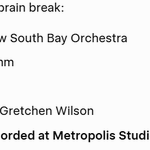
Every day, I spin the wheel. I loaded my Favorites playlist from Spotify into Grok as a database and then spun five songs to choose 2-3 from. Grok removes the ones spun. I use the songs in the second half of the day as brain breaks and also to introduce students to new music. Here's today's spin

Today in class, I had a quote of the day from Bill Watterson. This led to introducing my students to Calvin and Hobbes. It also reminded me of the time @stephanpastis collaborated with THE Bill Watterson. It was a thing of beauty. 2014 seems like so long ago. thecomicscomic.com/2014/06/0…