

Assistant Professor @ Rice University, Former Postdoc @ UC Berkeley EECS 🎓PhD from MIT EECS
Joined September 2018
- Tweets660
- Following577
- Followers1.4K
- Likes3.3K





Pinned Tweet
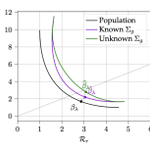
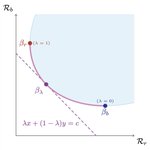
🧵1/ How should we balance accuracy and fairness when one predictive model has to serve multiple demographic groups?
In our new paper with @annieulichney and Mike Jordan, “The Statistical Fairness-Accuracy Frontier”, we turn the fairness-accuracy frontier into a practical, finite-sample tool.
TL;DR: Implementing fairness–accuracy trade-offs from finite data distorts the frontier; we provide minimax-optimal estimators, optimal sampling rules, and confidence bands for the empirical frontier.

Alireza Fallah retweeted

Over 400 academics in 30+ countries signed our open letter calling for immediate changes in AI development and deployment practices to ensure that cybersecurity incidents do not continue to occur, as future incidents will be far more damaging to our critical infrastructure.

Alireza Fallah retweeted

Seventh and last question on AI.
Can AI really help us create as many jobs as it will replace?
The AI industry offers two narratives at once.
The first emphasizes that because of AI’s capabilities, there will be a lot of job loss, and soon. Anthropic’s co-founder and CEO Dario Amodei is particularly vocal on this: cnbc.com/2026/01/27/dario-am…
The second claims that AI will also enable lots of new jobs, so we should not fear joblessness, higher unemployment, and humans being sidelined (see, for example, Jensen Huang, fortune.com/2026/09/01/nvidi… or Marc Andreessen, digitaltoday.co.kr/en/view/4…).
A lot hinges on this question. Sizable job displacement is costly for workers and could destabilize our already ailing democracy. Displacements from robots and cheap Chinese imports in the 1990s and 2000s in the United States, which were smaller than the projected job losses from AI, contributed significantly to declining trust in government and institutions (see my book What Happened to Liberal Democracy, penguinrandomhouse.com/books…, on this). Our democracy may not be able to survive another massive job dislocation.
I am worried about job loss, for two fundamental reasons. AI is currently being developed as an automation technology and in addition, I do not find the arguments about large numbers of jobs being created by AI particularly realistic. (I’ll come back below to how AI could create jobs if it weren’t developed as an automation technology).
Proponents of the job creation side fall back on four general arguments, none of which is convincing in my assessment.
First, new technologies have always created lots of jobs. True, but that does not guarantee that this time will be the same. And more importantly, this account neglects the richer details about different historical episodes. In a nutshell, automation technologies by themselves need not create jobs (though they can, depending on circumstances and how productive they are). They involve capital substituting for tasks previously performed by workers. The way they would create jobs is that the displaced workers would go and take non-automated jobs in other parts of the economy. This can happen, but it also depresses wages (or at the very least the labor share), and consequently, some of the workers may be discouraged from looking for work or may not have the skills that remaining non-automated tasks require. This, in any case, is what task-based models predict. See, for example: aeaweb.org/articles?id=10.12… and onlinelibrary.wiley.com/doi/….
The empirical evidence also casts doubt on plentiful job creation taking place automatically. For example, the introduction of robots led to many fewer jobs in local economies that depended on blue-collar jobs in robot-heavy industries (and this effect was quantitatively large; one more robot per thousand industrial workers reduced the employment population ratio in the local economy by about 2 percentage points and local wages by 0.42% between 1990 and 2007). See journals.uchicago.edu/doi/fu….
Second, AI will increase productivity and higher productivity will lead to more jobs. But this argument suffers from the same weakness as the previous one: higher productivity will trigger job creation only in remaining non-automated tasks (unless there are new tasks, which I discuss below). If wages are depressed and workers don’t have the skills for these non-automated tasks, even with higher productivity, there will not be AI-driven job creation.
Third, AI will need a lot of supporting roles, such as people to train the AI models. This one is the weakest argument of all. If AI is indeed an automation technology, then the whole point is to save labor costs. By the same logic, the labor needed to train AI must be much less than the labor AI ultimately saves. For this reason, I see essentially no chance that there training and maintaining AI will create anywhere near as many jobs as AI replaces.
Fourth, AI is already complementing workers. This argument is based on some evidence that many workers are using AI in their jobs – see, for example, thefp.com/p/ai-jobs-unemploy…. However, the mere fact that workers are using AI in their jobs doesn’t establish that new jobs will be plentiful.
The theory here is again quite clear (see the detailed treatment of this issue here, nber.org/papers/w32872). If AI simply makes workers more productive in the tasks that they used to perform already, it will drive down task prices. If you are the only worker using AI, this will benefit you. If all workers like you start using AI, then the skills on which you depend become commodified. This is what happened, for example, to London black cab drivers, whose highly-valuable knowledge of London streets was commodified when GPS technology enabled minicabs, and then later Uber drivers, to perform the same tasks as effectively. To put it simply, it isn’t enough for AI to make workers more productive at the tasks that they are performing already.
This brings me to how AI could create a lot of jobs. Again, the task-based framework provides the answer here: new technologies create jobs, and in fact well-paying jobs, if they enable new tasks (either in the same industry or in new industries). I have argued elsewhere that AI has this potential as a powerful information technology. See, for example, brookings.edu/articles/build…. But this isn’t currently the direction in which AI is being developed. Hence, on its current trajectory I remain quite concerned about future job losses (and wage declines) from AI.
Of course, things may turn out differently. But if they do, it will be because AI becomes more pro-worker. I see this as unlikely, but it is useful to still consider the scenarios that would bring such an outcome. These are: (1) current AI technologies may become turn out pro-worker than I am anticipating; (2) in the future the industry will automatically and by itself change and focus on pro-worker applications; (3) based on AI-driven science and research, new sectors will be created where there will be need for new workers.
I’m not optimistic about any of these possibilities, and therefore my conclusion is that AI is likely to lead to more jobs being lost than gained. (But I do think there are policies that would encourage pro-worker AI; see, for example, nature.com/articles/d41586-0…).
That being said, I don’t think the job loss will happen very quickly, because as I discussed in an earlier post (third question), the diffusion of AI is relatively slow. But this also implies the productivity gains from AI will be slow in coming.

Alireza Fallah retweeted

LLMs keep getting bigger. Compute budgets, unfortunately, do not.
This fall @Stanford, we (@AnayMehrotra @gvelegkas and Amin Saberi) are teaching MS&E 319: Efficient Generative Language Models.
The course asks a simple question: given a modeling goal and a limited computational budget, how should we choose the training objective, model architecture, and inference algorithm?
We’ll cover some of the main ideas, and occasionally surprising tricks, that make large language models more efficient, including efficient pre-training, mixture-of-experts architectures, attention and KV-cache compression, quantization, speculative decoding, LoRA, RLHF, DPO, and distillation.
And no, “just buy more GPUs” will not be the only answer.
We’ll try to post all the lecture materials and recordings as the course unfolds.
web.stanford.edu/class/msand…
Alireza Fallah retweeted

The cost of producing low quality papers has gone to almost zero, so to maintain the publication system we need to increase the cost of submitting low quality papers. The easiest way to do this is to impose reputational cost for producing low quality work. How to do this?
Alireza Fallah retweeted

Alignment science lead at Anthropic ⬇️

Alireza Fallah retweeted

Jacob is correct here—we really do earnestly believe AI could kill all humans! I personally think it is >10% within the next decade. I believe Anthropic is trying its best, but we do not yet have a plan to solve alignment for superintelligence and are not clearly on track to.

The people building AI earnestly believe that it could kill us all by the end of the decade. This is not a marketing stunt. If anything, many executives and senior researchers will couch their phrasing in the press to sound sensible - but I hear the same people express fear privately. No other human activity poses this level of danger.
Alireza Fallah retweeted

We develop a mechanism design framework for AI alignment and control: arxiv.org/abs/2609.01595
It’s largely conceptual but we offer stylized applications to failure modes (sandbagging, alignment faking), safety practice (scalable oversight, peer prediction), and a way to think about the value of alignment, interpretability, capability, and control.

Alireza Fallah retweeted
A new semester, and the first lecture is in the books for my class on the "Mathematical Foundations of AI Alignment". aaroth.github.io/cis-7000-ai… What does that mean? Good question. We have about a semester in which to figure it out.

Alireza Fallah retweeted
Recordings from FORC 2026 are now available --- check them out, and start preparing your submissions for next year. youtube.com/playlist?list=PL…

Alireza Fallah retweeted

We study a three-layer data market linking privacy-sensitive users, platforms, and a data buyer. We show that platform competition benefits data buyers more than users, and optimal privacy interventions depend on platform cost structures. @afallah94
econometricsociety.org/publi…


Alireza Fallah retweeted

Graduate students & postdocs: the deadline to register for the poster session for the Crossroads of AI & Society Workshop is this Friday, May 29. Travel grants of up to $500 are available. Priority is given to poster presenters. Learn more and register at bit.ly/3RsWAta


Alireza Fallah retweeted
Crossroads of AI & Society Workshop, hosted by Rice University's Global Paris Center in Paris, July 15-16, 2026.
Speaker lineup across CS, operations and economics.
Registration is free. Deadline: June 12
Poster and travel grant applications due: May 29
aaforml.com/2026/

Alireza Fallah retweeted

The deadline for "Highlights Beyond EC" nominations is next week! Please submit work that you think would be socially valuable to put in front of the Econ&CS community. (Link is in replies.)

Alireza Fallah retweeted

Our paper "Statistical Impossibility and Possibility of Aligning LLMs with Human Preferences" was just accepted to the Annals of Statistics.
It's known that reward models can't represent Condorcet cycles. We make this *quantitative*, and prove a possibility result for Nash-based alignment.
📄 arxiv.org/abs/2503.10990
w/ Kaizhao, @DrQiLong , Zhekun, and @JiancongXiao14 1/n

📣 Registration is now open for the Crossroads of AI & Society Workshop, hosted by @RiceUniversity’s Rice Global Paris Center in Paris, July 15–16, 2026! 🇫🇷✨
💡 Exploring the societal impacts of AI through the lenses of incentives, privacy, and fairness.
🎤 Featuring an amazing lineup of speakers across computer science, operations, and economics!
🎓 Poster session for grad students & postdocs!
✈️ Limited travel grants available!
🗓️ Registration is free; register by June 12. Apply for poster/travel support by May 29.
Learn more + register: aaforml.com/2026/
#AI #ML #ResponsibleAI #EconTwitter
@RiceCompSci @RiceEngineering
Alireza Fallah retweeted

Next up, we have Alireza Fallah (@afallah94) from Rice University, speaking about "Preference Alignment from Choices and Response Times".


This week’s workshop, “Agency in Collaborative Learning,” at @SimonsInstitute will feature many talks at the intersection of economics and machine learning.
I’ll also be speaking on Tuesday about this work on preference alignment using choice and response-time data.
The talks will be streamed online, and the schedule with the streaming links is available here: simons.berkeley.edu/workshop…


Alireza Fallah retweeted
Congratulations to Moshe @Vardi, Univ Prof at Rice, named a 2026 NAAI Academy Award laureate by the National Academy of Artificial Intelligence. He was recognized for his seminal contributions to logic-based AI & formal reasoning in intelligent systems. bit.ly/4bv5ahg
