

The American Institute for Boys and Men is a nonpartisan, nonprofit research organization focused on the wellbeing of boys and men.
Joined May 2023
- Tweets1.2K
- Following95
- Followers3.7K
- Likes371






Pinned Tweet
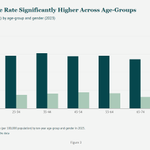
In 2023 alone, 39,045 men took their own lives, roughly one every 13 minutes.
The risk is even greater for working-class men, and since 2010, rates among men aged 25-34 have climbed by 30%.

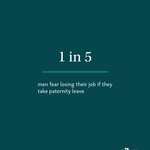
Over time, more non-college men have moved in with their parents. The argument goes that it's a temporary move, yet 1 in 5 non-college men in their early 30s live with their parents, and rates remain high into their 40s.
aibm.org/research/higher-ren…

“Demoralized men are not depressed in the clinical sense. They can still enjoy things, still function when motivated, still complete tasks that interest them. What they lack is a felt sense that effort connects to a future worth reaching.” New piece by Bruno Manno:
aibm.org/commentary/why-cant…

AIBM’s @JonathanDCohen1 endorses the idea of “practical ‘speed bumps’ like deposit limits or time limits as a default setting to create more friction for people engaged in betting” in a recent @politico piece.
politico.com/news/magazine/2…

“Among boys currently playing organized sports, half selected “playing with friends” and half selected “having fun” as favorite parts of the experience.” Boys need more outlets to connect with their peers outside of the digital world. Our new report with @AspenInstSports:
aibm.org/research/whats-goin…

American Institute for Boys and Men retweeted

If you read @JennyVrentas' story in the NYTimes about how DraftKings uses AI to target bettors vulnerable to gambling addiction, you'll want to hear the backstory about the 24-year-old who built the model, and why he ultimately left the company.
Full convo with @JonathanDCohen1: menonline.org/p/inside-draft…
American Institute for Boys and Men retweeted
Does watching pornography depicting choking make people more likely to choke a partner during sex?
Wright, Herbenick & Tokunaga (2023) found a correlation (not causation) for college students. Prior research by Burch & Salmon, Ferguson & Hartley casts doubt.
Now an opportunity for policy research:
England and Wales’ upcoming ban on porn depicting strangulation or suffocation creates an opportunity to evaluate what happens when access is restricted.
Does exposure decline? Do attitudes or sexual practices change?
deseret.com/u-s-world/2026/1…

At age 22, Jayden Butts helped DraftKings save millions with a tool he built as an analyst. Then he learned what it was really doing: targeting the customers most likely to lose. Listen to Jayden’s conversation with AIBM’s @JonathanDCohen1: menonline.org/p/inside-draft…
College success may begin in elementary school. New research by AIBM’s @ChrisLPulliam finds that boys fall behind girls on childhood behavior skills, which is linked to earning a four-year degree.
aibm.org/research/why-gender…

American Institute for Boys and Men retweeted

👷 What challenges are boys and men facing in today's economy, and what can policymakers do about them?
@RichardvReeves of @aibm_org and @swinshi of @AEI join EIG's @m_cosic to examine the relationship between men, work, and economic opportunity.
#AmericanWorkerConference

Research on social media and AI is getting millions in funding, but porn—despite being so widespread—is still met with embarrassment, shame, and taboo, says AIBM's @oso in a recent piece for @MensHealthUK on the role of pornography in men's lives.
menshealth.com/uk/mental-str…

American Institute for Boys and Men retweeted

Back in the 1980s, tribal bingo first emerged through a loophole in state gambling law. Sound familiar?
I'm not sure PMs are the existential threat many tribes seem to think they are, but I understand the concerns, and tribes' legal case against PMs seems like a slam dunk

NEWS: Four Native American tribes are launching new prediction apps with Kalshi — breaking ranks with most of Indian country, where opposition to the prediction industry runs high, over fears that it threatens tribal casinos that brought in $46b last year cnn.com/2026/10/07/business/…

About 69% of sports prediction market volume comes from states without legal sports betting, with Texas and California alone making up 43%, according to @JonathanDCohen1 on the @ProfGMarkets podcast:
podcasts.apple.com/us/podcas…

A year ago, California set a goal of getting 10,000 men into service through the California Men's Service Challenge. Today, they have surpassed that goal.
Volunteering and service are pathways into careers, and men remain underrepresented in the fastest-growing fields, like health, education and care work. Congrats to @CalVolunteers on this achievement!
Sports are a way for children to grow their relationships, make friends, and challenge themselves. But fewer boys are playing. Our new report with @AspenInstSports explores why and how to expand opportunity.
aibm.org/research/whats-goin…
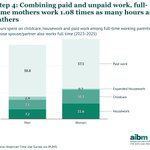
Narrow definitions of housework and childcare often miss other work typically done by fathers, such as home and vehicle maintenance. Including these and paid hours, the mother-to-father work ratio falls from 1.5 to 1.08 among dual full-time couples. aibm.org/research/data-spotl…

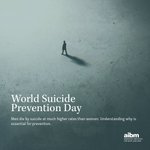
How should states approach suicide prevention? AIBM's Patrick Bourke suggests looking to Maryland: leaders take action, and the message reaches men where they are: in places like ballparks, while gaming, and in union halls.
aibm.org/commentary/we-need-…

Just 34% of men ages 18–24 were enrolled in college in 2024, compared with 43% of women. Workforce Pell could help more men access postsecondary education and career training, including CTE programs that lead directly to good jobs.
aibm.org/policy/how-workforc…

STEM jobs may boast a higher median wage than HEAL jobs, yet HEAL occupations are a major part of the future workforce—and men remain significantly underrepresented in them. Our research examines the gender gap in HEAL fields:
aibm.org/research/the-heal-e…

American Institute for Boys and Men retweeted
FINALLY someone asked for my take on the Sydney Sweeney ad. Great to chat with @edels0n on the state of play in the gambling industry

‘Oil Expert: We Can’t Predict Iran Anymore’
Ed Elson is joined by Matt Smith to break down how Trump’s latest threats are driving oil prices and where he thinks they’re headed next.
Then, Jonathan Cohen returns to discuss the state of the sports betting market and what the regulatory landscape could look like going forward.
Finally, Ed explains why he thinks the AI debate is the dumbest conversation of the year.
🔗's 1/2:
Youtube: youtube.com/@ProfGMarkets
–
