

Our research group @Purdue focuses on the study of atmospheric aerosols through complementary use of chemical imaging and high resolution mass spectrometry!
West Lafayette, Indiana
Joined June 2020
- Tweets197
- Following511
- Followers676
- Likes5.6K




Alexander Laskin Group retweeted

In this demo, Beam was prompted to create a 3D game in p5.js where an astronaut is free falling towards earth and must dodge or hit asteroids. Although Beam is not multimodal, its reinforcement learning (RL) training allows it to generalize across domains like gameplay.
Alexander Laskin Group retweeted

We are introducing Beam today, a 500b open model that excels in coding, agentic, and scientific workloads.
Beam is very token-efficient, pre-trained from scratch, and scaled with the largest RL run documented openly we are aware of.
Getting here was challenging, rewarding, and personal.
I immigrated to the USA during childhood when my parents got jobs as scientists at PNNL, a national lab located in a rural town in Washington state.
Growing up, I developed an interest in physics because it was grounded in simple principles, was foundational, and had long-term impact.
Physics was the foundational science of the 20th century. The first general computer (ENIAC), the transistor, GPS, and much of modern technology had its roots in physics.
In 2016, during my graduate studies, I noticed the birth of a new foundational science - Artificial Intelligence.
AlphaGo, the superintelligent Go agent developed by DeepMind, had come out and made me feel what was about to come.
A neural network, trained to imitate human players, and then improve itself through trial and error, mastered the most intellectually challenging board game in the world.
What surprised me about AlphaGo is how it was conceptually simple, general, and scalable. The system could in principle improve itself forever, it was just a function of compute.
This is when I became “AGI pilled” as they say.
I switched from physics to AI because I thought this would become the root node science of the 21st century, much like physics was the root node science of the 20th century.
I believe that working on foundational science is not enough on its own. Foundational science must also remain open and widely accessible.
We remember Newton for his contributions to physics, but he was also an alchemist.
Alchemy was done in secret, because the artificial production of gold was deemed lucrative but also dangerous with the potential do destroy entire economies. Newton even wrote his alchemy notebooks in cypher.
On the other hand, Principia was published in the Philosophical Transactions of the Royal Society, the knowledge was made widely available, passed down for generations in what we now call Newton’s laws.
The computer, transistor, GPS were possible to build because physics as a science was open. Openness creates an ecosystem of innovation.
The notion of openness, which is a core tenet of scientific discovery, has also become a guiding principle for how foundational technology gets built and distributed.
The internet was built on open protocols. The most widely used operating systems are open. The field of cybersecurity exists because strong encryption protocols were made open in the 1990s.
Open also means safer. The best defence is a distributed one. Commonly used open source software is robust and battle-tested because it is inspected and patched by a community of developers.
AI is different but also similar to software in many ways, though with a much larger surface area of vulnerabilities. It is impossible for a small group of safety researchers working in secrecy to remediate all of the potential issues regardless of their intentions. It is like entrusting a handful of white blood cells to protect your body.
AI is both foundational as a science and a technology, and the safest way that also ensures the benefits of AI are distributed evenly is by making it open.
I’m excited for what developers and scientists build and learn from this model, and for Beam to play a small part in ensuring that AI is made widely accessible, safe, and beneficial to all.

Introducing Beam: a highly efficient agentic open model with 501B total parameters and 23B active.
- Frontier reasoning efficiency
- Advances the Western open frontier on coding & agentic tasks
- Trained end-to-end from scratch
Full weights release this month.
Learn more about Beam: reflection.ai/beam

Alexander Laskin Group retweeted
Introducing Beam: a highly efficient agentic open model with 501B total parameters and 23B active.
- Frontier reasoning efficiency
- Advances the Western open frontier on coding & agentic tasks
- Trained end-to-end from scratch
Full weights release this month.
Learn more about Beam: reflection.ai/beam
Our new paper led by Steven Sharpe shows that wildfire-driven convective systems reshape the stratospheric aerosol composition, with potentially long-lasting impact on stratospheric chemistry. pubs.rsc.org/en/content/arti…
A large collaborative study combining aircraft-based aerosol measurements and chemical imaging of collected particles reports that intense wildfires inject biomass-burning products into the stratosphere. @PurdueChemistry @PurdueEAPS @AnfacPurdue @PurdueISF nature.com/articles/s41561-0…

New paper led by Qiaorong Xie shows organic aerosols from cyclic vs. acyclic monoterpene ozonolysis have strikingly different volatility & viscosity - key insights for modeling atmospheric impacts 🌍☁️
@PurdueChemistry @AnfacPurdue @PurdueISF @PurdueEAPS
pubs.acs.org/doi/full/10.102…

Our new paper, led by Hannah Folarin, investigates photochemical degradation of PET water bottles as a potential source of microplastics in bottled drinking water. @PurdueChemistry @AnfacPurdue @PurdueISF @PurdueEAPS pubs.rsc.org/en/content/arti…
Our new paper, led by Qiaorong Xie, demonstrates successful volatility measurements of ambient organic aerosol sampled by an UAV-mounted portable aethalometer. @PurdueChemistry @AnfacPurdue @PurdueISF @PurdueEAPS pubs.acs.org/doi/10.1021/acs…

Alexander Laskin Group retweeted

We have several staff positions open in our Amy Instrumentation Facility. Check them out: chem.purdue.edu/facultyopeni…
#chemjobs

Alexander Laskin Group retweeted

Congratulations to Emily Halpern (A. Laskin Group) on receiving the 2025 Excellence in Collaborative/Industrial Research (ECIR) Award from Purdue's analytical chemistry division!

Alexander Laskin Group retweeted

Check out this #OpenAccess review by @alaskinlab, Christopher P. West and Anusha P.S. Hettiyadura
"Molecular insights into the composition, sources, and aging of atmospheric brown carbon"
Read the full review here 👇
pubs.rsc.org/en/content/arti…

Excited to start 2025 with the publication of our review on the molecular aspects of atmospheric brown carbon - a project over three years in the making, initiated during the COVID shutdown @PurdueChemistry @AnfacPurdue @PurdueISF @PurdueEAPS pubs.rsc.org/en/content/arti…
Alexander Laskin Group retweeted
We're hiring #ChemJobs! Read more about our Director of Infrastructure position: chem.purdue.edu/facultyopeni…

Alexander Laskin Group retweeted
Please, RT. The analytical faculty @purduechemistry is holding an informational meeting for prospective graduate students on Mon, Oct 28, at 7:30 pm. purdue-edu.zoom.us/j/9808830…

Our review paper, led by Qiaorong Xie, highlights recent high resolution mass spectrometry applications in studies of organic aerosol formation mechanisms, brown carbon chemistry, and volatility. @PurdueChemistry @AnfacPurdue @PurdueISF @PurdueEAPS sciencedirect.com/science/ar…

Our new paper, led by Qiaorong Xie, investigates gas–particle partitioning and viscosity of atmospheric brown carbon. We highlight the importance of evaporation processes in shaping aerosol properties. @PurdueChemistry @AnfacPurdue @PurdueISF @PurdueEAPS pubs.acs.org/doi/full/10.102…

Alexander Laskin Group retweeted

Beautiful first day of the 2024 Fall semester @LifeAtPurdue ! Really looking forward to meeting my classes over next couple of days. Have first-year students, seniors, and graduate students - going to be a fun semester! @PurdueAg @PurdueAgEcon


Our most recent paper, led by Yue Zhou, presents a molecular-level study on the photolytic degradation of organic carbon deposited on snow and provides an estimate of its radiative effects. @PurdueChemistry @AnfacPurdue @PurdueISF @PurdueEAPS agupubs.onlinelibrary.wiley.…

Our new paper led by Kyla Siemens introduces a “fractionation” method for assessment of Atmospheric Brown Carbon compositional and optical information. @PurdueChemistry @AnfacPurdue @PurdueISF @PurdueEAPS pubs.acs.org/doi/full/10.102…

Alexander Laskin Group retweeted

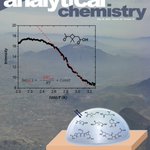
Our frequency-domain hyperspectral SRS microscope extends spectral coverage below 400 cm-1. Additionally, our graphic has been selected for the journal's supplementary cover. Congratulations to Matt Clark and his co-workers. The link: pubs.acs.org/doi/10.1021/acs…
