
Author of To Vaccinate or not to Vaccinate
Joined April 2019
- Tweets152
- Following307
- Followers139
- Likes166





When I need a refrigerator, I don’t read consumer reviews. People aren’t experts. They don’t know anything about refrigerators. If a refrigerator is being sold, it must be reliable and long-lasting.
When I go to a restaurant, I don’t read reviews about it. People aren’t experts. If a restaurant exists, the food there must be tasty and healthy.
When I need to get vaccinated, I don’t read reviews about the vaccine. People aren’t experts. If a vaccine exists, it must be safe and effective.
3
41
In 2014, a mass grave containing the remains of hundreds of children was discovered at a Catholic home for unmarried mothers in Tuam, Ireland.
From the 1930s to the 1970s, the pharmaceutical company Burroughs Wellcome (now part of GlaxoSmithKline) conducted trials of combined vaccines on these children without informing their mothers. These studies only came to light in the 1990s.
Catholic nuns claimed that in 2013 the Commission to Inquire into Child Abuse (CICA), which had examined vaccine trials, instructed them to destroy all documents related to the vaccine experiments carried out on the children.
Some of the deceased children were sent to medical schools for autopsies and research without parental consent.
In 2021, the Irish Catholic Church and the Irish state issued an apology "for running and enabling a network of religious institutions that abused and shamed unmarried mothers and their children for much of the 20th century".
If autism were caused by genetic factors, there would be a sufficiently accurate genetic test for its diagnosis. However, no such test exists. The accuracy of genetic tests does not exceed 10%.
The most accurate laboratory test for autism is based on detecting toxic metals in hair, primarily aluminum. Its accuracy exceeds 80%.
(PMID: 41208011, 36498727, 34994928)
Let's analyze Cremieux's post.
1. Hib (PedvaxHIB lineage; Santosham 1991, PMID: 1903846)
First, this study used the lyophilized PedvaxHIB vaccine, which was never actually licensed; the licensed version was the liquid form. More importantly, however, the placebo used in this study was a mixture of lactose, aluminum hydroxide, and thimerosal.
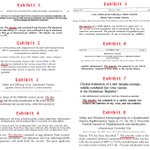
Conclusion: NOT a saline placebo. (Exhibit 1)
2. Rotavirus RV5 (RotaTeq; Vesikari 2006, PMID: 16394299)
This study does not specify what kind of placebo was used. However, this information can be found in another article (PMID: 16621194). The placebo was the same vaccine, but without the virus.
Conclusion: NOT a saline placebo. (Exhibit 2)
3. Rotavirus RV1 (Rotarix; Ruiz-Palacios 2006, PMID: 16394298)
The placebo was the same vaccine, but without the virus.
Conclusion: NOT a saline placebo. (Exhibit 3)
4. Influenza (LAIV; Belshe 1998, PMID: 9580647)
The placebo consisted of egg allantoic fluid containing sucrose, phosphate, and glutamate.
Conclusion: NOT a saline placebo. (Exhibit 4)
5. Varicella (VARIVAX lineage; Weibel 1984, PMID: 6325909)
The placebo was the same vaccine but “contained no viral material.” “The placebo consisted of lyophilized stabilizer containing approximately 45 mg of neomycin per milliliter.”
Conclusion: NOT a saline placebo. (Exhibit 5)
6. Hepatitis B (Szmuness 1980, PMID: 6997738)
Aluminum was used as a placebo in this trial.
Conclusion: NOT a saline placebo. (Exhibit 6)
7. MMR (Ehrenkranz 1975, PMID:764997; Schwarz 1975, PMID:128287)
"The placebo was prepared in a similar manner but without the addition of any virus."
Conclusion: NOT a saline placebo. (Exhibit 7)
8. HPV (Gardasil; Reisinger 2007, PMID:17484215)
In clinical trials of both HPV vaccines (Gardasil and Cervarix), aluminum was used as a placebo. However, one small control group in the Gardasil trials received "saline", rather than aluminum. But this "saline" also contained other components of the vaccine: polysorbate 80, yeast protein, borax and L-histidine.
Conclusion: NOT a saline placebo. (Exhibit 8)
The existence of this small group allows Merck to claim that not only aluminum but also saline was used as a placebo. However, the data on side effects in this group compared with the other groups is hidden. Merck summarized the serious side effects of all control groups together.
9. Polio IPV (Salk lineage)
Medium 199 was used as a placebo in this trial. It is a mixture of salts, amino acids, and dozens of other ingredients.
Conclusion: NOT a saline placebo.
Also, this is not a good example. This trial is known for the Cutter incident. Salk claimed that the entire virus in the vaccine was inactivated, but it was not. The National Foundation for Infantile Paralysis knew about this before the trial. Subsequently, it turned out that 40,000 children developed polio from the vaccine, 200 were paralyzed, and at least 10 died. Other companies also had difficulties with virus inactivation. Since other vaccine manufacturers threatened newspapers with reducing advertising, it was decided to place all the blame on Cutter.v
See PMID 16281468 for details.
10. COVID-19
COVID-19 trials indeed used a saline placebo. However, in order to prove that the vaccine was “safe,” Pfizer had to discard cases such as that of Maddie De Garay, who was severely injured by the vaccine, while the published article claimed she experienced only “functional abdominal pain.” Other participants who were injured after the first dose did not continue to the second dose, so they were “dropped” from the trial and their cases were not analyzed.
Conclusion: No vaccine in the childhood schedule has been tested against an inert saline placebo.
Cremieux is a pharma shill.


How do Paul Offit and other pro-vaccine leaders prove that aluminum in vaccines is safe, even though there are literally no studies on its safety? It's dead simple.
They link to studies that actually prove aluminum toxicity, but state that those studies prove its safety.
How do they get away with this? It's dead simple.
They know their readers do not follow the links or read the studies:
amantonio1.substack.com/p/qu…
In Israel this year, 12 infants have already died from measles. In the US, over the same period, two have died. Considering that the US has 25 times more children than Israel, and that Israel's measles vaccination coverage is roughly the same as in the US—and even higher—the result is that measles mortality in Israel is 150 times higher than in the US. Even when calculated based on reported cases, measles fatality in Israel comes out to about six times higher than in the US.
Israel has never recorded such high fatality before. In 2018, during the last major measles outbreak, when there were three times as many cases as in 2025, there were three deaths recorded, two of them among infants. Even in the 1960s, before vaccination began, measles fatality was lower. Such fatality rate — 12 deaths out of 2,200 registered cases — isn't seen today even in Third World countries. In developed countries, measles fatality like this was observed before World War II, when hunger and child labor were widespread.
In Kazakhstan, where the outbreak has been ongoing for several years with tens of thousands of measles cases, there were two deaths recorded in 2023, one of them in a premature child with comorbidities, and none in 2024–25. In the 2022 outbreak in Somalia, with 17,000 measles cases, not a single death was recorded.
How is this possible? Has medicine in Israel suddenly become so much worse — not just compared to the US and other developed countries, but even to Kazakhstan and Somalia?
Of course, that's impossible. Measles fatality in Israel can't be hundreds of times higher than in Kazakhstan or Somalia. Based on indirect evidence, it seems they're using COVID-era technology. Deaths "with measles" are being recorded as deaths "from measles." Plus, in Israel, measles diagnoses are made based on clinical presentation. That is, a physician can see a rash and, without lab analysis, decide that it's measles.
In January 2025, when the outbreak began in the US, the CDC issued an official recommendation to administer vitamin A for measles. Although numerous studies demonstrate its benefits, there's no such recommendation in Israel. The Ministry of Health and the media, which have been screaming for months about the importance of vaccination, haven't breathed a word about vitamin A.
Even if we assume these children really died from measles and not "with measles" or from other causes, the lack of a corresponding recommendation from the Ministry of Health, given the data on vitamin A's benefits, could have contributed to the deaths. In Kazakhstan and Somalia, by the way, all measles patients are given vitamin A.
Could measles fatality now be higher than in the pre-vaccination era? Theoretically, yes. Vaccinated mothers can't pass on enough antibodies to their children, resulting in a higher proportion of affected infants. The widespread obsession with fever reducing drugs could also contribute to increased fatality. On the other hand, medicine has advanced since then, and if this effect were real, it would have shown up a couple of generations earlier and would be happening everywhere, not just in Israel.
Something else is going on in Israel. The Ministry of Health, which lost the public's trust after the pandemic, is trying to regain it. While in the US, the people responsible for the pandemic failures stepped down from their positions, in Israel, all the same personnel stayed in place. And these people can't come up with anything new except to crank up the old music box again: "Get vaccinated, save lives." The fact that Israeli statistics suddenly look blatantly fabricated and completely detached from reality doesn't faze them. It worked for coronavirus, and it'll work now.
In practice, this kind of data is now eroding trust among physicians. COVID-19 was a new disease with constant mutations and many unknowns. Measles is not. When the fatality rate suddenly looks orders of magnitude worse than in Somalia, physicians who still think critically direct their questions not at measles and not at antivaxxers, but at the Health Ministry.
These physicians are still afraid to speak out publicly. Israel is waiting for its own Robert Kennedy, and until that happens, public trust in the Health Ministry and in the medical system will continue to decline.
1
11
128

The neonatal hepatitis B vaccine should be abolished. When the CDC attempted to demonstrate its safety, they had to assume that vaccinated full-term newborns weighing 7 lbs had the same risk of death as unvaccinated premature newborns weighing 3 lbs (PMID: 15247605)

7
77
Vaccine Against Glioma
Glioma is the most common type of brain tumor. Its prevalence in the United States is roughly comparable to that of cervical cancer. However, while most patients with cervical cancer survive, glioma remains largely untreatable, with more than 90% of patients dying within five years.
Fortunately, there is a vaccine against glioma — chickenpox. Not the chickenpox vaccine, but the disease itself. Several studies have shown that having chickenpox is associated with a significantly lower risk of developing glioma [1-7]. Other studies have found that childhood chickenpox is linked to a reduced risk of Hodgkin’s lymphoma, lymphocytic leukemia, ovarian cancer, Parkinson’s disease, and coronary heart disease [8-12]. And chickenpox contracted after chemotherapy is associated with increased survival [13-14].
Moreover, by catching chickenpox, you contribute to herd immunity. By transmitting the virus to others, you help them also lower their risk of glioma and other serious illnesses. And by being in contact with those who have already had chickenpox, you reduce their likelihood of developing shingles [15].
Catch chickenpox — save lives!
Sources:
[1] PMID: 26972449
[2] PMID: 9098175
[3] PMID: 11447050
[4] PMID: 15870157
[5] PMID: 21717196
[6] PMID: 24127236
[7] PMID: 9098174
[8] PMID: 16104880
[9] PMID: 25599166
[10] PMID: 16406019
[11] PMID: 23575988
[12] PMID: 588853
[13] PMID: 4061437
[14] PMID: 16780845
[15] PMID: 12241874
4
61
In Catalonia, they like to conduct large-scale studies on the effectiveness of pneumococcal vaccines in the elderly. It’s not entirely clear why, since studies repeatedly show that pneumococcal vaccines are immunogenic (i.e., they produce antibodies), and therefore effective. Case closed.
Moreover, in 2015, a Dutch randomized study showed that the effectiveness of Prevnar-13 in the elderly was 45% [1]. This study seemingly settled the debate on pneumococcal vaccine efficacy once and for all.
Of course, the control group in that study received an aluminum solution rather than saline. (Yes, it’s completely ethical to inject a control group with aluminum, a neurotoxin that can’t benefit them; otherwise, the ethics committee would not have approved the study.)
Of course, the study was sponsored by Pfizer, the vaccine manufacturer.
Of course, the study assessed effectiveness only against the vaccine-included pneumococcal strains, not all strains.
So what? These are minor details. The vaccine is effective, period. The CDC, followed by most developed countries, relied on immunogenicity studies and the aforementioned Dutch trial to include it in their vaccination schedules.
Yet Catalan researchers repeatedly spoil this neat picture.
In 2018, they published a large study [2] of over 2 million people aged 50 and older, observed during 2015. They concluded that Prevnar-13 was associated with a 69% increased risk of pneumonia.
In 2020, they published a follow-up [3], tracking the same 2 million people over two years (2015–2016). This time, Prevnar-13 was associated with a 52% higher risk of pneumococcal pneumonia and a 72% higher risk of all-cause pneumonia.
In 2023, they published a third study [4], again observing over 2 million people for two years (2017–2018). Prevnar-13 was associated with a 24% increase in pneumococcal pneumonia and a 38% increase in all-cause pneumonia. The Pneumovax-23 vaccine proved ineffective against pneumococcal pneumonia and was associated with a 14% increase in all-cause pneumonia.
This week, the indefatigable Catalan researchers published a fourth large study [5]. They observed 2.2 million people during 2019 and found that Prevnar-13 was associated with an 83% increase in pneumococcal pneumonia, a 55% increase in all-cause pneumonia, and a 91% increase in pneumonia-related mortality. The Pneumovax-23 vaccine was associated with a 21% increase in pneumococcal infection and a 24% increase in all-cause pneumonia.
Fortunately, serious scientists and medical organizations have ignored Catalan researchers’ publications for seven years, and this study will be overlooked as well. After all, everyone knows that any study suggesting a vaccine is ineffective or unsafe is, by default, flawed and unworthy of attention.
References:
[1] PMID: 25785969
[2] PMID: 29699550
[3] PMID: 31759735
[4] PMID: 36798107
[5] PMID: 41120971
5
64
Sunscreens are highly dangerous for coral reefs and for marine invertebrates, in which they cause genetic damage.
Fortunately, sunscreens are completely safe for humans.
Or rather, there are no studies proving they are dangerous for humans, which means they are completely safe.
Or rather, there are studies showing they are dangerous for humans, and quite a few of them, but those are bad studies, anti-sunscreen ones. Real science doesn’t acknowledge them.
As the great expert said: “If I could offer you only one tip for the future, sunscreen would be it.”

Today or tomorrow, Hamas will release the remaining Israeli hostages. After two years of starvation, they’ll be fed very carefully.
Fortunately, vaccines are much safer than food, and they’ll be given COVID and flu shots as soon as they return.
Source: globes.co.il/news/article.as…

1
6
138
Lately, things haven’t been going well for vaccine supporters. Vaccination rates keep falling, the U.S. Department of Health is led by anti-vaxxers, and the acting CDC chief is urging pharma companies to bring back separate measles, mumps, and rubella shots instead of the combined MMR — the very idea that got Andrew Wakefield expelled from the medical community.
Still, vaccine advocates sometimes find reasons to celebrate. This week, a new study came out (PMID: 41021257) supposedly confirming the effectiveness of the HPV vaccine. The study is small (about 2,300 participants), but something is better than nothing.
According to the authors, HPV prevalence dropped by 94% among the vaccinated and by 75% among the unvaccinated, thanks to herd immunity.
As usual with these kinds of studies, they only calculated effectiveness against the vaccine-targeted strains. Even though they sequenced all virus types and could have easily determined protection against all strains, they didn’t. Why? Because strain replacement occurs once vaccination begins — vaccine strains get replaced by non-vaccine ones. Moreover, some strains previously considered low-risk have become highly oncogenic. In other words, vaccination doesn’t reduce the overall HPV infection rate; it just swaps one set of strains for another (more details here: amantonio1.substack.com/p/qu…). That’s why the original assumption — that protection against just two HPV types (16 and 18) would be enough — turned out wrong. Work is already underway on vaccines that will target 14 or more HPV strains.
So this study doesn’t prove the vaccine prevents cervical cancer — its main purpose — or even HPV infection itself. It merely shows that vaccine strains are being replaced.
***
Last year, HPV vaccine advocates had a bigger reason for excitement. In January 2024, a high-profile Scottish study (PMID: 38247547) claimed that girls vaccinated at ages 12–13 never developed cervical cancer. The global media hailed it as a triumph.
But a year and a half later, Australian researchers reviewed (PMID: 40478649) the raw data and found serious inconsistencies.
First, the claim that “no invasive cancers were recorded among those vaccinated at 12–13” turned out false. There was one such case that wasn’t reported.
Second, most women in the “zero cases” group were under 25 at the end of follow-up — before the age when cervical screening begins in Scotland. In other words, they hadn’t yet reached screening age. Even before vaccination, cervical cancer in women under 25 was practically nonexistent.
Third, the authors included more women in their dataset than actually live in Scotland in the corresponding age groups. That artificially lowered the cancer rate and inflated the apparent benefit of the vaccine.
Fourth, vaccinated women were far more likely to undergo screening (Pap smears) than unvaccinated ones. Since screening itself effectively detects and removes precancerous lesions, screened women naturally have fewer cancers. Yet the Scottish study credited this effect to the vaccine.
In short, the widely cited Scottish study turned out to be false. The data were effectively falsified. It should be retracted — but neither the authors nor the journal will do that, and the media won’t correct their stories. You’ll only learn the truth about studies like this from anti-vaccine accounts.
3
34
7 Reasons to Get a Flu Shot
1. You want to increase your risk of getting the flu by 27%. (DOI: 10.1101/2025.01.30.25321421)
2. You want to increase your risk of non-influenza viral infections by 4.4 times. (PMID: 22423139)
3. You want to triple your child’s risk of hospitalization from influenza. (PMID: 22525386)
4. You want to help influenza viruses mutate, making them stronger and more virulent. (PMID: 18773534)
5. You want to boost the economy and support the billion-dollar, high-profit flu vaccine industry.
6. You want to increase your risk of miscarriage by 7.7 times. (PMID: 28917295)
7. You think you might be deficient in formaldehyde, barium, dog kidney cells, porcine gelatin, animal blood, polysorbate 80, gentamicin, and mercury. (vaccine excipient list)


3
81
This week, a large-scale study was published claiming that aluminum in vaccines is absolutely safe and has no link whatsoever to the development of chronic illnesses.
What’s more, aluminum was even associated with a lower risk of autism! According to the study, every additional milligram of aluminum administered to a child before the age of two reduced their risk of autism by 5%, and the risk of neurological disorders by 7%.
Like most other major studies that either found no link between vaccines and autism, or even found that vaccines protect against autism, this one also came out of Denmark. It’s unclear what exactly is rotten in the state of Denmark, but it seems to be the only country in the world capable of producing large-scale research on the link between vaccines and autism.
And as luck would have it, all of these Danish studies seem to originate from the Statens Serum Institut — an organization that, among other things, manufactures vaccines. Cynics might call this a conflict of interest, but of course, it’s not. After all, it’s only logical that vaccine experts work at institutions that produce vaccines. Who else should be publishing research on their safety and efficacy?
But why is it that all of the large-scale studies on vaccines and autism are Danish? Sure, there have been studies from other countries — mostly the U.S. and the UK — but none of them come close to the Danish studies in terms of sample size. How did it happen that the bulk of data on one of the most important issues in modern pediatrics comes from a country with fewer than 6 million people? Over the past few decades, the prevalence of autism has skyrocketed around the world. Is Denmark really the only country concerned about this?
Why hasn’t Israel, for instance, conducted a large-scale study proving to antivaxxers that there’s no link between vaccination and autism? Israel’s HMOs have fully computerized medical databases, which made it the first country in the world to demonstrate to the global community that COVID vaccines were not only effective but also safe. Conducting a large cohort study to disprove the vaccine-autism link in Israel would be a piece of cake. The results would be widely covered in international media, and the researchers would become globally renowned. So why, in the past 25 years, despite a sharp rise in autism rates, hasn’t a single Israeli researcher taken up the task?
Well, maybe one day, science historians will solve this mystery. In the meantime, let’s get back to the new Danish study.
Cynics point out that this study didn’t include a control group of children who received no aluminum. And indeed, that’s true. The authors mention that 1.2% of children didn’t receive aluminum, but they chose to exclude them from the analysis, arguing that these children interact with the healthcare system differently.
The absence of control groups in vaccine-autism studies is standard practice. All the other studies that debunked the vaccine-autism link also lacked unvaccinated control groups. And no one seemed to mind then — and we shouldn’t now. That’s just how science works.
By the way, back in January 2025, another large-scale study was published comparing vaccinated and completely unvaccinated children — and found that the vaccinated had significantly higher rates of autism and other neurological conditions. Fortunately, the media ignored that study, since it had a serious flaw: the authors didn’t account for the fact that unvaccinated children visit doctors less often, meaning their diagnoses are less likely to be recorded.
The new Danish study took that flaw into account. The authors adjusted the disease rates based on the number of doctor visits, and the results showed that aluminum not only has no effect on the risk of chronic illness — it may actually protect against autism. The media quickly recognized that this study was far more rigorous than the one from January and widely reported on it.
Now we can only hope that the FDA will force manufacturers to increase the amount of aluminum in vaccines — to finally defeat the autism epidemic once and for all.
1
2
80
This is the official map of Lyme disease (tick-borne borreliosis) distribution in the U.S. from 1995 to 2023, published on the CDC website.
It just so happens that the epicenter of Lyme disease is Plum Island (marked with an arrow), which houses a laboratory where ticks capable of transmitting borreliosis as a biological weapon were once developed.
It also just so happens that the first cases of Lyme disease were recorded in 1975 in the town of Old Lyme — located directly across from Plum Island.
Since Lyme disease is transmitted by ticks and not through the air, its spread has been slow but steady.
Thus, the very existence and spread of Lyme disease serve as yet another reminder that — just like with COVID — the emergence of a new disease in the exact place where it was being researched is purely coincidental.
Truly, Science, your coincidences work in mysterious ways!

Questioning @DrPaulOffit
Part 4. Dravet syndrome
Are vaccines merely a trigger or the actual cause of Dravet syndrome?
amantonio.substack.com/p/que…
2
51
A child in Belarus has been diagnosed with measles-related panencephalitis. According to the mother, this is the first officially recorded case of the disease in the country.
Two key factors appear to have contributed:
1. The child contracted measles at 8.5 months old.
In the past, infants rarely developed measles at such a young age because they were still protected by maternal antibodies. But with the advent of widespread vaccination, women who were vaccinated in childhood began passing on significantly fewer antibodies to their babies. As a result, measles started affecting younger infants. Contracting measles in infancy is considered a risk factor for developing panencephalitis.
2. The child’s fever was reduced during the measles infection.
Although children have contracted measles for thousands of years, panencephalitis was only first described in the 1930s, after the introduction of antipyretic (fever-reducing)
medications. These drugs may interfere with the immune system’s ability to fully eliminate the virus, allowing it to persist in the body and later re-emerge months or even years later as measles-related panencephalitis.
I believe that in nearly all cases of panencephalitis, antipyretics were used during the initial measles infection.
1
49