

Research in genomics, evolution, biodiversity, ancient DNA. Group leader at @biouea, previously postdoc at @TheCrick and PhD at @sangerinstitute
Joined April 2022
- Tweets80
- Following690
- Followers988
- Likes569

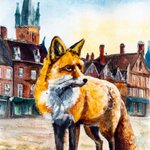

A 4-year postdoc position in population genomics is available in my group at the University of East Anglia, to work on a project sequencing a thousand fox genomes across rural and urban environments in the UK.
vacancies.uea.ac.uk/vacancie…
In this comment piece with @jfy133 and @twarinner, we highlight the mounting problems with data archiving and metadata reporting in ancient DNA research. The field cannot afford to keep neglecting this issue.
nature.com/articles/d41586-0…
Don't miss this great webinar on Friday next week, celebrating the 40th birthday of the first ancient DNA paper. A great line-up of speakers, sign up here: animal-adna.org/events/2024/…

On November 15th we'll celebrate the 40th aniversary of the first aDNA paper. Join us and our amazing speakers on the #QaggaQonference at 3pm GMT/ 4pm GMT+1 / 10am EST. Save the date!

A position is available in my research group at UEA for a wet-lab research assistant, for 3 years, to work on data generation for exciting new genomics projects in urban and rural foxes and other mammals.
vacancies.uea.ac.uk/vacancie…
This is now published in Scientific Data: nature.com/articles/s41597-0…. The survey is expanded to 42 studies, and the paper now includes a Box 1: "Step-by-step best practices for archiving ancient genomics data in the European Nucleotide Archive (ENA)." I hope this will prove useful!

In this preprint, I survey data archiving in ancient genomics—I find widespread shortcomings, which hinder reproducibility and data reuse. I argue that we need to step up our collective archiving game in #aDNA genomics, with six practical recommendations:
biorxiv.org/content/10.1101/…

Important findings on artifacts in PSMC curves arising from time segmentation/windowing choices, and advice on how to avoid these.

Avoidable false PSMC population size peaks occur across numerous studies biorxiv.org/cgi/content/shor… #biorxiv_evobio
Tomorrow Friday 31st of May, more great animal ancient genomics talks - join the fun 👇
10 days left for the next instalment of the #AaRCTikTalks featuring Damla Kaptan and @undeaddandy. Remember that you have to register through our webpage: animal-adna-research-communi…

Join us this Friday for the first set of talks in the monthly @AaRC_Community animal ancient genomics seminar series - sign-up details below
Here we have the announcement for the first #AaRCTikTalks! We'll have @StevenFiddaman and @_MarcoDeMartino presenting their research the 26th of April.
Registration: docs.google.com/forms/d/e/1F…

ALT Poster presenting the AaRC Tik Talks. Photos fo Steven Fiddaman and Marco de Martino and the date and hour of the seminar: 26th of April at 2pm London time.
Anders Bergström retweeted

"Disease Evolution in the Human Past" - Join us March 21st 2024 @TheCrick for a half-day symposium in the Medicine at the Crick series.
🦠 Johannes Krause | “The genetic history and origin of the Black Death” @MPI_EVA_Leipzig
🦟 Lucy van Dorp | “Tracking zoonotic pathogens in space and time" @LucyvanDorp
📈 Iain Mathieson | “Natural selection in Britain from the Stone Age to the present day” @mathiesoniain
🌍 Carina Schlebusch | “Past Lives, Present Insights: Biomolecular Stories from Ancient Africa” @cschlebu
👥 Matthew Hurles | “Population demography and the genetic architecture of developmental disorders" @mehurles
Everyone in the clinical and scientific community is welcome! Register 👉 crick.ac.uk/whats-on/medicin…

Anders Bergström retweeted

Don't miss the chance to present your work at @EMPSEB29
Submit your abstract now and join us on the forefront of Ecology and Evolutionary Biology!
Registration is a click away: empseb29.pages.ista.ac.at/re…
#EMPSEB29 #conference
The ancIBD tool is becoming the killer app for Identity by Descent (IBD) detection in ancient genomes—check out the paper and Harald's thread below. I also wrote a short News & Views piece on the paper: rdcu.be/dt42w

doi.org/10.1038/s41588-023-0… ancIBD is published now! 🧬💀
Our tool brings accurate IBD detection to aDNA. We show that this unlocks the detection of up to sixth-degree relatives in aDNA, and reveals new links between ancient cultures. A short summary ⬇️ (1/5)

Anders Bergström retweeted

📢📢#Niceseq is finally back! Don't miss out on its new edition. Amazing line-up of speakers: @andersbrgstrm, @TatianaGiraud6, @DelphineSicard, and @liti_nice, who will speak about "Domestication across the tree of life"
🗓️December 6th
🕘9:30-12:30
📍Le Galet, Pasteur 2 - Nice
Applications open for a @ARIES_DTP PhD studentship with me at @biouea to work on the evolutionary history of the red fox: the land mammal with the widest natural distribution, and one of few that is thriving even in the face of anthropogenic pressures: aries-dtp.ac.uk/studentships…
Applications are open for a @NRPBIODTP PhD studentship with me at @biouea to work on the genomics of the oldest and wildest evolutionary experiment in human history: domestic dogs and their biological adaptations to life by our side.
biodtp.norwichresearchpark.a…
I'm very honoured to be a recipient of the Philip Leverhulme Prize in Biological Sciences. A very encouraging recognition of past work, and fantastic support for future research!
leverhulme.ac.uk/news/philip…


Great accessible write-up for younger audiences of our wolf paper from last year. From @SJforKids, with myself and Dave Stanton @Nibbledtodeath

Recently, an 18,000 year old preserved canine puppy, named Dogor, was found. Scientists at @TheCrick wanted to learn more about wolf domestication and the evolution of modern-day dogs, with the help of Dogor! Learn more in our new adapted article: sciencejournalforkids.org/ar…


Anders Bergström retweeted

Need help with my next lecture. Here is a list of animals. Tell us which most impacted human history, and why
1-dog
2-cat
3-pig
4-sheep/goat
5-cattle/zebu/buffalo
6-chicken/turkey
7-flea/lice
8-lama/guanaco
9-horse/donkey/mule
10-camel/dromedary
11-rat
12-mosquitoe
Please RT
Anders Bergström retweeted

We are looking forward to welcoming @andersbrgstrm to Vienna next week as part of the #HEASSeminar series in Ancient Genomics. Registration for online and in-person participation is on our website:
heas.at/events/heas-seminar-…
@PinhasiL

Plague in Britain 4000 years ago: the Yersinia pestis strains that caused plague in Bronze Age continental Europe and Asia had also spread across the English Channel. Great work led by @TheCrick PhD student @Pooja_Swali
You’re unable to view this Post because this account owner limits who can view their Posts. Learn more