

Head in Space, Feet on Ground, Butt in between. Welcomes you to @ARDNnews @IAAsmallsat @SpaceAppsStgt @SpaceUpStgt @osm_to #DH0RN @andreashornig@mastodon.social
Solar System
Joined January 2009
- Tweets4.1K
- Following2.4K
- Followers880
- Likes1.9K






UPDATE: #HYPSO1 will re-enter in 15 days, according to #esa's #DISCOSweb data. Date is remaining to be the 2nd of November. Let's see what the next update will say...
#ChasingHYPSO1 @[email protected]
data source @esa: discosweb.esoc.esa.int/objec…

Andreas Hornig retweeted

Short time-lapse of part of this morning’s first pass of ICEYE-X36 (59103) and COSMOS 2612 (68762) over South America under partly cloudy skies.


Andreas Hornig retweeted

You want to find and see #HYPSO1 on your night sky? You can easily do that with @HeavensAboveCom (hosted by @DLR_de /GSOC).
For the city of #Jena, it looks like this for early morning October 17.
more: mastodon.social/@chasinghyps… #ChasingHYPSO1

Hi @shell_jim! Given your expertise in SDA and orbital debris, you might find #ChasingHYPSO1 interesting: a community effort to observe #HYPSO1 (51053) during its final weeks in orbit. We'd love your perspective—or participation!
#ChasingHYPSO1
xitter.cf/ARDNnews/status/210781…

Kick-starting #ChasingHYPSO1 via SatObs.org's SeeSat-L mailing list.
If you have optical equipment that can detect #CubeSats in orbit, please join!
@ntnu's #hypso1 will re-enter in November, detecting it is its farewell tour.
Read more here satobs.org/seesat/Oct-2026/0…


Andreas Hornig retweeted

Nice to see the Earth-Moon cycler orbits our lab recently discovered featured in @GarretsonPeter's overview of the cislunar space economy. Lots of interesting possibilities for transportation, surveillance, and infrastructure.

This is a fantastic video explaining orbital dynamics and the resulting economics, and security considerations of cislunar space. Well worth the 8.5 minutes to watch. youtu.be/kdpOdSMzXTA?is=By6z…

Andreas Hornig retweeted

A sharper view of our changing planet is coming. 🛰️🌎
Meet LandIS, the Landsat Instrument Suite that will fly aboard Landsat 10, the next satellite in the Landsat series.
With 26 spectral bands spanning visible light to thermal infrared, LandIS will collect more than twice as many bands as Landsat 8 and Landsat 9. These additional bands will help users better distinguish features on Earth’s surface and monitor water quality, agriculture, vegetation health, snow and ice, soil conditions, and other environmental parameters.
LandIS will also capture finer spatial detail, with resolutions of 10 to 20 meters for visible, near-infrared, and shortwave-infrared observations. That means a clearer view of smaller features, including streams, streamside habitats, woodlots, and individual agricultural fields.
Together, more spectral bands and finer spatial resolution will help users detect, distinguish, and track environmental change with greater detail and precision.
Expected to begin operations in the early 2030s, LandIS will also continue Landsat’s coverage of sunlit land and near-shore waters, along with select nighttime observations. It will also uphold the program’s high standards for data accuracy, extending a record of Earth observations that spans more than 54 years.
Learn more about Landsat 10 and its planned capabilities: ow.ly/X4gK50ZW4EE
📷: A visual comparison of spatial resolution showing the 30-meter pixels of Landsat 8 and 9 (left) alongside the finer, more detailed 10-meter pixels planned for Landsat 10 (right). Credit: NASA

ALT Comparison of Landsat 8/9 and Landsat 10 satellite images showing pixel resolution differences with 30m and 10m pixel grids over farmland.
UPDATE: #HYPSO1 will re-enter in 19 days, according to @esa's #DISCOSweb data. Date is moving earlier again. Let's see if it is entering October again...
#ChasingHYPSO1 @NTNU @Orbit_NTNU #cubesat
source:
discosweb.esoc.esa.int/objec…
More: mastodon.social/@andreashorn…

For #ChasingHYPSO1 I checked the start of the mission. #HYPSO1 was launched w/ @SpaceX #Transporter3 on 2022-01-13. It was claimed/identified 26d later, after a lot of @planet @iceye_global @SpireGlobal @KeplerComms @FOSSASys @capellaspace @umbraspace sats were identified already


#HYPSO1 will re-enter in 23 days, according to @esa's #DISCOSweb data. I had some old data dumps and then checked regularly. I made a quick @plotlygraphs. So 23 days remaining for #ChasingHYPSO1. I will make updates as #SpaceWeather progresses...
@ESAcleanspace @esaspaceweather

Andreas Hornig retweeted

SpaceX Starlink Presentation IAC2026 6 Oct 2026 youtu.be/U6gEGlq_eeM?is=kEtS… via @YouTube

Andreas Hornig retweeted

Michael Nicolls just just laid out SpaceX's ambition for connectivity that extends beyond Earth
“We will connect the Moon with a constellation, and then we will connect Mars”
"Our goal, again, is to extend consciousness beyond this planet, and we want to go and connect the Moon and Mars
But before that on Starlink, we're creating the technologies to connect the Moon with very high-bandwidth connectivity systems, very high-bandwidth lasers
And we will connect the Moon with a constellation, and then we will connect Mars, and we will form an interplanetary mesh of connectivity that is fundamentally driven by the same technologies we're working on with Starlink
To make this happen, SpaceX needs to keep improving safety in LEO so everyone can operate and scale safely”
Build safe, coordinated infrastructure in LEO first then extend connectivity and human presence to the Moon, Mars, and beyond
Andreas Hornig retweeted
Kick-starting #ChasingHYPSO1 via SatObs.org's SeeSat-L mailing list.
If you have optical equipment that can detect #CubeSats in orbit, please join!
@ntnu's #hypso1 will re-enter in November, detecting it is its farewell tour.
Read more here satobs.org/seesat/Oct-2026/0…
Andreas Hornig retweeted

Between 2 and 11 Oct 2026, test your stellar navigation skills & help fight light pollution at bit.ly/3RY24fz 📲
Find this month’s constellations, compare what you see to our star charts, and submit your observation. Your data helps scientists track light pollution! 🌍


Interested in #FramSat1 baseband recording, @Orbit_NTNU? I'm currently hunting @tu_wien's #sts1 & your #ntnu #hypso1 before it'll fall back to Earth, "soon". Your FS1 is "bycatch". Shall I put more into this drive drive.google.com/drive/folde… ? Reply here or preferred my mastodon...


Andreas Hornig retweeted

Quick Update on SJ-31
SJ-31 (SSC.69570) launched 16 Jun from Xichang with a stated mission of space environment detection. Its orbit is Molniya-like, but the high point sits near the equator ~4,100 km above the GEO belt and slowly walks past every GEO longitude. It looks down on the belt without entering it. Where it crosses the equator it stays more than 3,100 km outside equatorial GEO belt with a 2.82 km/s speed difference, so there is no close-approach case.
At 28 Sep 12:00 UTC, its apogee was 39,918 km, with 63.5° inclination, 0.69 eccentricity, and 172.0° argument of perigee. The orbit has not changed in the past two weeks. Visualization video includes SJ-31 in inertial frame and example GEO US assets in fixed frame.
Andreas Hornig retweeted
What if a spacecraft could cycle between Earth and Moon orbits, performing multiple circuits of each, naturally and indefinitely, with zero propulsion?
We’ve discovered a new class of stable, prograde, low-energy cycler orbits that do just that.
Why these orbits matter:
Ballistic → fuel-free
Stable → long-term ready
Near-chaotic → agile with low ΔV
Low-energy → access to Earth/Moon, Lagrange points, Sun–Earth L1/L2, even heliocentric space
At the AAS/AIAA Astrodynamics Specialist Conference in Boston next week, I’ll present on a new family of ballistic Earth-Moon cycler orbits that are stable, prograde, and mission agile—unlike any cyclers in the current literature.
The example below is shown in both the Earth-Moon rotating frame and inertial frame.
Conference Paper: ross.aoe.vt.edu/papers/ross-…
Andreas Hornig retweeted

🚀 Our SCOT80 Long Range: Integrated and successfully tested on GPS satellite “Hedi Lamarr”, it has been orbiting ~20,000 km above Earth since April 20, 2026. #TeamTESAT #SCOT80 #OpticalCommunication Picture©️@LockheedMartin

Andreas Hornig retweeted
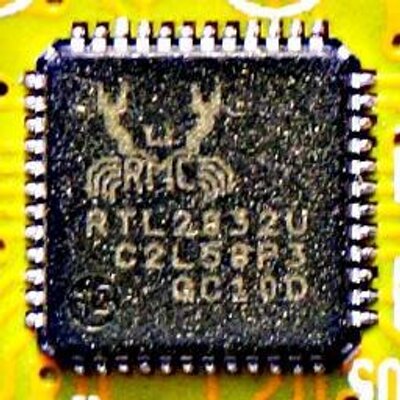
KrakenSDR Tested as a GNSS Jammer and Spoofer Localizer rtl-sdr.com/krakensdr-tested…

Andreas Hornig retweeted

We made history. On just our second flight, we became the first commercial space company from Europe to deliver satellites into orbit. Mission 'Onward and Upward' successfully lifted off and deployed payloads into orbit. A new chapter for European spaceflight. More: isaraerospace.com/press/hist…
