

software engineer, technology hobbyist • (re)posts about good software, infra, web, iOS, maps
Brooklyn, NY
Joined May 2018
- Tweets521
- Following517
- Followers154
- Likes9.6K




andrew roberts retweeted

It’s incredible how far you can push the UI with Fable 5.1.
This is an interactive children's book that reads the story aloud, uses layered 3D illustrations, and animates every word.
Fable created the concept and story from scratch based on a prompt. You can reuse the result as a template for more children's books, then have Fable voice, animate, and illustrate each one.


andrew roberts retweeted

I created a new generative typeface that simulates typography being woven together. You can play with it as if it’s real strands of thread 🧵🪡
I initially designed this for an exhibition all about textiles but excited to see what else I can do with this.
andrew roberts retweeted

iterating on a fun little isometric paper airplane loading hero for a new feature I'm very excited about. Thinking about how to mitigate the ink trap problem while keeping the simplicity of three shapes
andrew roberts retweeted

This is a personal project but If you're curious or want to try, get on the waitlist: yafafits.com ✨
andrew roberts retweeted

Imagine every pixel on your screen, streamed live directly from a model. No HTML, no layout engine, no code. Just exactly what you want to see.
@eddiejiao_obj, @drewocarr and I built a prototype to see how this could actually work, and set out to make it real. We're calling it Flipbook. (1/5)
andrew roberts retweeted

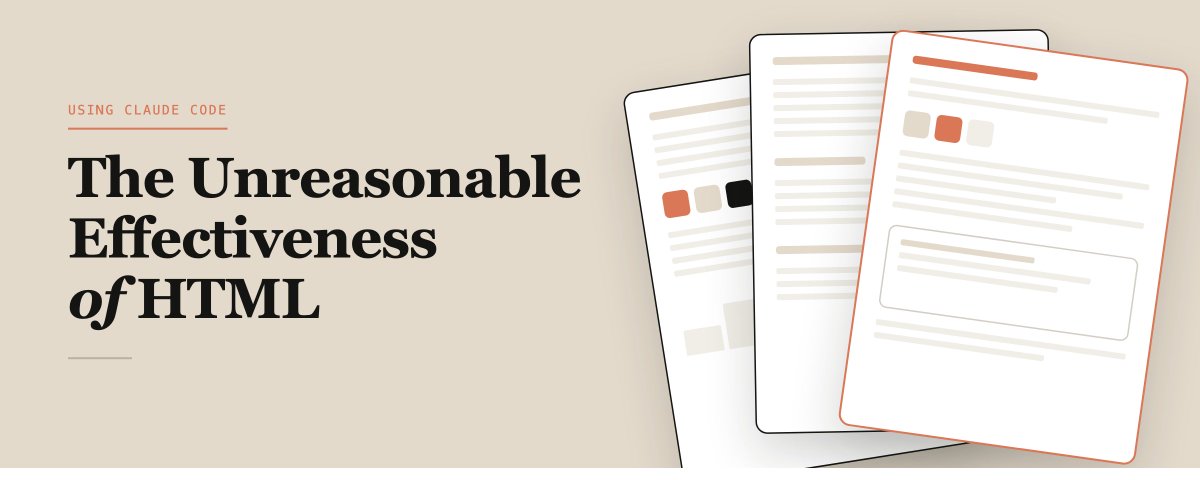
This works really well btw, at the end of your query ask your LLM to "structure your response as HTML", then view the generated file in your browser. I've also had some success asking the LLM to present its output as slideshows, etc.
More generally, imo audio is the human-preferred input to AIs but vision (images/animations/video) is the preferred output from them. Around a ~third of our brains are a massively parallel processor dedicated to vision, it is the 10-lane superhighway of information into brain. As AI improves, I think we'll see a progression that takes advantage:
1) raw text (hard/effortful to read)
2) markdown (bold, italic, headings, tables, a bit easier on the eyes) <-- current default
3) HTML (still procedural with underlying code, but a lot more flexibility on the graphics, layout, even interactivity) <-- early but forming new good default
...4,5,6,...
n) interactive neural videos/simulations
Imo the extrapolation (though the technology doesn't exist just yet) ends in some kind of interactive videos generated directly by a diffusion neural net. Many open questions as to how exact/procedural "Software 1.0" artifacts (e.g. interactive simulations) may be woven together with neural artifacts (diffusion grids), but generally something in the direction of the recently viral teapawt.org/zan2434/status/2046982…
There are also improvements necessary and pending at the input. Audio nor text nor video alone are not enough, e.g. I feel a need to point/gesture to things on the screen, similar to all the things you would do with a person physically next to you and your computer screen.
TLDR The input/output mind meld between humans and AIs is ongoing and there is a lot of work to do and significant progress to be made, way before jumping all the way into neuralink-esque BCIs and all that. For what's worth exploring at the current stage, hot tip try ask for HTML.




andrew roberts retweeted
I predicted that 2026 would be the year of the shader without knowing that HTML in Canvas was coming.
This is going to be huge for motion graphics and programatic video

andrew roberts retweeted

context-aware css card glow/shine effect 👨🍳
the trick: duplicate and scale the icon. translate it on pointermove. apply feGaussianBlur 🤙
check it 👇
andrew roberts retweeted

Huge React Aria release!
🏝️ Expandable table rows
📉 90% fewer dependencies
🔥 Sub-path imports – improved tree shaking, faster builds, and easier discoverability
🪟 Virtualizer window scrolling
➡️ GridList horizontal orientation
💾 NumberField and RangeCalendar commit behavior
andrew roberts retweeted

Rendering HTML into a canvas… then projecting it on to a @threejs scene!
Live link: cullenwebber.github.io/three…
Source code: github.com/cullenwebber/thre…
#threejs #webdev #shaders
andrew roberts retweeted

Added interaction support to the HTMLTexture (html-in-canvas) example.
github.com/mrdoob/three.js/p…


andrew roberts retweeted

My dear front-end developers (and anyone who’s interested in the future of interfaces):
I have crawled through depths of hell to bring you, for the foreseeable years, one of the more important foundational pieces of UI engineering (if not in implementation then certainly at least in concept):
Fast, accurate and comprehensive userland text measurement algorithm in pure TypeScript, usable for laying out entire web pages without CSS, bypassing DOM measurements and reflow