

Product Coach & Founder of @ProductPathways - Helping product people have greater impact and companies shift to the product model 🚀
Hype free product advice ➡️
Joined April 2019
- Tweets9.8K
- Following836
- Followers5.7K
- Likes6.4K




Pinned Tweet
Hers's a tactic I use when Stakeholders come with solutions, NOT problems.
Don't work backwards, work forward.
What do I mean by that?
Commonly when a stakeholder comes w/ a solution we try to get them to work backwards to the problem.
But for some this is a stretch.

Q: "how do you build a product strategy for AI products since when we don’t know what AI models will be capable of, we don’t know what competitors are doing or where the market is going in the next 3 months, let alone the next 8 months?"
Answer: Throw a lot of stuff out there.
Of course it's more nuanced than that but I'm not kidding.
I shared this in a recently newsletter post on How the Leading AI Companies Do Product. I talked about how they're all incredibly 'bottom-up' and it's intentional.
They genuinely don't know what will be technically possible next, or what will resonate. So throwing a lot of ideas out there to see what sticks is deliberate.
Going broad _IS_ part of the strategy.
And Cynefin explains why that works.
Most product work lives in the complicated domain. Known-unknowns or Unknown-Knowns.
In these spaces you can sense, analyse, then respond.
aka Research first, decide second.
But AI products are truly in the unknown-unknowns. There's nothing to analyse yet, so you have to act and probe first.
Run lots of experiments and see what works and resonates.
Which is the opposite of what most of us are used to.
Which is why I am seeing a lot of AI Product Roadmaps and Strategies fall apart and executives get frustrated.
Here's the nuance (and how I'm approach it as I'm living this first-hand)
It's the same way I approach 0 to 1 startups, which is a very similar context.
1. Have a shared long-term view of where the world is heading
This is for alignment, to make sure you're rowing in the right direction. But it can't be too concrete, because so much is unknown.
So write it as narratives. The key things you believe will be true in a few years.
For example:
- Do you believe there'll be no more UI in an agentic world?
- Do you believe everything will happen through chat or not?
- Do you believe we'll swing back to doing everything in person and non-AI work will be highly valued like hand-made stuff is today?
- etc.
2. Focus on a near-term goal
Eg. our first MVP or the next version of your product.
Basically the next 3 months. Create a high amount of clarity and detail in that. Basically "we need to build X".
You strategy ends up the combination of these two.
It's multi-year narratives plus a 3 month target.
And accept math things are going to change a lot more than you're used to.
We should also intentionally bake-in flexibility. Leave room to adapt, to pounce on opportunities when they show up, and to keep going broad and trying new things.
For anyone building AI products (or in 0-1 startup land) and struggling with this I hop it helps.
Theres no one way to do Product Strategy.
Because its contextual.
Your context drives
→ the constraints
→ the problems to solves
→ the questions you need to answer
→ the choices you need to make
Eg. The product leaders I work with in government and not-for-profit organizations dont need to make pricing decisions, but you might.
However for those new to product strategy I know starting with a blank page or being told "it depends" is not helpful either.
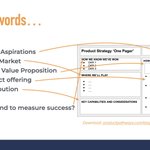
So to make this practical I'd recommend starting lightweight with a one-pager - like this one: productpathways.com/blog/pro…
And answer:
WHY = Vision/Winning Aspiration
WHO = Target Market
HOW = Unique Value Proposition/Differentiation
WHAT = Product Offering/Bets
WHEN = Distribution+ Success Measures
This will be a small step from where you are today, rather than trying to do a giant leap.
Start here. Iterate and learn.
You’ll still have a long way to go building a detailed product strategy but it’ll be better than doing nothing because it seems to big and daunting.
BONUS: If youre more progressed in your product strategy journey. You can still use one-pagers as a communication tool. Add a link to your product strategy doc for those who want more information.

7 years ago and what a defining moment in my career.
First BIG conference talk and the first time I started to realise maybe this whole solopreneaur thing could work.
Shoutout the LTP for being willing to share the stage with me.
And special shoutout to all those who started reading my newsletter posts 7 years ago on medium (yes pre-substack days like a cool kid).
Thanks 🙏 It’s not lost on me that I wouldn’t be where I am today without all of you!

A friendly reminder that product strategy isn't a fill in the box activity.
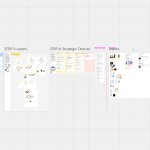
Its messy and often a lot of post-its, white boarding sessions, synthesising, and documents plastered with comments.
And a lot of back-and-forth.
Those neat Product Strategy documents (like these productpathways.com/strategy) are the end result, not the thing.

We need to be giving gifts not throw AI slop grenades over the fence.
I worked with a product leader once who framed communicating as "giving people gifts".
You want it to feel like a gift.
And what do you do with a gift?
You consider what they would like, what the right gift is. You package it up, wrap it, put a bow on it. You make it nice and presentable.
So don't just dump a bunch of unstructured information or feed it to claude to clean up - because we all know it will add more text than you gave it!
Do the work to synthesise it, triage, verify and come up with some recommendations.
So please give more gifts and less AI slop grenades.
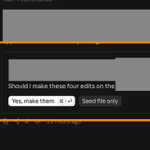
What happened to claude desktop - why does it keep having pop ups with buttons...
I don't like this at all...
Which sucks because Opus 5.5 is 🔥 and this experience is just killing it for me. I also find it's asking me questions a lot more and being less autonomous the last couple of days...

Dont rely on a single product roadmap.
This is where I see a lot of Product Managers go wrong.
They overload their product roadmap trying to make it work for everyone and for every situation.
From dependencies, delivery timelines, releases, opportunities, solutions, alignment to high level goals, etc... you end up needing a PhD to read it.
As the adage goes; "if its for everybody, its for nobody"
Its then no wonder theyre struggling to get buy-in.
And their messages arent landing.
So if you to influence stakeholders, then you need to start treating your roadmap as a communication tool.
Start with the audience:
→ who am I presenting this roadmap to?
→ what information do they want and what dont they need?
→ what format would be best? (this is important because sending the CEO of a Fortune 500 company a link to Jira isnt going to cut it)And tailor your roadmap to them.
Of course this doesnt need to mean youre recreating a new roadmap every time.Youll find that youll have 2-5 groups of audiences:
The most common I see are:
1) for executives
2) for external teams (eg sales, marketing, even a public roadmap)
3) a detailed version for product and engineering4) public roadmaps for customers
Different audiences.
Each with different levels of information and formats.
Yes its more work, but this can be the difference between influencing a stakeholder and getting bogged down into unnecessary details.

Helpful Product Roadmap resources
📌 How to build an outcome roadmap: youtube.com/watch?v=9oeeoeRf…
📌 Best practices for Product Roadmaps: antmurphy.me/newsletter/buil…
New experiment: Deleted my email app. All emails go through an agent now.
Emails are triaged and surfaced to me only when it makes sense.
- Urgent = immediately.
- In the next 24 hours = surface in between meetings and focus time.
- Non-urgent = wait until end of day (or start of day)
I've only just got comfortable doing this because agent interfaces have improved in Grok bot for example you basically can get an email editor in the chat - feels no different than doing it in the email app.
Day 1 and I've appreciated not having to delete 10 emails just to reply to one. Let's see how it goes!
Anyone done similar? advice? issues you ran into?

Ok, I love how much Opus 5.5 runs stuff in parallel with subagents but this is excessive 😆
21 versions of the same doc with one change each.

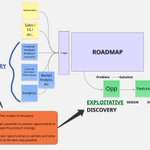
Product Discovery has two modes:
1. Exploring
2. Exploiting
Most teams I work with are great at exploiting.
They're really good at optimising what they already know - eg make the onboarding flow better, improve churn, come up with a solution for X, etc.
But few teams are really good at exploring.
Exploring whats possible. Gathering insights that shape their product strategy and uncover untapped opportunities (potentially whole new products!)
Note:
- Its not an either-or. You need both.
- They happen at different speeds. Exploit can be rapid, testing assumptions daily. Where as Explore is often slower and more always on.
- Explore helps to uncover innovative ideas. Exploit is more incremental improvements/optimisations.
- One leads to the other. Exploring to uncover opportunities that you can then prioritise and exploit.
- You might use different terms for these activities but principles are the same.
====
p.s. if you want to learn more about less talked about Product Discovery concepts like this, I created a thing 👉 productpathways.com/course/p…

Ant Murphy retweeted
Something I don't see enough is breaking down the problem space.
Instead I see a lot of teams plop big business goals, like 'Increase Revenue' on top of their OSTs (Opportunity Solution Trees)
But the problem with this is it's not something you have control over.
It's also just a very large problem space. There's 100s of things you can do to 'increase revenue'.
Instead you need to break the problem space down.
Contextualise 'Increase Revenue'.
How do you contribute to it?
Ideally make that as small as possible.
Because a narrow problem space creates focus. It's also easier to do continuous discovery & delivery and it makes your feedback loop much shorter.
There are so many ways you can do this.
For example, you can also do things like break it down by user segments like in the picture below.
(pic from a group coaching session I was running for an international company)
More examples: antmurphy.me/newsletter/dont…

Your roadmap should be a reflection of your strategy
Full video: youtube.com/watch?v=cdjLlkWE…
Asking for votes is an unreliable data point. It's too easy to click 'yes' or 'upvote'
There's no value exchange.
Email capture (and other mechanisms are better).
They require users to to give something up - their email - in exchange for what you're offering.
This makes it a much stronger data point.
Not to mention that you still get the same data point as number of votes (number of emails) but it’s a richer signal (you’ll get less but they’ll be serious buyers) and bonus you also simultaneously recruited users for discovery and build a list of first users.
So win-win!
Wherever you can capture emails not votes or opinions.
You still get the same data as votes (ie how many people gave their email) AND you also get a pool or potential users that you can reach out to, interview, run user testing with - even create an initial user community!
Full vide: youtube.com/watch?v=cdjLlkWE…
Product is a confidence game. Almost everything we do is about getting evidence to de-risk against uncertainty.
- Discovery is about de-risking. It's research to gather evidence.
- Strategy and business reviews de-risk by constantly revisiting the data and your hypotheses.
- Experimentation is de-risking by allowing the data to speak.
- Alpha/Beta and scaling up releases is de-risking by getting feedback in a smaller group early.
etc...
For me, this is a first principle. A good thing to be thinking about constantly. It's why we test assumptions and everything.
Full video: youtube.com/watch?v=cdjLlkWE…
Ant Murphy retweeted
Promise solving problems, not a laundry list of features.
Shoutout to ProdPad for perhaps the best public example I've seen of what this can look like!
Here's an example from their roadmap.
Outcome: "Land the right customers." "Retain the right customers."
Opportunities: "how can we better support our users to close the loop with customers who submit feedback?"
Hypothesis: "We believe that closing the loop is one of the most important aspects of product management... By empowering our users to address customer feedback more efficiently, we can not only improve transparency and engagement, but also foster deeper customer relationships."
Not a single feature.
No dates.
But you still know exactly what they're focused on, why
and in what order (now/next/later).
That's a roadmap!
Full teardown: youtube.com/watch?v=cdjLlkWE…
Promise solving problems, not a laundry list of features.
Shoutout to ProdPad for perhaps the best public example I've seen of what this can look like!
Here's an example from their roadmap.
Outcome: "Land the right customers." "Retain the right customers."
Opportunities: "how can we better support our users to close the loop with customers who submit feedback?"
Hypothesis: "We believe that closing the loop is one of the most important aspects of product management... By empowering our users to address customer feedback more efficiently, we can not only improve transparency and engagement, but also foster deeper customer relationships."
Not a single feature.
No dates.
But you still know exactly what they're focused on, why
and in what order (now/next/later).
That's a roadmap!
Full video: youtube.com/watch?v=cdjLlkWE…
Friendly reminder that bets are relative.
For a startup you can easily put everything on the line with one thing. For a trillion dollar enterprise a billion$ bet will be small.
The mistake is not levelling up as you go. If you still make small bets when you’re big, don’t be surprised if growth stalls.
Same with where you’re at career wise.
As a CxO moving departments, pivoting teams can be reasonable-small bets. But when you’re on the ground it can feel major (“another pivot!?”)
It’s easy to carry that baggage and not want to make the big swings but they might not be as big as you feel anymore.
Ps reminder to myself. Just had a moment that illustrated this well with a client.