

Public Policy Professional | Previously - Government of India | Management Consultant | Texas A&M | IIM Bangalore | IIT Madras
India
Joined March 2008
- Tweets4.5K
- Following1.5K
- Followers17.5K
- Likes43.3K






Pinned Tweet
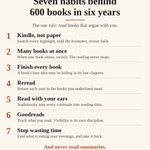
Sharing something I have been meaning to write for a long time. The seven habits behind how I read. Share how you have mastered the craft. ganuj.substack.com/p/i-hate-…

NITI Aayog member Rajiv Gauba calls for urban reforms. Cities need to directly have elected mayors with five-year terms, introduce a mayor-in-council system and ensure timely municipal elections
Read more at:
economictimes.indiatimes.com… ecoti.in/Ao-YCZ via @economictimes


From Munger to the L1 gate at Kolkata airport - Documenting the youth of India who are giving India wings as opposed to flying annonyingly like cockroaches foifaction.substack.com/p/fr…

Socialising is dead, reading is dead, everything except devices is dead derekthompson.org/p/the-deat…

Inrerstingly article by @satyaavachan
Ultimately, the credibility of journalism cannot be safeguarded by governments alone, nor can it be sustained merely by invoking press freedom. Freedom and responsibility must go hand in hand. If those who have built their careers on the principles of journalism remain silent while public trust in the profession comes under strain, they risk allowing others to define its future.

My article published in @TheDailyPioneer today.
The changing face of journalism: Who will bell the cat? dailypioneer.com/analysis/th… #

Ink, No Backspace: How I Write
An hour of thinking, an hour on paper, and no going back
ganuj.substack.com/p/ink-no-…

You do not need my routine. You need one hour that is protected, one medium that does not let you hide, and the discipline to keep going without looking back. Try it for a week: one hour, pen and paper, no deleting. Then tell me what came out.
timesofindia.indiatimes.com/…
Go ahead put your thoughts down with ink and paper and share. If you tag me, I promise to share each one of them. Start writing, start creating!

Strange Monday. You worked through the weekend, so the week begins with no fires to fight and no deadlines chasing you. Just time to think.
Is being always on right, or is periodic better? When your work becomes your hobby, it is either a sad commentary on your hobbies, or the best commentary on your life.
Perhaps this is the "real" work day. The one where you finally sit down and create.
“How shall we learn to know ourselves? By reflection, never; but only through action. Strive to do thy duty, then shalt thou know what is in thee.”
Johann Wolfgang von Goethe
An interesting take on France

The ugly truth about France and some of the other European countries currently in turmoil - and which none of the politicians want to admit because it'd be political suicide - is that you can't solve the problem by going after immigrants (as the right asserts) or the rich (as the left asserts), but you could solve it by going after the old.
One extraordinary statistic for you: people over 60 in France, a quarter of the population, own 60% of France's wealth, non-financial and financial (ofce.fr/pdf/revue/2025/3-192…).
And here is another crazy statistic:
that same quarter of the population, those above 60, receive nearly two-thirds of all social spending by the French government (previssima.fr/actualite/prot…) - which is famously among the highest in the world (France's government spending is an insane 57.3% of GDP).
Last statistic: they make up about 40% of voters because they're a third of registered voters (insee.fr/fr/statistiques/266…), and they turn out far more than anyone else (franceinfo.fr/elections/sond…).
Put our 3 statistics together and there's almost a bit of an apartheid situation here: the old own most of the country's wealth, collect most of the social spending and have the political power to keep it that way.
Which makes them a de-facto rentier class, living off assets and transfers paid for by younger generations.
And, of course, at the risk of stating a truism, the future is built by the young. Yet France keeps effectively taking money away from them to give it to those whose working lives are already behind them - and need the money far less since they already own the country's wealth.
What about inheritance, I hear you ask? That's the funniest/saddest aspect: given that life expectancy has kept rising, the French now inherit a home at 54 on average. The most common case is someone in their 80s leaving it to heirs in their 50s, in effect the very old transferring wealth to the about-to-be old (insee.fr/fr/statistiques/fic…).
You can add this to our earlier apartheid statement: on top of all the rest, even when the old finally let go of their wealth, it stays within their own "camp".
That's my personal situation, incidentally: I'm 42, my father is 71 and he is starting to look at ways to pass things on to me and my siblings, when our professional lives are already well settled, so it'll arrive when it changes things the least, which is pretty much the French system in a nutshell.
Now, I get that there'd be some unfairness in going after them: they paid into the system their entire working lives, playing by the rules of a social contract that told them if they paid up they'd collect at the end. Changing the rules now means breaking that promise, which is admittedly unfair.
But there's no magic wealth tree in any society: you can only take it where it is. That's the way most major societal transformations end up happening. They're often triggered by a catastrophic event (the so-called "four horsemen": mass-mobilisation war, revolution, state collapse, plague) BUT what really drives change is a transfer: wealth gets pried from the privileged class who've been sitting on it and handed to those who'll build what comes next.
So, in theory and in an ideal world, you can do without the catastrophic event and directly proceed with the transfer...
The fact that in France, and elsewhere in Europe, it's the youth protesting is probably no coincidence - even though they don't frame it as a generational fight. And even though, cruel irony, the left politicians many of them march behind promise to bring the retirement age back to 60 (lcp.fr/actualites/legislativ…), which would make the situation even worse.
Let's say they understand intuitively that the system is stacked against them, even if they haven't yet figured out how. And politicians are obviously doing what politicians do, meaning pandering to the people who actually vote, while pointing the young towards easier - and politically convenient - scapegoats.
To be clear I'm not saying it's the only problem in France, VERY far from it. I'm also not saying that all old people in France live a lavish lifestyle at the expense of younger generations: there are also plenty of very poor retirees who, if anything, would deserve more.
What I am saying is that it's probably the biggest elephant in the room: everyone can see it, nobody dares mention it - no politician, from any side, wants to run on cutting grandma's pension - and it makes every other problem harder to fix.

