
Forever sensemaking. Cognitive neuroscientist at Brown U
Boston
Joined September 2009
- Tweets1.7K
- Following929
- Followers519
- Likes2.4K







Apoorva Bhandari retweeted

Nature research paper: Functional architecture of the human insula
go.nature.com/47R8mm9

There is precedent in the figure of Srinivasa Ramanujan whose math appeared just as alien to Hardy & Littlewood. In what reads like a prescient article, Stephen Wolfram argued that he was an 'experimental mathematician'. His words seem to apply to AI writings.stephenwolfram.com/…


Some early first-hand accounts of encountering a narrow superhuman intelligence as mathematicians grapple with the hundreds of big AI proofs released by OpenAI.
Problems solved in inhuman ways that make us wonder what it means to actually know things... scottaaronson.blog/?p=10169


Apoorva Bhandari retweeted

Do you know why the pain of Sahil Wakode resonates with Dalits across India?
Because a part of the harassment and bullying that Sahil faced, which ultimately led to his suicide, is something many of us have experienced at some point in our lives.
When I reached Allahabad for JEE preparation and went looking for a room to stay in, the first thing I was asked in almost every household I visited was my CASTE.
The more households I visited, the more traumatic the search for a room became.
Then my friend told me to lie about my caste.
I did.
I lied about my caste. It was the first lie I told after moving from my village to the city.
And that experience alone was enough to make me see the reality of the society around me without any delusions about it.
Apoorva Bhandari retweeted

Come be our colleague!!! The Department of Cognitive and Psychological Sciences at Brown has two searches open:
🔹 Junior (tenure-track): apply.interfolio.com/190677
🔹 Senior (tenured): apply.interfolio.com/190696
Retweets appreciated!
Apoorva Bhandari retweeted

We describe compositionality as a continuum defined by 1) expressiveness of modules : what can the components do? and 2) complexity of syntax : what are the systematic rules that combine components?

Apoorva Bhandari retweeted

Our new preprint is out!
Learning Shapes the Energy Cost of Neural Tasks biorxiv.org/content/10.64898…
The human brain runs on ~20 watts. Computers and modern AI systems require vastly higher energy. How does the brain compute so efficiently? In our new study, we take a critical step toward directly measuring and understanding this.
Using in vivo glucose sensors in behaving mice, we asked: what is the neuronal fuel cost of performing a learned task? Key finding: After learning, the same task required less fuel, suggesting learning may not only improve performance—it may lower the energy cost of computation.
We propose an “energy minimization” view of learning. Neural circuits may optimize not only activity patterns or behavior but also energy cost. Understanding this could be critical for explaining the remarkable efficiency of biological intelligence.

Apoorva Bhandari retweeted

Can neurons speak? 🧠
New preprint: NEURRATOR. We take #MechInterp out of the LMs and point it at real brains with real neurons. We read spike trains from single neurons in mouse visual cortex and get them to narrate the scene in plain language. 🧵
#NeuroAI #interpretability #neuroscience #LLMs #compneuro #SAEs #Neuropixels #AI

Apoorva Bhandari retweeted

Excited to share our new paper on parallel computation and zero-shot composition in the recurrent network!
This was an amazing collaboration with @TAsabuki and Aineias!
biorxiv.org/content/10.64898…

Apoorva Bhandari retweeted

What can a neuron compute?
Real biological neurons are complex, but how capable are they?
Using a new method, we found that a single cortical neuron can classify cats vs dogs, recognize spoken words, and solve 10-bit parity, all tasks thought to require entire networks. (1/15)

Apoorva Bhandari retweeted
Nature research paper: Subspace communication in the hippocampal–retrosplenial axis
go.nature.com/4txTL7e

Apoorva Bhandari retweeted

Online now: Precision fMRI reveals densely interdigitated network patches with conserved motifs in the lateral prefrontal cortex dlvr.it/TSbkcr

Apoorva Bhandari retweeted

In systems neuroscience, this is simply not the case. Paradigms are challenged and updated all the time.

Some branches of neuroscience (and science in general) are unlikely to see real progress for a long time. This stagnation stems from an academic echo chamber that very effectively silences dissent. young researchers introducing new ideas are often marginalized or driven out before they can establish themselves. There must be quite a few of these people who left academia this way and are now working in industry. The current institutional framework simply won't fund or validate anyone bold enough to challenge entrenched ideas. It's a conformist paradise gated by tenure. BTW these stagnant areas tend to have dominant senior people who have never been wrong and shall remain "authorities" forever.
Apoorva Bhandari retweeted

Where, exactly, does learning happen in the brain?
Out now @Nature , we identify a synaptic locus of birdsong learning and show that the circuit can be tuned to make birds learn faster, but at a cost.🧵 #neuroscience
nature.com/articles/s41586-0…
Open link: rdcu.be/fiyrS

Apoorva Bhandari retweeted

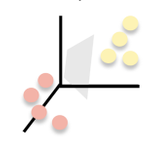
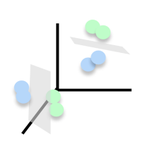
Neural networks might speak English, but they think in shapes.
Understanding their rich *neural geometry* is key to understanding how they work – and to debugging and controlling them with precision.
Starting today, we’re releasing a series of posts on this research agenda. 🧵
Apoorva Bhandari retweeted

Excited to share that our paper “Sequential Group Composition: A Window into the Mechanics of Deep Learning” was accepted to ICML 2026 in Seoul!
Co-led with @giovannimarchet
and @AdeleMyersPhD @hopfbifurcator @ninamiolane
Paper: arxiv.org/abs/2602.03655

Apoorva Bhandari retweeted

A transformer can learn not just the outcomes of dynamics, but the operator that executes the rules. To show this we trained a transformer on roughly 0.04% of a discrete rule space - 100 of 262,144 possible rules - and it learned to apply unseen rules from the same rule class. The model does not simply memorize specific rules. It learns the operator that maps a supplied rule plus an initial state, including unseen rules from this class, to the correct next state. This is relevant because it is a shift from “neural networks approximate dynamics” to “neural networks can learn to execute symbolic programs within a defined rule class”. The rule itself is supplied at inference time, as data, and the network has internalized how rules act, not which rules to apply. On previously unseen rules, the model achieves 98.5% perfect one-step forecasts and reconstructs governing rules with up to 96% functional accuracy.
Two results make this hold up under scrutiny. First, inductive bias decay. As we scaled training rule diversity, the correlation between functional inference accuracy and distance-from-nearest-training-rule collapsed to R² = 0.00. At the largest tested training-rule diversity, the model’s performance on a new rule shows no measurable dependence on how similar that rule is to anything it was trained on. The bias toward training data (the thing we worry most about in compositional generalization claims) is something we can measure decaying, and we find that at scale it is gone.
Second, an identifiability theory. We derive a closed-form expression for the number of rules consistent with a single observation. This reframes the inverse problem: failure to recover ground truth is not necessarily a model defect, but can be correct behavior when the data underdetermine the rule. The model is sampling the equivalence class; and identifiability is governed by coverage, not capacity.
The methodological move underneath both results is amortization. Classical work on rule inference (e.g. the Santa Fe EVCA program, evolutionary search over CA rule space) was per-instance: search the rule space for each new system. We replace that with a single forward pass of a transformer trained across many instantiations of the rule class. That is what makes symbolic rule inference scalable as a research direction rather than a curiosity.
We show that this works in a tightly constrained domain: binary, deterministic, local cellular automata on small grids. The locality-break experiment shows the model fails sharply when target systems violate its structural priors (which is itself a useful diagnostic, but it bounds the operator class). We don't yet know how this scales to multistate, higher-dimensional, or stochastic CA, or whether it transfers cleanly to non-CA systems whose coarse-grained dynamics admit local surrogates. The identifiability framework - what can be inferred from observation, given a hypothesis class - should transfer wherever finite local rules meet sparse data. The amortization argument transfers wherever per-instance symbolic search has been the bottleneck. Those are the pieces I expect to outlive the cellular automata setting.
Led by @JaimeBerkovich with Noah David, at @LAMM_MIT. Out now in Advanced Science @AdvPortfolio (link to paper & code below).
Apoorva Bhandari retweeted

Where does agency come from in a neural network?
We trained RNNs to chase a moving target. Some learn to react. Others learn to predict, anticipate, and even wait (schematic gif attached)
The difference comes down to the dimensionality of the neural code. 🧵 (1/7)
Apoorva Bhandari retweeted

What are the neural correlates of human behavior?
Much research has approached versions of this question between individuals but not within individuals. Are results from these 2 approaches similar? No!
In over 4000 individuals, the neural correlates of cognitive control diverged between vs. within individuals -- a case of non-ergodicity and Simpson’s paradox.
We think that non-ergodicity may be an important principle in human neuroscience. [1/12]

Apoorva Bhandari retweeted

Neural nets don’t just forget. Sometimes, after long training, they lose the ability to learn at all.
In our #ICLR2026 poster, we model Loss of Plasticity as gradient dynamics trapped in invariant manifolds: 🔴 frozen units, 🔵 cloned units.
The video makes the traps visible.
Apoorva Bhandari retweeted

1/6
Excited to share our #ICLR2026 paper:
Estimating Dimensionality of Neural Representations from Finite Samples
with @canatar_a, @s_y_chung, and Daniel Lee.
Paper: arxiv.org/abs/2509.26560
