




New research findings from Anthropic show that for many tasks, a single agent + tools outperforms sub-agent systems
Intuitively, this makes a ton of sense. We're in for a lot of twists and turns in terms of single agent, orchestrator + workers and multi agent workflows
In the near term, I'd love to see the team translate this more into ultracode improvements because my recent attempts at leaning into it have yielded messy and overzealous overarchitected lanes and milestones
claude.com/resources/article…

I’ve been doing something like this with hudsonkit.com/arc
Also added support @kepano’s in addition to prior support for mermaid
There are a few great libraries but Arc is mine and mostly deterministic and now I can just quickly grow it when I see a new idea I like


i've been a bit quiet - working on a new companion skill that will help your agents draw these beautiful statecharts/diagrams + check them against the specs you made with /create-formal-verification-skill in pstack!
it now uses Pele from @kepano too which is why they look so good.
will release soon!

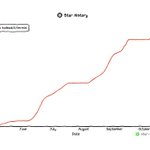
I was catching on some repo maintenance today and noticed an iOS library I open sourced has been organically growing over time
I haven't done a thing to share it, just improving it as I iterate on my projects
the numbers are tiny but man that's just a rewarding feeling

Lattices gives (my agents) a view of all my machines on all my machines
Omarchy and MacOS but maybe we should add cloud too?

Part of the bet I made when starting to build openscout.app earlier this year was that as models got better, they would become more able to determine what they needed and find the best path to get it.
My intuition was that orchestration frameworks were doing too much work, enforcing top down topologies and over time, they would throttle the agents
I believe this is starting to play out. Today, I have a decently large refactor going and Opus is self organizing with Fable and Codex (Astra mainly)
I've given some high level guidance on this collaboration shape in the past but didn't really point to Codex today so the memory is kicking in and it's a thing of beauty

I went pretty far down the road on this idea 3 years ago, having worked closely with big Insurance carriers - with a focus on context extraction, summarization and change management
Core assumption: models are going to get there but orgs will need a lot of help with transition

Our latest model advances bring stronger capabilities for building and migrating software in low-resource programming languages such as COBOL, Fortran, and Visual Basic.
These languages power software that banks, governments, and businesses depend on. Progress here means understanding decades of business logic and helping developers modernize those systems while preserving what works.
We’re building these capabilities around the challenges developers and enterprise customers bring us. If your team is working on these systems, tell us which languages and workflows we should tackle next.
openai.com/index/low-resourc…
New feature in Lattices Action - PiP virtual agent space so your coding agents can run through browser use and computer use without bothering you on your main workspace.
You can drop pause/resume the agents directly from the preview and see everything they are doing as well
I'm quite impressed with the progress SpaceXAI's been making with grokbot. I've been mostly using the voice mode when I'm out and about but also sometimes at home when I'm doing things around the house
Of course, being me, I wanted to connect it my other agents 🦾
thought I'd share the setup

Lattices.dev is now on Omarchy. The mouse gestures and keyboard shortcuts continuity is helpful and of course my agents continue to help me manage all the layouts
Recently added computer use integrations + virtual spaces (so agents work off screen with PiP preview!)

Omarchy already comes with a very programmable core and Hyprland is quite amenable to anything you want to do which makes it super easy to build Lattices on top.
Once that is there, I can benefit from a common set of abstractions for my agents.
Now since I'll often have a lot of machines on my desk, the layouts are aware of the other hosts and I've been playing with "visit" and "preview" functionality that basically sends my mouse and keyboard over without moving changing their bluetooth and streaming video from O -> Mac while my agents are cooking
The latter two aren't robust just yet but it's all helping me get the most from my agents. Presumable Lattices should help do this with cloud instances just as well.


over the past year, I've developed the habit of investing in design studies in a studio (similar to Claude's artifacts + /design + DS)
the study comes before the actual implementation and by not worrying about the details, it give the models a lot more context for polish and precision. Over time, I *feel* like reusable components in studies have lead to more interesting designs
I'd probably lean into Artifacts more if they opened it up but for now my studio is a thin piece of software all my projects share. Astra, Opus and Grok take on similar ideas and it feels a bit like training distribution archeology + sculpting to get awesome results. Here's a study from earlier today
