

Tour guide, archaeological researcher, explorer, tech geek. Curious of the world I live in but longing for the world to come.
Dogubayazit, Turkey
Joined January 2009
- Tweets1.5K
- Following1K
- Followers1K
- Likes9.6K


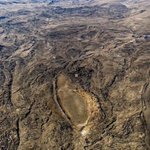


Can we retire "even Fasold says it's a syncline"?
Every few days someone waves the 1996 Collins & Fasold paper at me as if it settles the geology at Durupınar. The Journal of Geoscience Education carried that paper, and Collins signed it as senior author and the geologist of the two. Here's what both men said afterwards.
Fasold first. Ships were his trade (merchant marine officer, salvage expert), not rocks. His alt.atheism post of 20 March 1998 treats the syncline as that article's built-in assumption, dismisses the syncline crowd as people who never saw the site, and adds in his own capitals: "FOUR OTHER GEOLOGISTS SAY IT'S NOT A SYNCLINE." Five weeks separate that post from his death on 26 April 1998.
Then Collins. A postscript on his own online copy of the paper concedes that his study of the site was incomplete back then, and it lands here: "this site cannot be a doubly-plunging syncline." To be fair, he still argued the formation is natural, with landslide debris sculpting bedrock around a basalt pipe. But the syncline was gone.
So one author undercut the syncline and the other dropped it outright. If you cite 1996, cite what its authors said afterwards. Stopping where it's convenient is cherry-picking.
Think the formation is natural? Fine. Argue it from the rocks, not from a syncline its own senior author threw out.
Still citing Dr. LorenceCollins’s 1996 syncline explanation for the Durupınar Noah’s ark site and rejecting geologist Dr. Salih Bayraktutan’s position that it’s not a syncline? Read Collins’s own correction.
Geologist Dr. Collins later rejected his original interpretation that the Durupınar formation was a doubly plunging syncline. In the postscript to his online paper, he acknowledged:
“This article was written at a time when I (Lorence Collins) had not fully studied the supposed Noah’s ark site”
He then explicitly stated that his subsequent work showed the site could not be a doubly plunging syncline. That is a significant reversal of the structural explanation presented in the original paper.
It is frustrating to see that explanation repeated as though the author never corrected it. Repeating an outdated interpretation without checking the author’s own correction is lazy research. Publication and peer review do not make a conclusion permanent or exempt it from scrutiny.
To be precise, Collins continued to advocate a natural geological origin. He abandoned the syncline interpretation; this was not an endorsement of Noah’s Ark or a formal retraction of the entire paper. This next position of his isn’t set in stone either (pun intended 🤪).
But anyone invoking his authority should accurately represent his revised position. Before dismissing ongoing research at Durupınar, at least read the corrections to the sources you are citing.
P.S. How did such a confident explanation of the boat-shaped site make it into a peer-reviewed journal when the Collins later admitted he hadn’t fully studied it? Geologist Murat Avcı’s 2007 claim that the Durupınar site is a detached block of Miocene limestone will also receive a detailed rebuttal. It makes you wonder how thoroughly the site was actually examined by these guys before such confident conclusions were published.
Andrew Jones retweeted

In testing GPT-6.2, I used it to make a significant historical discovery which I detail in the post below. This suggests that the process of research and discovery we’re already seeing in verifiable domains like math is starting to generalize to non-deterministic fields like history.
You can read the full post here:
generativehistory.substack.c…
In a nutshell, Yale’s Beinecke Library holds an anonymous sketchbook of an 1808 journey from Montreal to Lake Superior and back. I’ve spent many hours over the years trying to figure out who made the sketches with no luck. The artist could literally be any one of several thousand people. There are few clues: only four dated and labelled images.
With minimal prompting, in just 22 minutes, Astra used publicly available sources to identify a minor French aristocrat, the vicomte de Chabot, as the artist and suggested that we test the hypothesis by ordering copies of a little known microfilmed diary of Chabot’s trip it also found.
I was truly stunned. I’d never heard of Chabot or this diary! New document finds are also exceedingly rare in a well worn field like fur trade history.
I ordered scans of the journal from microfilm and when they arrived the handwriting matched the captions in the sketchbook. The itinerary also aligned perfectly with the few dated drawings in the book. But there was actually the type of conclusive evidence we rarely get as historians: on 18 June 1808, after Chabot’s canoe reached Fort St. Joseph, he wrote “I took a sketch” before describing the exact view of the fort depicted in a matching drawing.
The journal itself is also a major find. It had been mentioned once in a dissertation footnote, but in a completely different area of history and is unknown to fur trade or Canadian historians. It’s long and detailed, covering some 162 notebook pages which makes this a significant new document to my field. Attached to the journal was another trove of documents too: excerpts from long-destroyed North West Company papers, journals, and letters. Again, this almost never happens. Both finds equally surprised the other leading experts I consulted.
Although we can construct a coherent narrative in hindsight, I cannot emphasize enough how exceedingly difficult this sort of thinking and recall is for humans. Unlike a human, Astra was able to tackle the problem from both ends at once: working forward from the scant facts of the 1808 journey pictured in the sketchbook and backwards from the immense number of surviving facts about 1808 British North America in general.
While we can technically explain Astra’s path to this find as a product of enhanced search capabilities, it conducted the investigation from end to end. I basically acted as the research assistant, restricting copies of the paper documents it needed.
To my mind, this puts historians in a similar position as the mathematicians found themselves about eleven months ago, when LLMs started to solve the first Erdős problems. Over the past year, we’ve watched these same models go from learning to read handwriting, to beginning to think historically, to mastering the undergraduate essay, and finally to making small but real contributions to human knowledge more or less autonomously.
The trajectory seems clear.

Andrew Jones retweeted

Hey Ken, I don’t know why you are being so dogmatic or recalcitrant on the #Durupinar site @creationnews - your influence is not an honest appraisal of the honest work that we have done. I will send my work for your journal to review, but like CMI u may speak with one voice.
Andrew Jones retweeted

More exciting discoveries from the Noah's Ark site in Turkey!
Professor Cenker Atila is examining remarkable pieces of wood recovered from the Durupınar formation, and these fragments could help answer some fascinating questions about the Ark's history.
What type of wood was used to build Noah's Ark? Could these samples help us finally understand the mysterious “gopher wood” described in Genesis 6:14?
Some of the fragments have unusually straight edges and markings that appear to have been made by tools. Others show evidence of burning, raising intriguing questions about what happened to the Ark after it came to rest in the mountains of Ararat.
Andrew Jones has also announced dating results indicating an age of more than 4,000 years, aligning with the biblical Flood timeline.
Now, further laboratory analysis will help researchers identify the wood, examine the markings, and investigate what caused the charring.
After thousands of years, could we finally be uncovering the materials used to build Noah's Ark?
This extraordinary site continues to reveal more of its secrets, and we're excited to share every new discovery as the investigation moves forward.
Help us in our mission at NoahsArkScans.com/donate
Andrew Jones retweeted

Archaeologists get about four minutes to save a Terracotta Warrior's face before the paint peels off right in front of them.
That's why the 2,200-year-old head in this clip is wrapped in plastic wrap like leftovers going in the fridge. There's a spray bottle sitting right next to it too. Both are there to keep the air around the paint wet.
Before anyone painted these soldiers, Qin's craftsmen brushed every one with two coats of lacquer made from tree sap, then put the color on top. Then they sat in damp dirt for 22 centuries, and that lacquer stayed soaked with water the whole time.
The second you dig one up, the water starts leaving. The lacquer shrinks and curls off the clay, and it takes the paint with it. One study timed the curling at 15 seconds and the flaking at four minutes, about as long as it takes to boil an egg. German scientists later figured out the cutoff is 84% humidity. Once the air gets drier than that, the damage can't be undone. And the air in Xi'an, where they're buried, is dry.
Farmers digging a well found the first one back in 1974. For years after that, archaeologists watched color come up out of the dirt and fall apart within minutes. Plenty of it was already gone, burned or rotted away underground, but a lot of what lasted 2,200 years didn't make it through the first afternoon. That's why every Terracotta Warrior you've ever seen in a photo is gray.
They were painted in bright colors. Cinnabar for red, malachite for green, azurite for blue, and something called Han purple, which doesn't exist anywhere in nature. Workshops back then were cooking it in kilns at around 1,700°F. A Smithsonian conservator didn't figure out what it was made of until 1992.
Fixing this took a particle accelerator. German and Chinese teams worked on it for years and came up with two methods. One swaps the water in the lacquer for a chemical that doesn't shrink as it dries. The other soaks the lacquer in liquid plastic and blasts it with an electron beam, which hardens the plastic inside the layer and glues the paint to the clay.
Now think about the emperor himself. Qin Shi Huang's tomb sits about a mile from the soldiers, and nobody has ever opened it. A historian writing about a century after his death said it held rivers of mercury, and mercury vapor has already been picked up at the surface.
Mercury is one reason they've waited, and this clip shows you another. If painted clay falls apart in four minutes, nobody can tell you what 2,200 years of sealed-up silk and wood would do the second that room gets air. After watching what happened to the soldiers, I wouldn't be in a hurry to open the emperor either.

Andrew Jones retweeted

🚨😳 SCIENTISTS MAY HAVE UNCOVERED NEW CLUES CONNECTED TO NOAH’S ARK!
Andrew Jones, founder of Noah’s Ark Scans, says preliminary laboratory results from wood samples recovered near the Durupinar formation in eastern Turkey date the material to approximately 4,300 years old!
The team reportedly discovered what appeared to be burnt wood approximately 30 feet beneath the formation. Other samples allegedly showed possible tool marks.
Even more interesting, the boat-shaped formation measures approximately 300 cubits in length—the same measurement given for Noah’s Ark in Genesis 6:15!
Jones says the preliminary dating is consistent with some traditional biblical chronologies for Noah’s Flood.
Now, these findings have NOT been independently established as proof of Noah’s Ark, and further scientific testing is needed.
But the discovery raises fascinating questions about one of the most well-known accounts in the Bible.
Could there be archaeological evidence waiting to be uncovered that sheds more light on the story of Noah?
Genesis 6:15 — “The length of the ark shall be three hundred cubits…”
The Bible continues to inspire questions, investigation, and discussion thousands of years later!
#NoahsArk #BiblicalArchaeology #Genesis #GreatFlood #BibleEvidence #Archaeology #MountArarat #ChristianNews #FaithAndScience #BiblicalHistory #NoahsFlood #JesusChrist

Andrew Jones retweeted

Could this be a major breakthrough in the search for Noah's Ark? Researcher Andrew Jones reveals stunning new laboratory results from wood samples discovered at the mysterious Durupınar formation in Turkey — a site some believe could contain the remains of the biblical vessel.
FULL STORY: youtube.com/watch?v=5D5Ef3-v…

Andrew Jones retweeted

Noah’s Ark researcher says wood samples found in Turkey align with Genesis flood timeline christianpost.com/news/noahs…

Andrew Jones retweeted

🚢Ağrı'da Nuh'un Gemisi'ne ait olduğu iddia edilen kalıntılardan alınan numunelerin karbon-14 testi sonuçları açıklandı
ABD'deki analizlerde parçaların milattan önce 2 bin 200-2 bin 400 yıllarına tarihlendiği belirtildi haberturk.com/yasam/nuhun-ge…
Andrew Jones retweeted

“The king died. Clouds …”
A Babylonian astronomical diary records the death of Alexander the Great and the weather on the same line. June, 323 BC.
We still have the clay.

ALT A diary of space and weather observations from the year 323-322 BC that records the death of Alexander the Great, referring to him simply as "The King". On display at the British Museum, London. British Museum 45962: https://www.britishmuseum.org/collection/object/W_1881-0706-403

Andrew Jones retweeted

🔴Nuh'un gemisi Ağrı Dağı'nda mı?
🔻Nuh'un Gemisi'nin Ağrı’da olduğuna dair bilimsel araştırmalar Türkiye, İsviçre ve ABD’de devam ediyor. Bölgeden alınan ahşap kalıntıların yaşı ile tarihî olayın gerçekleşme zamanı arasında benzerlikler tespit edildi.
@okanatess
#SorunumuzVar
Daha fazlası için ⬇️
youtube.com/watch?v=FveeGUTQ…
Andrew Jones retweeted

Ağrı’da Nuh’un Gemisi araştırmasında alınan ahşap örneklerinin yaşının, Nuh Tufanı’nın tarihiyle örtüştüğü açıklandı.


Andrew Jones retweeted

Ağrı’da Nuh’un Gemisi araştırmasında ahşap örneklerinin yaşı tufan tarihleriyle örtüştü.
Prof. Dr. Cenker Atilla: "Bunları Amerika, İsviçre ve TÜBİTAK’a karbon-14 analizleri için göndermiştim. Dün itibarıyla Amerika’daki laboratuvarın sonuçları geldi.
Kutsal kitaplara göre Nuh Tufanı milattan önce 2300 yıllarında meydana gelmiş. Bizim karbon-14 tarihlendirmemiz tam da bu tarihlere uyuyor.
Analizimizde örnekler milattan önce 2200 ile 2400 yılları arasına tarihlendirildi. Bir an önce TÜBİTAK’tan ve İsviçre’den gelecek sonuçları bekliyoruz."


Ağrı’nın Doğubayazıt ilçesinde Nuh’un Gemisi’ne ilişkin araştırmalar sürüyor.
— Araştırma kapsamında tekne şeklindeki bölgeden 300’den fazla toprak numunesi alındı.
— 2024’te yapılan analizlerde, tekne şeklindeki bölgedeki toprakta çevresine kıyasla 3 kat daha fazla organik madde tespit edildi.
— Radar taramalarında yer altında dik açılar, muhtemel tüneller, katmanlar ve boşluklar belirlendi.
— Bazı anomalilerin insan yapımı olabileceği değerlendirilirken, ilk kez karotlu sondaj çalışması gerçekleştirildi.
— Yeni numunelerde çürümüş ahşap, hayvan kalıntıları ve insan faaliyetlerine ilişkin izler araştırılacak.
— Numunelerin analizlerinin kış boyunca sürmesi, sonuçların ardından gelecek yıl kapsamlı bir rapor hazırlanması bekleniyor.
Andrew Jones retweeted

Ağrı Dağı'nda bulunan ahşap kalıntıların yaşı, Nuh Tufanı için öne sürülen tarihle örtüştü.
▬ ABD'de yapılan karbon-14 analizinde MÖ 2200-2400 yılları arasına tarihlendirildiği duyuruldu.


Andrew Jones retweeted

🔴Nuh’un Gemisi Ağrı’da mı? ABD’deki laboratuvardan dikkat çeken sonuç: 4 bin 300 yıllık ahşap parçaları bulundu
🔗gzt.link/4281708/p/x

Andrew Jones retweeted

NUH'UN GEMİSİ'NE AİT OLDUĞU DEĞERLENDİRİLEN AHŞAP NUMUNELERİN AMERİKA'DAKİ TEST SONUÇLARI AÇIKLANDI
@cenkeratila
@arkeologist
Andrew Jones retweeted
BREAKING: New discoveries at the Noah's Ark site in Turkey are making national headlines!
Fox News has covered the latest developments from the Durupınar formation, where Professor Cenker Atila recently recovered several unusual fragments believed to be ancient wood.
Following heavy rainfall at the site, Professor Cenker Atila noticed dark markings along a newly exposed section of the western side. Upon closer examination, he discovered pieces of material that appear to be charred, with markings researchers believe could indicate they were cut or worked with tools.
The samples have been submitted for laboratory analysis to investigate their age, composition, and origin.
Could these fragments be connected to the remains of Noah's Ark?
This discovery adds another fascinating development to an investigation that has already revealed unusual radar anomalies and subsurface features beneath the 515-foot-long formation.
This site continues to reveal more of its secrets, and the case for Noah's Ark continues to grow.

