
@RadicalNumerics | PhD Eddy Lab @Harvard interested in protein ML for modeling protein domains and predicting homology
Joined May 2024
- Tweets19
- Following270
- Followers55
- Likes130

A closer look at how Omnii-1 works!

1/10 Introducing Omnii Genome, one of eight Advances built on Omnii-1.
A single generalist model now outperforms leading specialized models (AlphaGenome) in linking genetic changes to gene activity and mapping regulatory interactions.
These capabilities help make sense of the 98% of the human genome that doesn’t code for proteins
How Omnii-1 works:
Happy to share I’ve recently joined @RadicalNumerics after defending my PhD @Harvard.
Excited to share some of what we’ve been working on. Lots to come!

Arpan Sarkar retweeted

1/8 Does text-to-image generation need language pretraining?
Today, we share Halcyon, a family of early-fusion, base models trained from scratch. Halcyon outperforms strong late-fusion baselines with up to 275× less pretraining compute. Models and recipes are open.
Halcyon is part of a research program at Radical Numerics on the science of multimodal pretraining and scaling.
Arpan Sarkar retweeted
1/5 What does it take to scale pretraining to 20+ data modalities at once? Improved data mixing methods are one important ingredient.
Today, we share how we scale data mixing to thousands of sources for DNA and natural language pretraining of Omnii, our multimodal genome model.
pLM benchmarks often split the labeled task data, but don’t account for homologs of the test set appearing in the pretraining data.
We measured the impact of this leakage on apparent generalization by pretraining three 650M pLMs on data splits with varying amounts of leakage

(1/6) Excited to share our work (@arpsark) on “Evaluating out of distribution generalization of protein language models” as a spotlight paper in GenBio 2026 at ICML! (openreview.net/forum?id=sVBG…)
PSALM
preprint: biorxiv.org/content/10.1101/…
code: github.com/Protein-Sequence-…


Excited to be a part of this team! Check out our work investigating scientific problem solving in LLMs!

1/9 🚀 New paper: Demystifying Scientific Problem-Solving in LLMs — How does reasoning enhancement affect knowledge recall, and do LLMs benefit from external knowledge complimentary to reasoning?
Tldr;
📊 SciReas: holistic and efficient evaluation suite for scientific reasoning
🧠 KRUX: a novel framework to study knowledge vs reasoning in LLMs
🔑 Findings: knowledge is a bottleneck; reasoners + in-context knowledge help; long CoT helps knowledge recall/utilization

Arpan Sarkar retweeted

(1/7) Very excited to share my first PhD preprint on the interactions of two of my favorite mobile genetic elements: phages and group II introns!
biorxiv.org/content/10.1101/…

Arpan Sarkar retweeted

Super excited to share my postdoc work investigating how mating and parental behaviors evolve using wild species of mice combined with single nucleus RNA-sequencing of the hypothalamus 🐭🧠🧬!
biorxiv.org/content/10.1101/…

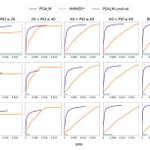
PSALM annotates sequences with greater sensitivity and specificity than profile HMM-based methods (on identical training sets). PSALM has a very low residue-level FPR, benefits strongly from additional examples, and annotates clans even at low percent identity to training data

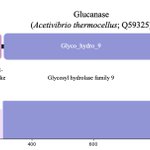
We propose PSALM, which extends ESM-2 to predict *residue*-level protein sequence annotations. PSALM accurately annotates domain boundaries, multi-domain proteins, and even domains that are currently unannotated in sequence databases


Excited to share our new work (with @KumareshSpikes): "Protein Sequence Domain Annotation using Language Models" (PSALM)
biorxiv.org/content/10.1101/…
