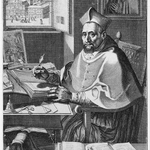
"Perhaps also more probable, is according to the opinion of Saint Thomas, who teaches that divine cooperation so concurs with second causes, even free ones, that He not only gave and conserves their operative powers, but also moves them and applies them to work.”
— S. Bellarmine
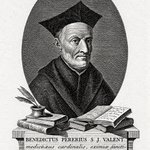
“Thus Saint Thomas helps second causes, and in these our will, to be moved, applied, and determined by God to acting; although certain theologians dissent, I nevertheless, having weighed the matter much and more carefully, willingly incline to that opinion.”
— Benito Pereira SJ
4
47
“God applies the same power to acting, and so moves it; the second cause operates, but moved and directed by God, as the instrument is moved by the artisan.”
— Francisco de Toledo, S.J., Physics, book II, chapter 3, question 8.
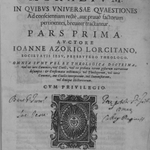
"Second causes therefore are moved and applied by God Himself to their functions and works, because God imprints motion in them, and therefore by moving makes that the second cause make, because He wills, decrees, and moves that it make."
— Juan Azor, S.J. Inst. mor., I.21, q.8.
"Nothing in a good work can free choice, unless it be moved divinely: that it be moved, however, is in the hand of God as clay in the hands of the potter."
— Joannes Lensaeus, De Christiana Libertate, lib. I, cap. 8.
"And hence no matter how perfect a corporeal or spiritual nature is supposed to be, it cannot proceed to its act unless it be moved by God."
— St. Thomas Aquinas, I-II, q. 109, a. 1.
"As light not only operates with the air, but also operates in the very air by reason of continuation with its source: so also grace not only operates with free choice, but also operates in free choice and moves free choice."
— St. Bonaventure, O.F.M., In II Sent., d. 26.
2
76
"Whom among the Thomists will the Jansenians find...who shall have said that the will, predeterminated by divine grace, lacks the proximate power of dissenting?"
— François Annat, S.J.
"God works all things for Himself, according to that saying: "The Lord hath made all things for Himself, the wicked also for the evil day" (Proverbs 16); therefore the end for which God permits sins is the showing forth of divine justice and mercy."
-Diego Alvarez, D.111, C.1
"The Thomists maintain that there is in man an intrinsic indifference both to acting and to not acting, and that this indifference is proximate and explicit...they reject the third proposition condemned by the Jansenists."
— François Annat, S.J.
10
257
"No secondary cause causes anything unless the First Cause causes together with it, and this takes place naturally prior to the causation of the proximate cause itself."
— Bl. John Duns Scotus, O.F.M.
31
393
"God does not foresee that this man will make good use of free will except because He wills or preordains that this man will make good use of it; for...the certain foreknowledge of future contingents arises from the determination of the divine will."
Bl. John Duns Scotus, O.F.M.
Franciscus Sylvius, in his opuscule On the Motion of the First Mover, most elegantly demonstrates beyond all doubt that the Angelic Doctor St. Thomas taught physical premotion, for all those still unsure - which I am translating and will be done with soon.
"Every movement of a will whereby Powers are applied to operation is reduced to God, as a first object of appetite and a first agent of willing. Therefore; every operation should be attributed to God, as to a first and principal agent."
— St. Thomas Aquinas, SCG, III, ch. 67.
"The motion of the mover precedes the movement of the thing moved both logically and causally."
— St. Thomas Aquinas, Summa Contra Gentiles, III, ch. 149.
"And thus the act of the intellect or of any created being whatsoever depends upon God in two ways: first, inasmuch as it is from Him that it has the form whereby it acts; second, inasmuch as it is moved by Him to act."
— St. Thomas Aquinas, I-II, q. 109, a. 1.
"It follows of necessity that God causes the action of every natural thing as moving and applying its power to action."
— St. Thomas Aquinas, De Potentia, q. 3, a. 7.
"Therefore, the will’s movement directly comes from the will and God, who causes the will, who alone acts within the will and can incline the will to whatever he should will."
— St. Thomas Aquinas, De Malo, q. 3, a. 3, corpus.