
Research at @meta, previously @openai, @imbue_ai and @cocosci_lab lab at Princeton. All opinions my own
San Francisco, USA
Joined October 2010
- Tweets2.2K
- Following244
- Followers2.6K
- Likes3.1K
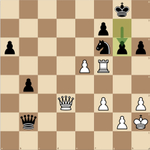

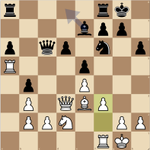




Pinned Tweet
A few months ago now, I wrote a document about my experiences interviewing for AI research jobs before eventually joining @OpenAI. This doc details my process and lessons learned. Hope it's helpful!
tinyurl.com/bas-ai-interview…


basvanopheusden retweeted

I spent 20,000 dollars in API credits having different AI models play each other at Blood on the Clocktower (a Mafia or Werewolf type social deception game).
The results were fascinating. Models have gotten much better over the course of this year at creative on-the-spot scheming and bluffing, and also at reasoning as a team to break apart these underground conspiracies.
I go through some of the most standout games these AIs played in this video. The new models are getting pretty good. If my friends pulled off some of these moves while we were playing, I’d give them a fist bump.
Fwiw, OpenAI’s newer models are much better than Anthropic’s at this game.
You can see the full benchmark at the website, and I’ve also made it so that you and your friends can play again the AIs: clocktowerbench.com
basvanopheusden retweeted

Announcing the next version of Artificial Analysis API Performance Benchmarking: Time per Task is now our headline performance metric, measuring how long a model takes to complete a task rather than how fast it streams
The update applies to the ~1,000 serverless endpoints we benchmark multiple times a day for speed, latency and caching.
Key changes:
➤ Time per Task is now the headline metric to compare models: as workloads become more agentic, the time to complete a task matters more than speed per token. A model that is fast per token but verbose can take longer than a slower model that uses fewer tokens. Time per Task divides a model's output tokens per Intelligence Index task by its End-to-End Output Speed.
➤ End-to-End Output Speed covers the full request: speed is now measured from sending the request to receiving the final token. That includes the wait before the first token (prefill, and reasoning for models that hide it) as well as generation. Output tokens now come from each provider's API-reported counts instead of the o200k_base tokenizer, and we monitor for discrepancies in reported counts.
➤ Agentic workloads are now part of every measurement: we benchmark short, document-length and long-context prompts, plus multi-turn sessions across coding and knowledge work. Headline figures are the average across these workloads over the past 5 days.
➤ API default effort is now tracked alongside highest effort: most developers run models at the effort level each lab sets as its API default, so we now benchmark key models at that setting as well as at their highest effort. Effort names are not comparable across labs, so we use each lab's own default rather than one shared setting.
Key takeaways:
➤ OpenAI models make up most of the Intelligence vs. Time per Task Pareto frontier despite slower output speeds: across effort levels, GPT-6 Astra and GPT-6.1 Sol hold the frontier from ~45 to ~55 on the Intelligence Index. At max effort, GPT-6 Astra runs at 51 tokens/s but finishes a task in ~17 minutes, against ~26 for Claude Opus 5.5 (max, 111 tokens/s) and ~29 minutes for Gemini 4 Carbon (high, 71 tokens/s), because it uses ~50k output tokens per task against ~120k to ~170k.
➤ API default effort cuts Time per Task by ~3 to 5x and Cost per Task by ~2 to 4x for GPT-6 Astra, GPT-6.1 Sol and Claude Opus 5.5: all three default to medium effort, which scores ~5 to 11 points lower on the Intelligence Index in exchange. Claude Opus 5.5 falls from ~26 minutes and $10.04 per task at max to ~6.8 minutes and $2.45 at medium effort.
➤ Endpoints that optimize for decode speed alone see the largest drop in End-to-End Output Speed: high decode speeds can come at the cost of latency, for example by queuing requests to run at lower batch sizes, or by holding output and sending it in a single burst. Both lengthen the wait before the first token, which End-to-End Output Speed now counts.

basvanopheusden retweeted

The Collaborative Intelligence Benchmark paper is out!
We tested 18 AI models as teammates on 240 tasks. The best model scores only 82.2 out of 100.
Frontier models almost never cheat. But when a teammate pushes back, they give in!
Read the paper at arxiv.org/abs/2611.02633

basvanopheusden retweeted

This is an incredible result demonstrating how weird models are.. If you show a heart picture to Claude or GPT, they switch coding strategies from 0% to 100% recursive. (And if you ask them, they say that the heart picture was irrelevant ❤️)

Put a heart ❤️ next to a coding problem, and Claude & GPT write recursive code 100% of the time (0% baseline). They also can't tell you why!
Excited to share “A Heart Means Recursion” from my summer at @GoogleDeepMind, on how VLMs read & communicate with visual symbols. 🧵


basvanopheusden retweeted
US open-weights models made gains in both intelligence and parameter efficiency last week:
➤ Thursday morning: NVIDIA released Nemotron 3.5 Bolt and Nemotron 3.5 Super VL. Super VL scored 26.5 on the Intelligence Index with 120B parameters, pushing Inkling Small off the Pareto frontier
➤ Thursday midday: Meta's Muse Spark Open scored 38.9, more than 12 points ahead of Super VL and the highest intelligence yet for a US open weights model
➤ Friday morning: Beam 1.0, Reflection's first model, scored 30.3 with 501B parameters, joining the frontier between Super VL and Muse Spark Open
See our full comparison of open weight models on Artificial Analysis artificialanalysis.ai/models…
basvanopheusden retweeted

Beam is now available across platforms, with open weights under the Apache 2.0 license - in collaboration with an ecosystem of 40+ partners.
We're releasing:
- Weights, tokenizer, and reference implementation
- BF16, FP8 and NVFP4 weights and a DFlash2 drafter
- The open source harness we built and trained Beam on: Mirror CLI
Weights and model card on Hugging Face: huggingface.co/reflection

basvanopheusden retweeted

Four Gemini 4 Argon agents, one shared Minecraft world, one goal: defeat the Ender Dragon. 27 hours and 2,783 self-written programs later, the dragon fell.


basvanopheusden retweeted

Congrats to @GoogleAI's Gemini 4 Argon for taking the top spot of our Humanity's Sixth Sense (HSS) benchmark with a score of 55.4%, edging out GPT-6-Astra at 53.6%. 🥇
HSS tests AI’s ability to reason beyond what’s visible, from hidden objects to predicting what happens next and understanding human behavior.
We took a closer look at performance across categories, and that’s where things get interesting. 👀🧵
basvanopheusden retweeted

So, I tested Muse Wonder Full 1.0 on real work. 2 repos. 105 bugs frontier models missed in Q1 2026. Find and fix what you can.
I'm so surprised we need a new thread.
The results:
GPT-6 Astra (max): 45
Muse Wonder Full 1.0 (max): 44
Fable 5.1 (max): 43
Opus 5.5 (max): 41.7
Muse Spark 1.3 (max): 32.2
Grok 4.7 (xhigh): 29
@AIatMeta has just matched Anthropic and OpenAI. Huge congrats!
Next in this thread, more effort levels and more runs for Muse Wonder Full 1.0. All dropping tonight 🧵

basvanopheusden retweeted
MUSE WONDER
this is the culmination of over a year of research and infrastructure work in msl
since we originally shipped muse spark in april, we have continued to scale our models across pre-training and RL, now reaching the frontier 🏆
see our model's improvements on the artificial analysis index:


I've not done enough to see if the model is good but name is excellent 😎

Meet Mistral Large 4, aka Le Chonk.
• 1T parameters, natively multimodal. 49B active.
It is the best open weights model from US or Europe on aggregated benchmarks.
• State-of-the-art on critical workloads, including cyber defense, manufacturing and finance and it surpasses closed frontier models on visual grounding.
• Forged in Europe end-to-end and is deployable from Europe via our own Mistral Cloud infrastructure.
• Available to all via API today. Working with cybersecurity partners privately.
Open weights release end of October.
2
267
basvanopheusden retweeted
Introducing Beam: a highly efficient agentic open model with 501B total parameters and 23B active.
- Frontier reasoning efficiency
- Advances the Western open frontier on coding & agentic tasks
- Trained end-to-end from scratch
Full weights release this month.
Learn more about Beam: reflection.ai/beam

basvanopheusden retweeted

The most profound paper of my PhD so far. We truly did something special to make LMs play/explain chess, needing both architectural & algorithmic innovation (natural-language analogue of the Alphazero algorithm) + applicable to many other domains. Please read on and share!
1/10

basvanopheusden retweeted

BREAKING NEWS
The 2026 #NobelPrize in Physiology or Medicine has been awarded to Karl Deisseroth, Peter Hegemann and Georg Nagel “for their discoveries concerning light-gated ion channels and optogenetics.”

basvanopheusden retweeted

Following gold-medal-level performance from our AI models across five competitions in mathematics, physics, and chemistry, we asked a harder question: can AI contribute when a problem is genuinely open and without an existing solution path?
Over the past several months, mathematicians worked with Muse Spark 1.1 and Muse Spark 1.2 in Thinking Mode through the regular meta.ai chat interface, with no custom research scaffold, to find solutions to such problems.
Our goal wasn't to mass-produce papers, but empower researchers. Every collaboration followed the same principles: mathematicians guided the research, a second group of mathematicians then reviewed the work, each paper marks which passages were drafted primarily by humans or AI, and each credits the prior research it builds on. Where other teams independently announced solutions to the same problems, we acknowledge their work as well.
Today, we're sharing six papers from that collaboration.
🧵👇
