


Zai retweeted
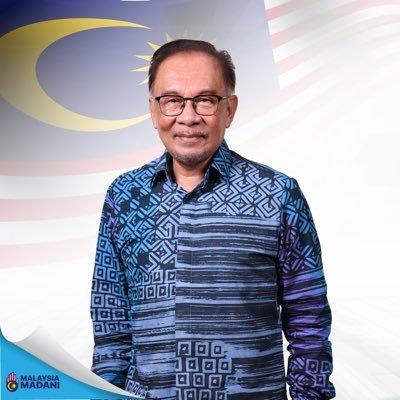
Selamat Hari Kebangsaan Ke-69 kepada seluruh rakyat Malaysia.
Saya berbangga kerana kita diberi kesempatan meraikan pengorbanan dan kebebasan, di samping terus merangkul seluruh kekuatan rakyat yang rencam kaum dan agama di bawah panji Jalur Gemilang.
Merdeka! 🇲🇾
#YakinMADANI
#Merdeka69

Zai retweeted

30 mins of Iraola ball with players well below what we’d expect at Liverpool.
The system, the energy, the entertainment. The man is football genius.
Those doubting are fools & will never be happy
Zai retweeted

Hamka, Anwar, Khurshid Ahmad antara pimpinan-pemikir gerakan Islam yang awal dijemput pasca Revolusi Iran dulu.

Zai retweeted

Indonesia pernah menyita tanker Iran (2021 & 2023), termasuk MT Arman 114 di Natuna alasan transfer minyak ilegal, matikan AIS, dan aktivitas mencurigakan. Kapalnya di lelang dan minyaknya 2,3 juta ton di ambil. Apakah ini akan memberatkan RI 🇮🇩 di kondisi langka Minyak 🛢⛽️🔥? @BPSDMESDM @kemenkeu – at Jakarta Capital Region, Indonesia

Zai retweeted

Honestly? I woke up today feeling grateful.
Not because everything is perfect. But because of what didn’t happen.
With the war in the Middle East pushing oil prices up, things are getting harder everywhere.
Unsubsidised RON95 in Malaysia just hit RM3.87 a litre.
Our neighbours are under real pressure. Philippines. Thailand. Cambodia. Laos.
Even Australia is facing a fuel crisis right now.
These are not just statistics.
These are real people, families trying to get to work, small business owners watching their costs double overnight, ordinary folks doing their best in a situation they didn’t create.
If you’re reading this, hang in there.
But yesterday, our PM announced that our subsidised petrol at RM1.99 stays.
Yes, the quota drops from 300L to 200L in April.
And I keep thinking, this kind of stability doesn’t just happen.
It took decades. Generations of leaders building diplomatic relationships quietly in the background.
Policy makers running the numbers at midnight.
Civil servants holding things together without anyone knowing their name.
People who never made the news but made the difference.
This moment of relative calm, they built it. Long before this crisis ever came.
But it also took something very Malaysian.
We have this rare ability to sit with anyone, different races, different religions, different backgrounds and just get along.
In a world that’s fracturing right now, that’s actually a superpower.
So today I’m not taking it for granted.
To everyone working behind the scenes, thank you. We see you.
Syukur.
And to our neighbours and friends from around world, you’ve got this. 🙏🇲🇾


Zai retweeted

BREAKING: President Trump just told 450 million Europeans: sign my deal by Thursday or I cut your gas. And if you think this is impulsive, you are not paying attention. This is the most calculated energy play in American history.
Qatar’s LNG is offline. Force Majeure. Ras Laffan shut after Iranian drones hit it on Day 3. Seventeen percent of global LNG capacity gone for 3 to 5 years. Russia’s pipeline gas to Europe was severed after Ukraine. Norway is maxed. Europe’s LNG prices have surged 35 to 50 percent since Hormuz closed. One supplier remains at scale: the United States. Trump’s ambassador to the EU just told the Parliament: ratify the $750 billion trade deal without amendments by Thursday March 26, or lose “favorable access” to American LNG.
Now decode the strategic geopolitical chess game which is being played in realtime.
Saturday night, Trump posted a 48-hour ultimatum threatening to obliterate Iranian power plants. That was not about Iran. That was about oil prices. He needed them high enough to terrify Europe into ratifying the LNG deal, but not so high that American consumers revolted before the midterms. The ultimatum spiked Brent past $113 and WTI past $100 on Sunday. Monday morning, Trump posted about “productive conversations” and paused the power plant strikes for five days. Oil crashed over 10 percent in hours. WTI hit $89. The S&P surged $2 trillion.
He spiked oil to create the fear. Then crashed it to create the relief. The fear makes Europe sign. The relief makes American voters forgive the war. Both moves serve the same president. Both happened within 36 hours. Both were executed with social media posts, not missiles.
The $750 billion deal is the permanent monetisation of Europe’s energy vulnerability. LNG. Oil. Civil nuclear. Locked in until 2028. The EU had been delaying ratification for months. Three wars removed every alternative: Iran removed Qatar, Ukraine removed Russia, Norway’s geology removed Norway. What remains is American LNG. Trump is not selling gas. He is selling the absence of alternatives.
The 5-day power-plant pause expires Saturday March 28. The EU Parliament votes Thursday March 26. Europe must ratify American energy dependency two days before the war might escalate again. If the pause collapses Saturday and Iran executes Ghalibaf’s promise to “irreversibly destroy” regional energy infrastructure, European LNG prices spike after the deal is already signed. Trump gets the $750 billion commitment at crisis pricing, then potentially triggers the next crisis 48 hours later. The deal locks in before the leverage expires.
This is Trump Doctrine in its purest form. He does not separate trade from security from energy from markets. He operates them as one instrument. The war degrades Iran. The degradation closes Hormuz. The closure spikes energy. The spike terrifies Europe. The terror forces the deal. The deal locks in $750 billion. The pause crashes oil. The crash rallies stocks. The rally preserves midterm support. Every move funds the next move.
He used the words “Department of War” in the pause announcement. Not Defence. The pre-1947 name. The name that tells Europe: the man offering you gas can resume bombing power plants on Saturday.
Yesterday Russia signed a deal to build Vietnam’s first nuclear plant. Today Trump threatens to cut Europe’s gas. Two great powers selling energy security to two desperate continents during the same war. Both profit from the crisis. Both lock in decades of dependency. Both timed the offer to the moment the customer cannot refuse.
The strait closed the alternatives. The ultimatum created the fear. The pause created the relief. The deal monetises both. Thursday is payday.
Full deep dive analysis:
open.substack.com/pub/shanak…


Zai retweeted

Guys Malaysia baru saja melakukan sesuatu yang belum pernah dilakukan negara lain.
Mereka tidak tunda perjanjian dagang dengan Amerika.
Tidak minta renegosiasi.
Tidak bilang sedang dikaji ulang.
Mereka bilang perjanjian itu tidak ada lagi.
Null and void.
Batal demi hukum.
Kata-kata langsung dari Menteri Perdagangan Malaysia 'It is not on hold. It is no longer there.'
Ini perlu dipahami konteksnya.
Lima bulan lalu Trump dan PM Anwar Ibrahim tanda tangan perjanjian dagang di KL.
Tarif Malaysia dipotong dari 47 persen ke 19 persen.
Trump bilang ini bukti bahwa sistem tarif timbal baliknya berhasil. Dijadikan template untuk negara-negara lain.
Sekarang template itu tidak berlaku.
Kenapa?
Karena tanggal 20 Februari 2026 Mahkamah Agung Amerika memutuskan bahwa undang-undang yang dijadikan dasar hukum oleh Trump untuk membuat semua perjanjian tarif ini yang namanya IEEPA ternyata tidak memberi presiden kewenangan untuk bikin tarif sepihak.
Artinya semua perjanjian dagang yang Trump tanda tangani sejak 2025 sampai Februari 2026 fondasinya baru saja dinyatakan tidak sah oleh pengadilan tertinggi Amerika sendiri.
Malaysia baca putusan itu.
Dan langsung jalan.
Dan ini yang perlu digarisbawahi.
Malaysia bukan satu-satunya negara yang tanda tangan perjanjian dengan fondasi hukum yang sama. Ada banyak negara lain yang perjanjiannya berdiri di atas dasar hukum yang sama persis yang sudah dinyatakan tidak berlaku.
Setiap menteri perdagangan di setiap negara yang tanda tangan perjanjian itu sekarang sedang baca putusan Mahkamah Agung Amerika yang sama. Dan mereka semua sedang tanya pertanyaan yang sama.
Apakah perjanjian kita masih bisa ditegakkan secara hukum?
Jawaban teknisnya tidak.
Fondasinya sudah gugur.
Malaysia cuma yang pertama ngomong keras.
Dan ini menarik untuk Indonesia.
Kita sedang di tengah tekanan perang Iran yang bikin harga minyak naik dan rupiah melemah. APBN kita sedang disiapkan skenario defisit sampai 4 persen. Dan sekarang arsitektur perdagangan Amerika — yang selama ini dianggap stabil ternyata berdiri di atas kewenangan yang tidak pernah ada.
Sistem-sistem yang kita anggap kokoh ternyata lebih rapuh dari yang kita kira.
Malaysia baru saja menarik satu benang.
Dan tidak ada yang tahu berapa banyak benang lain yang akan ikut tertarik.

JUST IN: Malaysia just declared the U.S.-Malaysia trade deal null and void.
Not suspended. Not under review. Null and void.
“It is not on hold. It is no longer there.” Those are the words of Malaysia’s Investment, Trade and Industry Minister, Datuk Seri Johari Abdul Ghani. On the record. This week.
The deal was signed five months ago in Kuala Lumpur by President Trump and Prime Minister Anwar Ibrahim at the ASEAN Summit. It cut tariffs from 47 percent to 19 percent. It was presented as proof that reciprocal trade works. It was the template.
It no longer exists.
The trigger was a Supreme Court ruling on February 20 in Learning Resources, Inc. v. Trump. The Court held that the International Emergency Economic Powers Act does not authorise presidential tariffs. IEEPA was the legal foundation beneath virtually every reciprocal tariff deal the administration signed. The Court pulled the foundation. Malaysia looked at the structure standing on nothing and walked away.
No other country has done this yet. But fifteen nations are now under new Section 301 investigations launched March 11 and 12, covering structural excess capacity across sixteen economies and forced labour practices across sixty. The USTR pivoted to Section 301 within weeks of the ruling because it is the only remaining statutory vehicle for broad tariff authority. The pivot tells you the administration knows the legal ground shifted.
The question every trade desk should be asking this morning is not whether Malaysia matters. Malaysia covers 12 percent of its exports to the US under the deal. The question is who follows.
Every reciprocal trade agreement signed under IEEPA authority between 2025 and February 2026 now sits on the same voided legal foundation. Every counterparty government has the same option Malaysia just exercised. Every trade minister in every capital that signed one of these deals is reading the same Supreme Court opinion and asking the same question: is our agreement still enforceable?
The answer, as of February 20, is that the legal basis no longer exists. The deals were signed under authority the Court has since ruled the President did not have. Malaysia is the first government to say that out loud. It will not be the last.
The cascade risk is not theoretical. Roughly $500 billion in annual US trade flows run through the nations now under Section 301 investigation or bound by IEEPA-era reciprocal agreements. If even a fraction of those counterparties follow Malaysia’s precedent, the result is a simultaneous renegotiation of America’s trade architecture during a period when the Hormuz crisis is already driving energy and food inflation, the Fed is trapped at 3 percent core PCE with no room to cut, and US farmers cannot afford $900-per-ton ammonia.
Carl Quintanilla posted the headline with the kind of brevity that tells you even CNBC does not know how to frame this. Because the frame is uncomfortable. The administration built a tariff architecture on a legal authority the Supreme Court ruled it never had. The first country to notice just tore up the deal on live television.
The trade architecture, the fertiliser supply chain, the insurance market, the naval coalition, the planting calendar. One by one, the systems the global economy assumed were stable are revealing themselves as fragile.
Malaysia just pulled another thread.
open.substack.com/pub/shanak…


Zai retweeted

Rancangan Pendidikan Negara 2026–2035
*Apa itu Rancangan Pendidikan Malaysia (RPM) 2026-2035?*
Tahun Ini, Tahun Kita
#7TerasKPM
#MalaysiaMADANI
#PendidikanManusiawi
#TaatSetia
#PendidikanNadiNegara

Zai retweeted

Pengukuran Pembelajaran Tahun Empat dilaksana mulai tahun ini manakala bagi Tingkatan 3 mulai tahun depan.

Zai retweeted

Semua sistem pendidikan termasuk UEC wajib ambil ujian Bahasa Melayu – PM
#malaysiagazette
malaysiagazette.com/2026/01/…

Zai retweeted

🚨 JUST IN : Starting next year, pre-school in Malaysia will begin at age five, and Standard 1 at age six.
However, PM Anwar Ibrahim stressed that the move will not be compulsory in its initial year, adding that parents will be given a choice if they feel their child is not ready.
📌 Other important announcements :
• Bahasa Malaysia exams are now compulsory for Private/International Schools, Religious Schools, and UEC students.
• Year 4 pupils will take a new standardised assessment this year, covering Bahasa Malaysia, English, Science, and Mathematics.
• The Form Three Learning Measurement for five main subjects - Bahasa Malaysia, English, Mathematics, Science, and History - will also begin soon.
• Optional Chinese, Tamil, and Arabic classes as subjects must be provided by the Education Ministry.
• Five primary and five secondary schools per district will be upgraded, improving both facilities and education quality.


"Kalau ada yang tidak terima Bahasa Melayu, lebih baik jangan duduk di Malaysia" stressed the King.
YDPA Sultan Ibrahim said any education system introduced must accept the Malay language, Malaysian history, and align with the national education policy.
Meanwhile, the government will announce tomorrow whether UPSR and PT3 exams will be reinstated as part of the National Education Development Plan 2026–2035.


Zai retweeted

Steven Sim ke KUSKOP, kementerian yang terlalu mandom dan ramai taktahu wujud selama ini.
Aku yakin dia akan teruskan kecemerlangan di tempat baru. Campak ke laut jadi pulau, campak ke bukit jadi gunung! Jalan Teruih @scheekeong !!!
Zai retweeted
Singapore and Indonesia have reportedly accepted RTM’s apology for misidentifying their leaders during the live broadcast of the 47th ASEAN Summit.
RTM DG Suhaimi Sulaiman offered an official explanation, which was positively received, Utusan Malaysia reports.
utusan.com.my/berita/2025/10…
🧵1

Zai retweeted

WHAT’S THE DEAL WITH ARTICLE 5.1 AGREEMENT BETWEEN THE UNITED STATES OF AMERICA AND MALAYSIA ON RECIPROCAL TRADE (ART)?
Since everyone is talking about this Article 5.1 in the AGREEMENT BETWEEN THE UNITED STATES OF AMERICA AND MALAYSIA ON RECIPROCAL TRADE (ART), allow to explain this controversial article in 4 parts.
I have taken the liberty to highlight in different colours so that it is easier to understand.
First part - yellow
This is the clause that talks about customs duties, quotas, restrictions etc that the US imposes on another country. According to this, if it is relevant to protect the economic or national security of the US, the US intends to notify Malaysia to align the two countries’ economic and national security.
Second part - green
This part talks about when Malaysia receives a notification of the measures taken in the first part.
Third part - purple
When a notification is received as per the second part, then Malaysia shall either
i) adopt or maintain a measure with equivalent restrictive effect as the measure adopted by the US, or
ii) agree to a timeline for implementation that is acceptable to both countries
This is where most critics stop reading. The last part is conveniently left out to fit their narrative.
Final part - red
This is the most important part, in my view.
Once a notification is received (second part) Malaysia shall adopt measures or agree to a timeline for implementation (third part).
But for what purpose?
The purpose, or aim, is in the final part - the line highlighted red:
“…to address a shared economic or national security concern, guided by principles of goodwill and a shared commitment to enhancing bilateral relations between the United States and Malaysia.”
The key words here are:
“address a shared economic or national security concern”. Meaning, the measures are to address economic or national security concern which are shared by BOTH countries - thus the word “SHARED”.
The existence of this last part proves that unlike the claims of some quarters, Malaysia does not have any obligation to impose restrictions on third countries blindly merely because the US has done so. The obligation arise when there is a concern that is shared together.
It further goes on to talk about principles of goodwill and enhancing bilateral ties.
In other words, if the economic or security concern is only on the US side, there is no obligation under the third part (purple) on Malaysia.
Thus, a careful and objective reading of this Article in its entirety, part by part, will show that quite apart from ‘taking away Malaysia’s autonomy and sovereignty’, Article 5.1 actually promotes mutual cooperation for shared interests.
Provisions in a contract do not exist in a vacuum. Clauses and articles must be read in its entirety and should not be selectively quoted merely to further one’s political agenda.
The ART is an important deal that provides much needed certainty in terms of trade between the US and Malaysia. It is the result of the hard work of many women and men who did their very best in challenging circumstances. They secured the very best deal for Malaysia, which ensures that our economy will continue to grow and we remain competitive in the region.
At the very least, take an objective view on the deal and not cherry pick provisions that suit one’s narrative.

Zai retweeted

Who is Anwar Ibrahim, the Malaysian leader who helped Trump preside over a 'peace deal'? bbc.in/4o7Br2V

Zai retweeted
Alhamdulillah, pertemuan dengan Presiden @realDonaldTrump berlangsung dalam suasana yang terbuka, jujur dan produktif. Ia memperkukuh keyakinan bersama terhadap peranan Malaysia sebagai rakan yang berprinsip, konstruktif dan berwibawa dalam membina keamanan serta kemakmuran serantau.
Perjanjian Damai Kuala Lumpur antara Kemboja dan Thailand merupakan satu pencapaian bersejarah yang menyerlahkan peranan Malaysia sebagai pemangkin diplomasi damai ASEAN serta lambang kesepaduan rantau dalam menjunjung keamanan dan kestabilan.
Saya juga menzahirkan penghargaan kepada Presiden Trump atas komitmen beliau dalam memajukan Pelan Damai Gaza, yang diharap dapat menyelamatkan nyawa rakyat Palestin. Mesej saya jelas, Palestin harus selamat, merdeka dan berdaulat. Malaysia tetap teguh dengan prinsip kemanusiaan sejagat, memperjuangkan keamanan yang adil dan berkekalan, memperkukuh solidariti ASEAN, serta mengangkat martabat Malaysia sebagai jambatan ke arah dunia yang aman, makmur dan bermaruah.
======
President Donald Trump’s visit to Malaysia marks an important moment in reaffirming our long-standing relations with the United States and our shared commitment to regional peace and prosperity. Our meeting was grounded in respect for our mutual interest, renewing trade dialogue, advancing supply-chain and critical-minerals cooperation and reaffirming ASEAN’s central role in shaping Asia-Pacific engagement.
As the rotating Chair of ASEAN, we saw this visit not as an endorsement of any power bloc, but as a demonstration that Malaysia can serve as a neutral, dependable and effective partner. Bridging economies, facilitating dialogue, and contributing to stability. The signing of the Kuala Lumpur Peace Accord between Cambodia and Thailand is a clear example of how our strategic diplomatic role adds value.
Looking ahead, we are mindful that meaningful engagement requires more than agreements on paper. We will monitor implementation closely, ensure our people benefit from trade access and safeguard Malaysia’s interests and autonomy. Our position will remain rooted in the principles of peace, prosperity and integrity, working with friends and neighbours. Together, we will chart a path that honours our traditions, embraces the future, and serves the wellbeing of all Malaysians and the people of ASEAN.
Thank you, President Trump, for your visit to Malaysia.
🇲🇾🤝🇺🇸
#MalaysiaMADANI
#MADANIbekerja
#RancakkanMADANI
#ASEAN
