

former Mayor of Bellingham, WA sustainability wonk, public transportation advocate, good government geek
Gaia
Joined January 2014
- Tweets8.2K
- Following888
- Followers1.4K
- Likes47.2K


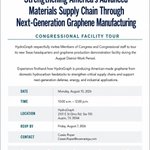
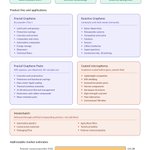


Brilliant marketing by HydroGraph $HGRAF!
Your Conductive Network Has a Weak Link
Conductive compounding has run on the same bargain for decades. Need lower resistivity? Add more carbon black. Then live with the viscosity spike, the brittle parts, and the processing headaches that come along for the ride.
HydroGraph thinks that bargain is overdue for renegotiation.
At AMI Plastics World Expos in Cleveland, November 11 and 12, our team will show how ultra-low loadings of Fractal Graphene™ (FGA-1) work alongside your existing carbon black to build a more effective conductive network. In epoxy at 8 wt% total carbon, swapping just 0.04 wt% FGA-1 in for part of the carbon black cut volume resistivity 110-fold.
Tarek Jalloul, our Business Development Manager for North America, will walk through the data in his technical session, “More Conductivity, Less Filler, Lower Cost.” Bring your toughest conductivity-versus-loading target. We want to hear it.
us.list-manage.com/K6Z3SFGG4…
Seeing a lot of noise, apparently responding to Fuzzy Panda's short-driven thesis, from fellow $HGRAF shareholders. So I put the question to Gemini:
There is, by HydroGraph's admission, an 18- to 24-month lag between a company's initiation of a 'pilot' test of Fractal Graphene and conversion to a commercial contract. $HGRAF is in process with >80 firms at this point. No firms have walked away; they are refining optimal graphene percentages and methods for adding to their product(s). Several are negotiating long-term offtake agreements. CEO Breure indicates at least one (major, iirc) contract is expected to be signed this year. So the foundational question, it seems, is do you believe Breure or Fuzzy Panda. The latter has perverse incentive to lie, while Breure has consistently delivered what's been promised--albeit not always on time. Please analyze, given this information.
Gemini gave a dissertation, presenting myriad formatting challenges. Here's G's edited version, to save me a ton of work:
The $HGRAF short thesis by Fuzzy Panda is structurally broken. It relies on treating a high-tech material science company like a standard commodity stock.
In nanomaterials, a 18-24 month lag from pilot test to contract is the industry norm—not a red flag.
The real metrics show strong product-market fit:
• 80+ firms actively in the pipeline
• ZERO customer churn during testing
• Firms are actively negotiating long-term offtake agreements
The tech is validated. The 4-year+ runway is secured. This is an execution play, not a fraud.
Short sellers profit from near-term FUD. CEO Breure is playing the long game—securing EPA clearances, building a 30-ton Texas facility, and redomiciling to the US.
With a major commercial contract expected this year, the shorts are running out of time.
Understanding motivations is important, if you want to make $$--and to avoid losing $$ to FUDsters. Many of these guys have been honing their fear tactics for decades. If you don't know what you own--or recognize them for who they are--you can make big mistakes.
NFA. DYODD.
Following up on yesterday's off-the-cuff look at the opportunities $HGRAF has in asphalt paving markets, I looked at how much asphalt is used in the US. Per the National Asphalt Pavement Association (NAPA) survey data, U.S. asphalt mixture production was ~440–444 million tons in 2023–2024. At a .01% loading, that equals a potential graphene demand of 44,000 tons *annually*. Getting graphene tested, then spec'd into public sector requirements and bid documents is likely to take a decade--but the huge win-win it creates is compelling.
I then posed the following question to 2Grok:
How would optimal incorporation of $HGRAF's fractal graphene into typical asphalt paving mix affect the following qualities: strength, durability, permeability? Note how these impacts would affect repaving cycles in terms of frequency.
Optimal incorporation of HydroGraph’s ($HGRAF) Fractal Graphene into typical asphalt paving mixes is expected to improve strength and durability while generally reducing permeability (improving moisture resistance), based on the material’s properties and broader research on graphene additives in asphalt. Note that HydroGraph has published data primarily on cement/concrete applications (e.g., low loadings improving compressive strength), with samples under evaluation in construction materials more broadly. Specific published results for their Fractal Graphene in asphalt mixes are limited or not publicly detailed, so the effects below draw on general graphene (including graphene nanoplatelets/GNPs and graphene oxide) literature plus the company’s emphasis on high-purity, low-loading performance via good dispersion.
Strength
Graphene’s exceptional stiffness, high surface area, and reinforcing effect strengthen the bitumen binder and the overall mix. Studies commonly report:
Higher complex shear modulus (G∗G∗) and reduced phase angle, improving elastic response and high-temperature performance.
Better rutting resistance (e.g., lower permanent deformation in wheel-tracking or MSCR tests; improvements on the order of 15–40% in various metrics at optimal doses).
Enhanced Marshall stability, fatigue resistance, and cracking resistance in many cases.
Optimal loadings are typically low (often 0.05–1% by weight of binder, sometimes higher depending on the graphene type and dispersion method). HydroGraph’s material is designed for performance at very low loadings (similar to their 0.02% results in cement) due to its ultrafine morphology (~20–50 nm lateral size, few-layer turbostratic structure) and high purity (99.8%). Good dispersion is critical—agglomeration at higher doses can reduce benefits. Their Fractal Graphene Paste (aqueous, high-concentration) could aid incorporation into compatible systems, though hot-mix asphalt processes may favor dry powder or adapted dispersions.
Durability
Improvements in durability are among the most consistent findings:
Better resistance to oxidative aging and thermal degradation.
Improved moisture susceptibility (higher tensile strength ratios/TSR, reduced stripping potential via stronger asphalt-aggregate adhesion).
Enhanced fatigue life and, in some work, self-healing behavior under certain conditions (e.g., microwave-assisted).
These effects stem from graphene reinforcing the binder film around aggregates, creating a more stable microstructure, and sometimes forming networks that limit crack propagation. Real-world trials of other graphene-enhanced asphalt additives have aimed at extending pavement life through better stiffness, rutting resistance, and endurance while allowing higher recycled content.
Permeability
Graphene generally reduces permeability and improves water resistance rather than increasing it:
Barrier properties and hydrophobicity of graphene hinder water penetration into the binder and at the aggregate interface.
Studies show better water stability (lower mass loss in immersion tests, improved TSR), even in permeable/porous mixes at low doses (e.g., ~0.05%).
This helps mitigate moisture damage, freeze-thaw deterioration, and stripping—key failure modes.
In dense-graded mixes, the effect is primarily protective. In intentionally permeable pavements, low-dose graphene can still enhance durability without fully sealing the structure, though mix design must be optimized.
Impact on Repaving Cycles
Better strength, durability, and moisture resistance should extend pavement service life and reduce repaving frequency. Typical conventional asphalt pavements may require significant rehabilitation or resurfacing every 10–20 years depending on traffic, climate, and maintenance. Graphene-modified mixes with improved rutting, cracking, aging, and moisture resistance could meaningfully lengthen this interval (literature and trials suggest potential gains that support multi-year extensions, though exact percentages depend on dosage, mix design, climate, and traffic).
This would lower lifecycle costs, reduce roadworks disruption, and improve sustainability (fewer materials and lower embodied carbon over time). Realized benefits require proper plant-scale dispersion, mix design validation (e.g., via Superpave or equivalent), and field performance data. HydroGraph’s low-loading approach and pre-dispersed products could help make this economically viable if adapted successfully to asphalt processes.
Caveats: Performance is highly sensitive to dispersion quality, dosage, base binder, aggregates, and climate. Lab results do not always fully translate to the field. Specific testing of Fractal Graphene in asphalt is recommended for optimized formulations. Overall, the literature supports graphene as a promising additive for higher-performance, longer-lasting pavements when properly incorporated.
Again, this is a 'long game' play--but one I believe will play out in $HGRAF's favor. NFA. DYODD.

Wandering the pages of LinkedIn, as I do at times to get a different take from usual news feeds. LinkedIn curates, of course, but mine is quite broad as A) I'm 69 years old (though still needing to grow up, as my better half reminds on occasion); and B) I've had perhaps the most varied career of anyone I know, so have broad interests and experiences.
Today a $HGRAF HydroGraph posting popped up. Not one of the folks I already follow, but a product manager, Ksenia Hancock, from the UK. She was reporting on her time at Fakuma Messe.
If you've never heard of Fakuna Messe, join the club. If you own $HGRAF, though, you *ought* to know of it. From Gemini:
"The 30th Fakuma Messe, the world’s leading international trade fair for industrial plastics processing, took place from October 12 to 16, 2026, at Messe Friedrichshafen in Germany. Organized by P. E. Schall, this anniversary edition brought together roughly 1,600 international exhibitors across 12 exhibition halls."
Here's a link to this year's exhibitors: fakuma-messe.de/en/list-of-e…
Ms. Hancock made the rounds. Here's a snippet after her 1st day:
"...It’s been a good day learning more about the world of plastics processing and compounding. catching up with partners and familiar faces, and meeting new people to explore where HydroGraph’s graphene could help solve some real challenges.
I’ll be around tomorrow morning too, so if you’re at Fakuma and fancy a catch-up before the show comes to a close, drop me a message!..."
Some may think there's little news here. But the news is significant, really. All the hires $HGRAF's been reporting out for the past year? They aren't all C-Suite types. Some are beginning and mid-level employees, out evangelizing on the benefits of HydroGraph graphene. What better place to do so than at *the world's largest* international trade fair for industrial plastics processing this year. Only K Messe, held every 3 years, is larger. Fakuma Messe only occurs in years that K Messe doesn't.
The takeaway is $HGRAF isn't about what's happening on Bay Street or Wall Street. It's about the elbow grease being applied on Main Street. These snippets are glimpses of what most folks don't know: the connections being made; potential clients' eyes opening; starting points of real sales that will continue forward and stimulate others in a growing wave. And Ksenia Hancock is where the $HGRAF rubber--or plastic--met the road last week.


Dan Pike retweeted


'Could you imagine Churchill doing a deal like this with Hitler?'
@ayeshahazarika begins #SundayMorning by reflecting on the diesel deal Donald Trump has made with Vladimir Putin this week.
Watch #SundayMorningWith @ayeshahazarika: trib.al/3sFXPbf
Thinking of Canada today. Wish US leadership still valued our countries' longstanding friendship, and was reaching out to offer whatever aid could help Canada address the situation at CFB Wainwright.
share.google/0abINZo3nTa55dm…

I see a challenging market going forward until 2028. But again, $HGRAF has advantages:
1) An enormous supply of cash and a modest burn rate;
2) A bevy of companies that are running pilot projects to optimize graphene inputs into their products. These companies include a top 10 auto maker, some PTE manufacturers, coatings manufacturers, ~100 in all, last I heard;
3) US Government interest, including USDoW, where a wide swath of companies could make substantially better products with fractal graphene and other HydroGraph products. Graphene inclusion in some military hardware could be stipulated, using $HGRAF specs;
4) Biosensors capable of early--and affordable--detection of cancers, including lung cancers and ovarian cancers. At least one sensor is on the market now for lung cancer, while another can detect ovarian cancer far earlier--and I believe more reliably--than currently available tests.
Just a small sampling of what's coming. And these innovations not only offer significant advances over the status quo, but more often than not they do so while *costing less* to manufacture, due to greater strength with far less usage of presently-required material inputs.
Tough to watch the action of late, but the foundational promise of HydroGraph remains very real. I'm still long.
These are the kind of days that our investing minds claim to long for, even as they elevate our fears. If you've done your homework, are at peace with the long term value of your holding(s), a great time to put some resources to work.
For me, HydroGraph comes to mind. I keep telling folks that, in this economic environment, their recent $70 million raise was brilliant. If you analyze $HGRAF's patents, their solution sets to adding graphene to a wide array of products with amazing, predictable and repeatable outcomes and couple that with their huge stable of partners honing pilot projects towards soon-to-be-deliverable contracts, it's easy to hold and wait.
And the certainty of the redomiciling, coupled with the likelihood of a NASDAQ uplisting early next year, means the wait for impressive returns won't be long for investors--though it may feel interminable to shorts and day traders.
NFA. DYODD. GLTA.
Hearing lots of concern, too much feigned, but some real, over $HGRAF's share price dropping. Here's a few quick thoughts. TL:DR = everything's going to be fine. Wait until January, then check back in. The ride may be bumpy, but the trend will be up.
Full take:
$HGRAF's in a quiet period. They're limited in what they can say, as many voices expressing doubt know and are leveraging. Lots happening beneath the waves. Raising $70 million will look brilliant over the next few years.
The cost was minimal; the warrants were unfortunate, but we don't see much of what's going on. I want $HGRAF prepared to deliver when contracts are signed.
- That means $$ in place to hire key folks now.
- It means sufficient funds to expedite Hyperion production and installation at WGI aligned with expected US orders.
- It means $$ to deploy to creating a production facility at Manchester, should it be necessary.
- It means $$ available for multiple other contingencies that may arise in the next 24 months.
Deals will come. I don't want management to alter its course to satisfy shareholders' impatience.
Management should *continue* putting the pieces in place to deliver the tremendous value they've been unlocking for $HGRAF's shareholders and clients. The SP variance is part of the ecosystem at this stage. I don't want future returns damaged because management felt it necessary to assuage folks' insecurities.
Too many of the current voices are actively engaged in trying to sabotage what HydroGraph is doing for reasons that are deliberate and malicious, while feigning innocence and good intentions.
Give things a chance to play out. Then talk to me in January.
Just thinking it's good to reread the J6 Committee report, as a reminder of just *HOW BAD* January 6, 2021 was. And who was responsible. And all the folks then, and since, aiding and abetting this monstrous crime against our country and its Constitution.

No surprise Trump doesn’t want you to see the J6 Committee evidence. Here’s the GPO website with transcripts, documents, exhibits & our meticulously sourced 800+ page final report. Also links to our hearings. Might be a good time to watch those again. govinfo.gov/collection/janua…

Reading a lot of buzz about the recent announcement from the GEIC at University of Manchester and Duo regarding the use of Duo's new, graphene-enhanced polyethylene (PE) shipping bags.
Stronger, lighter, more recycled content--what's not to like? More importantly, *who's* graphene is in the secret sauce? I haven't weighed in, as several posters have, making an overwhelming case that $HGRAF is the likely provider. And by likely, I mean along the lines of 2-standard-deviations-from-the-mean likely. Here's a couple links; there are a few more, but I'm pressed for time atm. Apologies I haven't listed them all; I'll try to do a fuller sharing later today...
Bottom line is, great news! and further confirmation that HydroGraph management is on top of its game...
Hat tip to teapawt.org/jamesscher31816 for prompting this post.
teapawt.org/ArneriDesign/status/21…
teapawt.org/zzzTrAsHeRzzz/status/2…
teapawt.org/HS_Mentalistic/status/…
teapawt.org/Swedish_uranium/status…
teapawt.org/Swedish_uranium/status…
duopackaging.com/packaging-s…

