

OG • Was @Bill since 2009 • Google Maps → Generative AI • AI fine art, workflows & rabbit holes • Not an expert — just further down the hole than you 🐇
Latent Image
Joined January 2009
- Tweets4.3K
- Following314
- Followers650
- Likes17.5K


Bill | AI Imagery retweeted
Nice list.
Can't help but wonder how this will fix my air conditioner, get my car unlocked, or repair a plumbing leak.
Learn to do something with your hands instead of your keyboard.


Bill | AI Imagery retweeted

This is f*cking insane. Former Google CEO Eric Schmidt just told everyone the easiest way to get rich in the next two years, and it's not stocks or crypto:
"If you really want to make money, it's actually easy, found an agentic AI company, I mean build an agent to do something
If you build a better agent than anyone else, you can probably build one incredible company and own it yourself"
The man who ran Google for 10 years explains in under 30 seconds why the next year or two is the agentic period, and why the window won't stay open
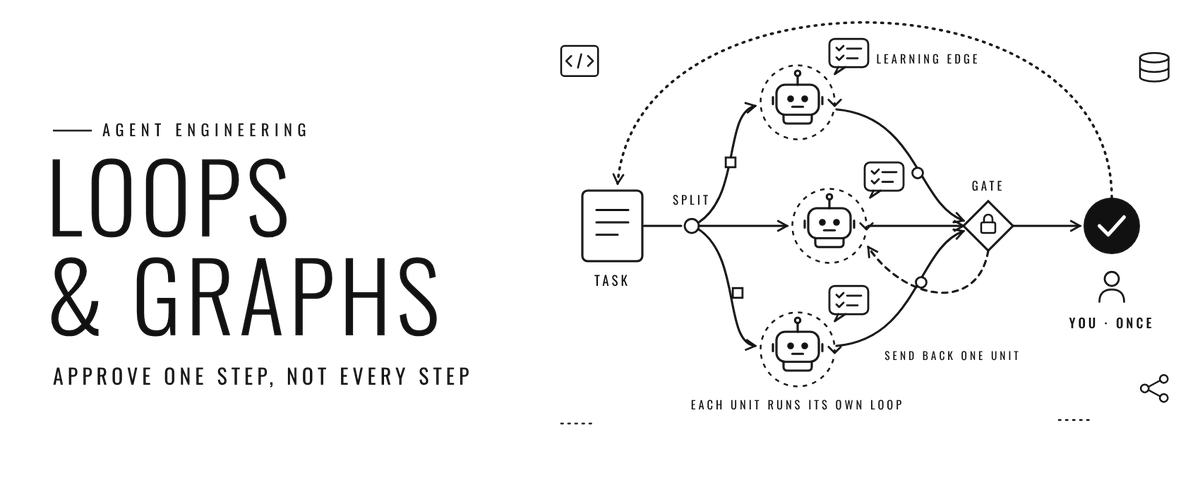
Prompts → Claude Code → Loops → Graphs → Gates → A Company You Own Yourself
Save this before it disappears from your feed
Everything below is free:
Building effective agents (Anthropic)
anthropic.com/engineering/bu…
How Anthropic built its multi-agent research system
anthropic.com/engineering/mu…
Harnesses for long-running agents
anthropic.com/engineering/ef…
Writing tools for agents
anthropic.com/engineering/wr…
Claude Code 101
anthropic.skilljar.com/claud…
Claude Code in action
anthropic.skilljar.com/claud…
Prompt engineering
platform.claude.com/docs/en/…
Subagents (parallel work)
code.claude.com/docs/en/sub-…
Hooks (checks that can say no)
code.claude.com/docs/en/hook…
CLAUDE.md + memory
code.claude.com/docs/en/clau…
Skills
code.claude.com/docs/en/skil…
MCP
code.claude.com/docs/en/mcp
LangGraph (graphs of agents)
langchain-ai.github.io/langg…
Karpathy's autoresearch (an agent in a loop)
github.com/karpathy/autorese…
All of this costs $0
95% will spend the agentic period scrolling AI threads. The 5% who ship agents will own the companies that come out of it
Bookmark it and start with the first link tonight
Then read how to make an agent that works for hours without you in the Loops & Graphs guide below ↓



Bill | AI Imagery retweeted

Of course it's all a lie ... Every time Sniffy the Clown opens his mouth, it's nothing but lies.

Bill | AI Imagery retweeted

6 days and $40,000 of compute with GPT-5.6 Sol to find a critical vulnerability in Chrome, claiming Google’s first full-chain reward in 2026 for a vulnerability that would affect an estimated 1 billion users.
Highlights the opportunity for defenders to utilize these tools to secure their software to unprecedented levels:

For the second time in Google Chrome’s history, Google awarded a $250,000 bounty for a full-chain exploit… to @XBOW. Here’s the full story:
At an all-hands at the start of 2026 in Malta, I set the team a crazy challenge. A full-chain exploit of Chrome by the annual Black Hat cybersecurity conference in August.
I believed there were few better tests of whether @XBOW could move beyond web applications to desktop software, servers and devices.
Chrome is one of the most hardened pieces of software on the planet, used by more than half the world’s population.
A full-chain exploit lets an attacker take total control of a machine, where they can read every email, password and bank login the user types. You don’t need to download anything or click a phishing link. Visiting the wrong site is enough.
So @moyix, Andres Luksenberg, Baul Lee, and Willem Pinckaers took on the challenge along with a fifth teammate: OpenAI's GPT-5.6 Sol.
They built a chain they thought would win, but Google told us they already knew one of the bugs.
We were already in Las Vegas for Black Hat and DEF CON, and the team didn’t want to go home without the win.
So Brendan and the agents built a new exploit in just 6 days.
We submitted it to Google and waited.
The news came through that we'd done what should’ve been impossible. A full-chain bounty of $250,000, the first awarded under Google’s 2026 rules.
It took just 6 days and $40,000 of compute to construct an exploit that affects a billion users of Chrome on Windows. An intelligence-agency veteran told me his team used to spend 6 months on this kind of vulnerability.
My takeaway: the cost of finding truly critical vulnerabilities is collapsing, for attackers and defenders alike. Restricting powerful models is not the answer; GPT-5.6 Sol is already public.
But defenders have one advantage attackers never will: they can test their own code first.
Assume your software is exploitable. Whoever is hunting your bugs has the same building blocks we did.
This is cause for urgency but not panic.
XBOW is now developing an autonomous product for testing compiled software (desktop applications, servers, embedded devices), and partnering with the world’s top organizations to design that product.
If you’d like to be one of them, get in touch.
P.S. Restart Chrome whenever the Update button appears!


Bill | AI Imagery retweeted

Dusting off this tweet from April because this gap in shared understanding of LLM capability is *widening*. It's now less "two groups of people speaking past each other" and more a sharp funnel.
- Napkin math somewhere around 6B people (~75% of the population) have barely come in contact with LLMs at all.
- Around 1-2B (~20%) are casual and infrequent users of free-tier ChatGPT-like products. This group sees derpy chatbots and treats them a bit like a better Google search, a writing aid, or etc. Maybe an agent tries to book you a flight. I have non-tech friends who (reasonably, imo) say they have not much use for it at all. Even many professionals outside of math&code are in this tier. For example, execs and many other functions spend a lot of their time talking to other people, so while they understand what is happening intellectually, it is still second-hand and a bit abstract.
- Now we get to professional use of frontier-grade LLMs in math&code. Somewhere around 20M people (0.2%) see first-hand that large, complex projects that used to take them weeks/months can now be completed by agents with a prompt. Building apps, copying apps, translating apps, decompiling apps from binaries... This has all happened very quickly and recently - less than 1 year ago, I was writing code manually by hand, typing memorized computer code commands into a code editor character by character, occasionally pressing Tab to autocomplete a little chunk of code.
- And finally we get to the ~5,000 people (~0.00006%) with access to frontier-grade systems internally. The external world has seen the preview. It looks like swarms of thousands of agents collaborating over weeks on software mega projects: minting zero days, running cyber attacks and defenses at machine speeds, discovering new science, advancing the frontier of mathematics. Things that would have taken top professionals in the industry years of work. Meanwhile, human review and comprehension are starting to fall behind. For example, people are still involved in the "archeology" of the OpenAI-HF incident from many months ago. Mathematicians may be poring over the 722 manuscripts on frontier mathematics for a while.
The funnel is driven by a combination of factors:
1. The impact scales with ambition, problem size, and horizon. A question with a paragraph answer barely stresses the system. You need a reservoir of big, difficult problems that you really care about. This aspect drives the consumer / professional dimension of the funnel.
2. The jaggedness of the system (which I have written about a lot separately). Capability peaks in domains that are digital, verifiable and economically valuable. This is because LLM capability emerges from reinforcement learning on verifiable rewards on a curated environment mixture driven by revenue potential. This aspect primarily drives the area (e.g. math&code) dimension of the funnel.
3. Access. Free-tier, paid-tier, internal.
So this is the weirdness of the moment. The general public has mostly not interacted with these systems. When they have, it looks like a derpy chatbot. The majority of professionals still see only a modest uplift. And a small sliver of professionals are experiencing the vertigo of the curve going vertical. And it is all happening at the same time.

Judging by my tl there is a growing gap in understanding of AI capability.
The first issue I think is around recency and tier of use. I think a lot of people tried the free tier of ChatGPT somewhere last year and allowed it to inform their views on AI a little too much. This is a group of reactions laughing at various quirks of the models, hallucinations, etc. Yes I also saw the viral videos of OpenAI's Advanced Voice mode fumbling simple queries like "should I drive or walk to the carwash". The thing is that these free and old/deprecated models don't reflect the capability in the latest round of state of the art agentic models of this year, especially OpenAI Codex and Claude Code.
But that brings me to the second issue. Even if people paid $200/month to use the state of the art models, a lot of the capabilities are relatively "peaky" in highly technical areas. Typical queries around search, writing, advice, etc. are *not* the domain that has made the most noticeable and dramatic strides in capability. Partly, this is due to the technical details of reinforcement learning and its use of verifiable rewards. But partly, it's also because these use cases are not sufficiently prioritized by the companies in their hillclimbing because they don't lead to as much $$$ value. The goldmines are elsewhere, and the focus comes along.
So that brings me to the second group of people, who *both* 1) pay for and use the state of the art frontier agentic models (OpenAI Codex / Claude Code) and 2) do so professionally in technical domains like programming, math and research. This group of people is subject to the highest amount of "AI Psychosis" because the recent improvements in these domains as of this year have been nothing short of staggering. When you hand a computer terminal to one of these models, you can now watch them melt programming problems that you'd normally expect to take days/weeks of work. It's this second group of people that assigns a much greater gravity to the capabilities, their slope, and various cyber-related repercussions.
TLDR the people in these two groups are speaking past each other. It really is simultaneously the case that OpenAI's free and I think slightly orphaned (?) "Advanced Voice Mode" will fumble the dumbest questions in your Instagram's reels and *at the same time*, OpenAI's highest-tier and paid Codex model will go off for 1 hour to coherently restructure an entire code base, or find and exploit vulnerabilities in computer systems. This part really works and has made dramatic strides because 2 properties: 1) these domains offer explicit reward functions that are verifiable meaning they are easily amenable to reinforcement learning training (e.g. unit tests passed yes or no, in contrast to writing, which is much harder to explicitly judge), but also 2) they are a lot more valuable in b2b settings, meaning that the biggest fraction of the team is focused on improving them. So here we are.
You may have heard of this. It's an open-source clone of Adobe's Creative Suite.
Lightroom clone is awesome
getartcraft.com/apps

28

Bill | AI Imagery retweeted

A ROBOT CLEARS A HOUSE FASTER THAN AN ASSAULT TEAM AND MAKES 0 MISTAKES
Look at the caption at the bottom of the frame, not at the machine. Test CQB-18. Headshot evaluation. That is the name of the exercise, printed by whoever runs the range.
Clearing rooms is the hardest thing infantry does. A room is decided in about 2 seconds, a team of 4 has to move as 1 body, and most of the training is not about shooting. It is about not shooting the wrong person.
Every mistake in a house comes from a nervous system. Tunnel vision. Hearing that drops out after the first shot indoors because a rifle fired inside 4 walls is deafening. A pulse at 160 and hands that will not stay still. Entire doctrines exist to work around those 4 problems.
A machine has none of them, and that changes the aiming point. Armies train center mass because the chest is the only thing a shaking human can reliably hit. Take the human out and the point of aim moves up about 30 centimetres, permanently.
Which quietly deletes the most important thing a soldier wears. Plates stop rifle rounds in the chest, and 10 kilograms of armour has been worth carrying for 60 years for exactly 1 reason: everybody was shooting at the chest.
Body armour was always a bet that the shooter is human.


Bill | AI Imagery retweeted

最搞的是评论区已经脑洞大开了:
“iPhone 都能跑,我那台吃灰的 M4 iPad Pro(40Gbps 雷电带宽 + 16G 内存)岂不是要上天?”
“苹果官方没做出来的生态互联,被网友手搓出来了。” 😂
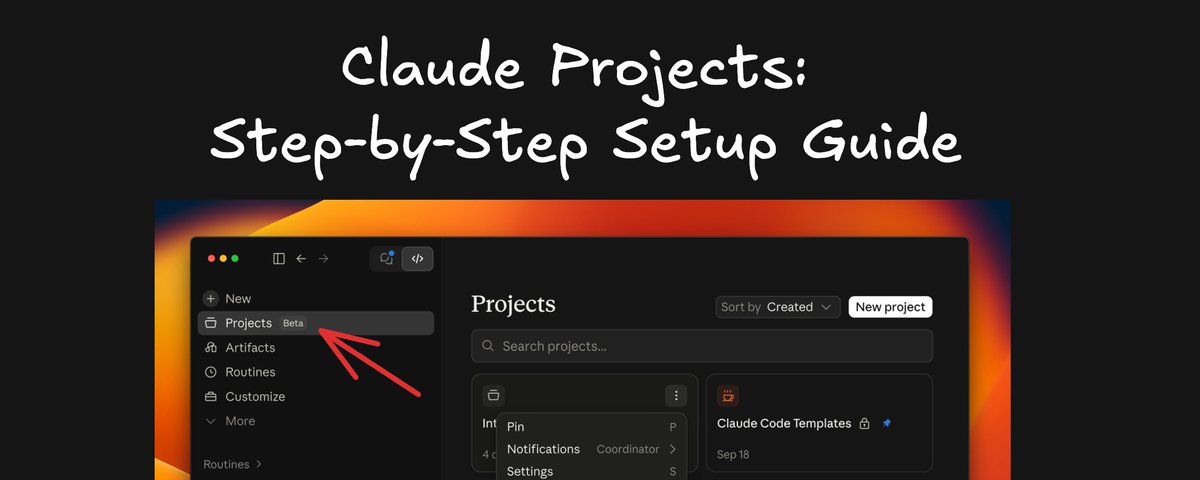
项目叫 backburner,代码已开源在github.com/StayLameBro/backb…




Bill | AI Imagery retweeted

Since I see many sharing this from other accounts instead of mine so I figured I would share again. Please share my X version if sharing. Dead Mouse Delivery.
Bill | AI Imagery retweeted

Claude Opus 5.5 writes a fugue in the style of Bach. I called Astra’s fugue the most impressive musical feat I’d ever seen from an LLM, and this is just as good. The circle-of-fifths sequence beginning at 1:13 is beautiful. The interplay of voices is natural and satisfying. LLMs are getting to the point where their music is good enough to listen to for pure enjoyment.