
AI x drug discovery. Generating antibodies @ Divergence Labs. Formerly PhD @MIT
Joined February 2024
- Tweets50
- Following641
- Followers1K
- Likes3






Pinned Tweet
Binder design has come of age thanks to generative models—but how can we access the wider array of dynamic, multistate protein functions, so elegantly employed by nature?
@mihirbafna14 and I are excited to share SwitchCraft, a framework for designing such functions. (1/7)
Bowen Jing retweeted

Public preview of BioEmu2! @MSFTResearch AI for Science’s new foundation model for biomolecular structure, dynamics and function. Open weights, MIT license.
github.com/microsoft/bioemu2
Movie: BioEmu2-simulated binding of intrinsically disordered peptide PUMA to MCL-1 receptor. 🧵⬇️
Super exciting to see the $1.8B commitment to data collection towards the virtual cell led by @biohub @alexrives ! The best direction to take this investment IMO is to scale up (no pun intended) Thousandfold Expansion Microscopy from @eboyden3 @AliHShaib, enabling in situ, nm-resolution imaging of individual molecules in intact cells with simple light microscopy.
Imagine blowing up a cell to the size of a marble and studying the identity, interactions, and even conformations of every individual macromolecule in a diseased tissue. This kind of full state observability will go a long way to closing the gap between observational and causal understanding (not to mention generating petabytes of high-SNR data for AI models).

Hello world, meet 1,000× Expansion Microscopy.
1,000,000,000× expansion by volume! A gel that starts at a few centimeters will then expand to the volume of an Olympic swimming pool. biorxiv.org/content/10.64898…
In our new bioRxiv preprint, work carried out between MIT and UMG, led by Helena Hu in collaboration with scientists from the labs of @eboyden3 Ed Boyden, Silvio Rizzoli, and myself, we present Thousandfold Expansion Microscopy.
By enlarging biological specimens across multiple rounds of expansion, molecular-scale features, as small as the distances between adjacent amino acids, can be visualized with conventional optical microscopes.
Democratizing super-resolution microscopy.

Bowen Jing retweeted

When do biological reasoning models use their biological inputs?
High performance can create a mirage of reliance on biological representations. Reasoning traces don’t always reflect the evidence.
Our paper examines these limits and paths to better biological reasoning models.
Bowen Jing retweeted

Excited to share a preprint of my main PhD work in @nickpolizzi_'s lab - introducing LUCI-tag, a new orthogonal self-labeling protein tag based on K-Ras(G12C) and its covalent inhibitors! biorxiv.org/content/10.64898… (1/16)

Bowen Jing retweeted

Today, we’re announcing mBER-2, our latest AI protein design system, and sharing a bit of how we use it to explore biology in vivo at scale.
For a long time, we’ve been working on what I think of as “frontier problems” in medicine and biology. We know a lot about the targets involved in disease, but there is still an enormous amount of biology we haven’t explored, and potential uses for that biology we haven’t discovered.
One of those problems is drug delivery. There are thousands of potential targets, and most receptors remain unexplored as routes for delivering medicines. We want to understand which ones we can use, where they can take a drug, and what kinds of molecules make that possible.
Ultimately, we need to test these molecules in vivo to understand what they actually do. We’ve spent the last six years building measurement technologies that let us generate millions of measurements in living systems.
mBER-2 is an AI protein design system built for that scale of in vivo measurement. Our goal is to generate binders across the full range of targets we care about, while systematically exploring the possible binding sites on each one. It’s not just what you bind, but where and how you bind that determines whether a molecule performs it's function. mBER-2 lets us probe those differences at massive scale.
We’re also sharing a look at some of our in vivo data. We’ve designed more than 50 million molecules across over 4,000 targets, and screened millions of molecules in living systems. By probing hundreds of receptors, we’ve found new pathways for delivering genetic medicines into fat that outperform industry benchmarks by a large margin.
This is just the beginning. We call the space of all bindable sites across proteomes the EpiTome. As we explore it, we’re building the data to connect AI design, receptor binding, and what a molecule actually does in a living organism.
Much like the idea of a virtual cell, we envision a Virtual Organism that helps us design medicines with specific properties in mind. The foundation is our own in vivo data, connecting molecular design to outcomes measured in living systems.
The endgame is to use AI to explore more biology, measure what happens, and use what we learn to design better medicines. Every round should deepen our understanding of biology and improve our ability to build molecules that do what we need them to do.
Bowen Jing retweeted

Genomes are full of dark matter of unknown functions.
We present Minerva, a new method for discovery guided by genome language models. Minerva reveals the interactions hidden in non-coding DNA, pointing to hundreds of new putative RNAs and repetitive elements per bacterial genome. Minerva allows us to find and study elements invisible to traditional methods at orders of magnitude greater scale than before.
Bowen Jing retweeted

In light of the progress in mathematics, we at Edison Scientific and FutureHouse have assembled a set of Millennium Problems for Biology. They are chosen to be very hard to solve but very easy to validate in a simple laboratory environment. Any of these, if solved, would mark a major advance in biotechnology, and most of them would contribute materially towards curing disease. These are, in some sense, the “last reasonable eval” for AI in biology. This was work primarily by @MichaelaThinks and myself, with contributions from many others.
Short descriptions below. The full descriptions of the problems with acceptance criteria are at the Bio Millennium Problems website, linked in the next post. Share more if you have ideas. If they meet our criteria, we’ll add them to our list (with attribution and permission).

Bowen Jing retweeted

Our wet-lab validation campaign for Proteina-Complexa is now on bioRxiv! It includes some new exciting experimental results, from large protein structures (fully codesigned!) to functional carbohydrate binders.
biorxiv.org/content/10.64898…
Thread with some of the additions 🧵1/n

Bowen Jing retweeted

Nature research paper: Development of a random background to understand ligand optimization
go.nature.com/4h6g3u9

Bowen Jing retweeted

The largest experimental protein sequence-fitness dataset: 13k measurements across 3 proteins reveals that fitness landscapes are rugged, there are many functional sequences between orthologs, and current ML models can't distinguish functional and non-functional sequences.

Bowen Jing retweeted

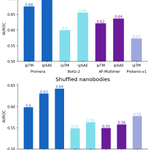
I’m so excited to report that pLM-designed peptides work in vivo!! 🧬🐭 In our new @ScienceAdvances paper, a SaLT&PepPr guide directs selective degradation of pathogenic β-catenin in mice! A huge milestone for sequence-based binder design. 🌟
📜: science.org/doi/10.1126/scia…
🧵👇🏾

Bowen Jing retweeted

One of the puzzles in perturbation prediction, and the cause of many food fights, is that deep learning models often lose to the simplest possible baseline-- just predict the average response across all perturbations.
This summer, multiple labs converged on an answer to this.
Bowen Jing retweeted

Breakthroughs in AI for biology are largely catalyzed by the diverse datasets deposited by scientists.
To make experimental data on biomolecular dynamics from NMR as easily accessible as the PDB, @HWaymentSteele and I are releasing makeshift, installable via PyPi
Preprint: biorxiv.org/content/10.64898…
Docs: makeshift-docs.readthedocs.i…

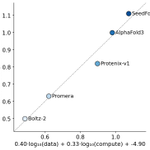
Claude’s protein design results give insight into whether differences in success rates can be explained by structural confidence, or if there are latent factors. The evidence seems to favor the latter, suggesting that method improvements will remain challenging to judge in silico


Many drugs work by binding to a specific target in the body and blocking or changing what it does. An important first step in the drug development process is designing a molecule that can bind tightly to its target. Traditionally, that's meant weeks or months of expert work per target, sifting through a large number of candidates to identify the few that work.
We wanted to test if Claude could successfully design novel protein binders from scratch (also called de novo design). With a protein design prompt written by a human expert, Claude autonomously designed protein binders against 14 out of 15 targets.
We then worked with Adaptyv Bio and Twist Bioscience, who independently built and tested the proteins Claude designed.
Bowen Jing retweeted

Following the publication of our phage gen paper, I wrote some personal thoughts on biosafety and biosecurity as generative biology improves.
Given the trajectory of progress, there should be concern and urgency -- but also optimism.
brianhie.com/present_and_fut…

Bowen Jing retweeted

Dyna-1 is now published in @Nature! Since this preprint thread 18 months ago, there's prospective experimental validation and more!
nature.com/articles/s41586-0…
Many congratulations to coauthors @ginaelnesr @DorotheeKern and the whole team!

Protein dynamics was the first research to enchant me >10yrs ago, but I left in PhD bc I couldnt find big expt data to evaluate models.
Today w @ginaelnesr, I'm thrilled to share the big dynamics data I've been dreaming of, and the mdl we trained: Dyna-1.
rb.gy/de5axp

It’s getting hard to keep track of all the new open-source cofolding models coming out. To help everyone stay up to date, I'm excited to share cofoldarena.ai, a PDB-synced leaderboard of open models, updated weekly. All predictions are available to view & download! (1/4)
We can also dynamically select release windows to construct custom evaluation sets — and probe the possibility of unintentional bias or training leakage. Are there any models whose performance changes over time? 🤔 (3/4)