

Astrophysicist. Interested in numerical cosmology, dark matter, galaxy formation. Computer graphics enthusiast. Assistant Professor at @unimib.
Milan, Italy
Joined September 2014
- Tweets255
- Following135
- Followers257
- Likes393




Alejandro Benítez-Llambay retweeted

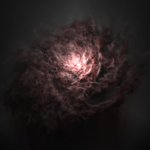
The galaxy, also known as Messier 104, gets its nickname from its central bulge and outer dust trail, which gives it a sombrero-like appearance from our vantage point
spklr.io/6019EK9QU

Alejandro Benítez-Llambay retweeted

Astronomers confirm a major prediction of the big bang creation model where dark energy is the universe's dominant component & cold dark matter is the 2nd most abundant component. They found a starless massive gas cloud in M94's halo. The hydrogen gas in this cloud has a mass equal to a million Suns, has a 9,000 light-year diameter, & contains no luminous stars, implying that it is relic gas cloud left over from the cosmic creation event. You can read about the discovery here: iopscience.iop.org/article/1…

Alejandro Benítez-Llambay retweeted

If you've ever wondered what Hubble and Webb were observing at any time? 👀
Space Telescope Live can show you what the telescopes are looking at now and what the next planned observation will be, all in one space (pun intended 😁): spacetelescopelive.org/

Alejandro Benítez-Llambay retweeted
Scientists trained Hubble’s sharp vision on a starless, gas-rich, dark-matter cloud and identified a new type of astronomical object—a failed galaxy that never produced stars. Nicknamed Cloud-9, it is considered a fossil from the early universe: news.stsci.edu/4bdj2Ov #AAS247
Alejandro Benítez-Llambay retweeted

NEW from #AAS247: NSF NRAO Radio Telescopes Help Reveal Cloud-9, a Starless Dark-Matter “Failed Galaxy” Near M94
public.nrao.edu/news/starles…
📸 Credit: NASA, ESA, NSF VLA, Gagandeep Anand (STScI), Alejandro Benitez-Llambay (University of Milano-Bicocca), Joseph DePasquale (STScI)

Alejandro Benítez-Llambay retweeted

Our new paper with @ximexram on a comoving framework for planet migration is on arXiv!
Simulating planets moving through their disk is computationally expensive. Our new method solves this by keeping the planet fixed, making simulations over >10x faster!
Alejandro Benítez-Llambay retweeted
From preprint to final publication! The journey for this review on planet-disk interaction is complete.
The officially published version is now available online. I hope it serves as a useful resource for the community!
Published version: doi.org/10.1016/B978-0-443-2…

Preprint of my review chapter on planet-disk interactions for the upcoming Encyclopedia of Astrophysics is on arXiv. It provides a first solid approach into planet-disk interactions for both undergraduate students and researchers from other fields.
arxiv.org/abs/2410.00374


Alejandro Benítez-Llambay retweeted

Interested in helping find new Milky Way satellite galaxies? Join "DELVE Dwarf Galaxy Quest: Milky Way Neighbors" on Zooniverse to classify potential candidates! zooniverse.org/projects/ywyh…

Alejandro Benítez-Llambay retweeted

University of Chicago: Possible Sign of Life in Deep Space Faces New Doubts news.uchicago.edu/story/poss…
Alejandro Benítez-Llambay retweeted

Ottenute le prime immagini del filamento cosmico che unisce due galassie in formazione, risalente a quando l’#Universo aveva solo 2 miliardi di anni 🔭
La scoperta apre una nuova prospettiva per comprendere l'essenza della materia oscura 🪐
@INAF_astro
unimib.it/comunicati/ragnate…

Alejandro Benítez-Llambay retweeted
It's amazing to see what we can achieve by applying our recent developments! #nebula and #sphviewer2 bring efficient and exciting ways to render numerical simulations!

When our new tech for sphviewer2 intersects with the genius of @pabllam and his new nebula code, you get stunning images like this: an SPH dusty galaxy. I don’t recall seeing anything this cool! Stay tuned for more exciting developments in simulation rendering tools!


Alejandro Benítez-Llambay retweeted
In this experiment with my new code nebula I simulate the ethereal beauty of light penetrating dense clouds. By leveraging the power of GPUs, we can explore the intricate interplay between light and volumetric media, creating visually stunning and immersive experiences.
Alejandro Benítez-Llambay retweeted
I'm back with another new Milky Way satellite galaxy from the DELVE survey! Introducing Aquarius III: arxiv.org/abs/2410.00981. We argue it's interesting because of its cold velocity dispersion + orbit which keeps it far from the disk plane --> formed in a very-low-mass DM halo?
Alejandro Benítez-Llambay retweeted
Preprint of my review chapter on planet-disk interactions for the upcoming Encyclopedia of Astrophysics is on arXiv. It provides a first solid approach into planet-disk interactions for both undergraduate students and researchers from other fields.
arxiv.org/abs/2410.00374
Alejandro Benítez-Llambay retweeted
I would like to advertise our recently accepted paper led by David Velasco-Romero at @Princeton. #FARGO3D simulations show that eccentric planets (0.1-8 Earths) can get locked near dust rings due to their own accretion (heating/thermal torque).
Link: arxiv.org/pdf/2407.16546

Alejandro Benítez-Llambay retweeted

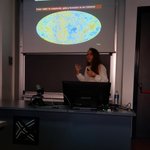
Awesome morning sessions ft. @bllalejandro , Yamila Yaryura, @fstasys and @DanteJPaz among others.
#FoF2024

ALT Alejandro Benítez Llambay during his invited talk at FoF2024

ALT Yamila Yaryura during her talk at FoF2024

ALT Federico Stasyszyn during his talk at FoF2024

ALT Dante Paz during his talk at FoF2024
Alejandro Benítez-Llambay retweeted
Everything is ready for today!
#FoF2024
Alejandro Benítez-Llambay retweeted
Wednesday 10th
@bllalejandro is our invited speaker for the morning session.
Full program available here: fof.oac.uncor.edu/2024/progr…
#FoF2024

ALT Wednesday 10th at 9am, Alejandro Benítez Llambay from the University of Milano-Bicocca (Italy) presents a talk entitled "The recent discovery of a starless dark matter halo" as an invited speaker at the Friends of Friends Meeting 2024.
Alejandro Benítez-Llambay retweeted
Our new paper on a thermodynamic criterion for the formation of Circumplanetary Disks, arxiv.org/abs/2402.14638, led by Leonardo Krapp @krappleo is a nice example about the utilization of the RAM method to increase the resolution locally around a planet to reduce computing cost.

Happy to share our new paper arxiv.org/abs/2305.05362 where we generalize the FARGO algorithm on refined meshes. Our new RAM method speed-up calculations by more than a factor 10🚀. Check it out on CPUs and GPUs! bitbucket.org/fargo3d/public @krappleo @ximexram
