

Former Chicagoan, current suburbanite. Principal, Fixed Income Manager Research at Morningstar. Opinions mine. I like D&D. Disclosure: https://teapawt.org/t.co/kkUgmc7Sku
Joined August 2015
- Tweets3.2K
- Following438
- Followers1.1K
- Likes4.5K





Pinned Tweet
Reminder -> When less-liquid securities are put into daily NAV wrappers, lower volatility (standard deviation) is often an indicator of higher risk. This is the opposite of what most equity investors experience and learn to internalize.
Brian Moriarty retweeted

.@MorningstarInc's own @bpmoriarty and Jack Shannon recently joined me on "The Long View" to discuss how their team puts semiliquid funds through their paces in the process of assigning Morningstar Medalist Ratings to a select subset of this fast-growing menu of products aimed at offering advisors and individual investors a more convenient means of tapping into private markets.
We framed our conversation around the "P's" that are central to their team's due diligence:
⚙️ Process - Managing liquidity is always an area of emphasis, but receives even greater attention in the case of semiliquid funds, as managers must balance portfolio liquidity with investors' expectations for excess returns.
👨🍼 Parent - No different than in public markets, investing in private markets means managing the tension between investment success and the desire to grow fund assets. Morningstar's manager research team keeps a keen eye on the interaction between deal teams and investment teams in this space.
🧑🦰 🧔♀️ People - Experience, team structure, incentives, co-investment, and more factor into the team's assessment of those responsible for managing these funds--much as is the case with traditional public markets funds.
💵 Price - There's no question that semiliquid funds are more expensive than traditional mutual funds and ETFs. The question is--as always--are they worth it?
morningstar.com/personal-fin…

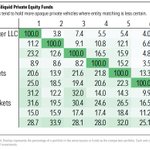
How private is your private portfolio? That's a question we've wanted to answer for a while, and we're out with some initial research. Venture capital semiliquid funds were (unsurprisingly) the most exclusive, while direct lending funds were the least exclusive.


My colleague Jack Shannon did some phenomenal but simple research on why semiliquid redemptions maxing out was inevitable: "Roughly 80% of all funds with at least five years of operating history saw at least one 12-month period of 20% redemption."
spr.ly/6010B6dUuo

3
140
A lot of ink (and angry tweets) has been spent on private credit and semiliquid funds recently, and in the deluge I think a few basic facts have been forgotten or ignored:
I don't have any insight into the 14% number, but the "no gates" is objectively wrong. Cliffwater Corporate Lending offers a 5% quarterly tender, meaning any redemptions above 5% will be prorated. They can flex up to 7% if they want to.

1
3
377
My colleague Alec Lucas is out with our take on the BCRED tender offer story. As usual, it's more nuanced than most critics and defendants have made it out to be. Initial redemptions came up above 7%, some portion of which came from a feeder fund...
