

The California Department of Community Services and Development (CSD) administers energy and community service programs for low-income Californians.
- Tweets3.9K
- Following325
- Followers2.1K
- Likes365




ALT A courtroom with wooden benches and an American flag in the background. Text on the image reads, "What if a courtroom could be a place of hope, healing and transformation? Read Justice Charles F. Adams’ perspective on CARE Court in CalMatters." The CalHHS logo is in the bottom right corner.

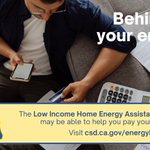
ALT Person smiling, reviewing bills on their laptop with a credit card. Overlaid messaging alongside logo for the Department of Community Services and Development: "Behind on your energy bills? The Low Income Home Energy Assistance Program may be able to help you pay your energy bills. Visit csd.ca.gov/EnergyBills to apply."

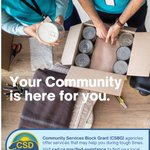
ALT A woman smiles, holding a box of supplies. Overlaid messaging alongside logo for the Department of Community Services and Development: "Your community is here for you. The Community Services Block Grant (CSBG) agencies offer services that may help you during tough times. Visit csd.ca.gov/find-assistance to find your local CSBG agency today."


ALT State leaders and college students seated around a square-shaped table. Additional attendees are sitting along the wall in the room. A banner and screen presentation from the SF-Marin Food Bank are at the front of the room.

ALT This image shows an older adult woman with her closed eyes in a calm setting, accompanied by the text "Your mental health matters" and "#WorldMentalHealthDay." The logo for CalHHS is visible in the top right corner.


ALT An adult holding a baby. "Young children, pregnant people and adults 50+ may be eligible for the RSV vaccine."

ALT A couple smiling and embracing their small child. Overlaid messaging alongside logo for the Department of Community Services and Development: "You have better things to worry about. The Low Income Home Energy Assistance Program may be able to help you pay your energy bills. Visit csd.ca.gov/energybills to apply."

ALT What should I do?

ALT You can take a few simple steps now. Stay Informed. Sign up for local emergency alerts, pay attention to weather forecasts, and follow instructions from local officials. Make a Plan. Think about where you would go and how you would get there if you needed to leave your home. Plan for Daily Needs. Think about medications, medical equipment, transportation, pets, communication needs, and anything else you rely on each day. Stay Alert During Storms. Flooding can happen in places that have not flooded before. Never drive through flood Know Where to Get Help. Call 211 for information about local services and resources. Call 911 in an emergency.

ALT What is El Niño?

ALT El Niño is a natural weather pattern caused by warmer ocean water in the Pacific. It can increase the chance of strong storms in parts of California. Strong storms can bring heavy rain, flooding, landslides, power outages, road closures, and disruptions to services and care. El Niño increases the risk of severe weather, but it does not guarantee that every area will be affected.

ALT What is the State of Emergency?

ALT The Governor declared a State of Emergency to help California prepare before severe weather happens. The State of Emergency helps California: Plan with local and tribal governments and share information. Get needed supplies, equipment, and services faster. Move flood-fighting supplies and other resources where they may be needed. Speed up work that can reduce flooding, landslides, and other risks. The State of Emergency does not mean a disaster has already happened. It also does not automatically provide disaster assistance or financial help to individuals and families.

ALT Volunteers working together to pack a box with supplies. Overlaid messaging alongside logo for the Department of Community Services and Development: "Real help where you need it. The Community Services Block Grant (CSBG) agencies offer services that may help you during tough times. Visit csd.ca.gov/find-assistance to find your local CSBG agency today."

ALT Image of blue sky with solar panels on lower half of image. CSD Logo overlay along with text: October 7, 2026, HAPPY ENERGY EFFICIENCY DAY CALIFORNIA. CSD's Low-Income Weatherization Program. 608,600 Greenhouse Gas Emissions Reduced in Metric Tons. 39,741 Households Have Lowered Energy Costs Since 2014.

ALT Overhead view of a person reviewing bills with a phone and credit card. Overlaid messaging alongside logo for the Department of Community Services and Development: "Behind on your energy bills? The Low Income Home Energy Assistance Program may be able to help you pay your energy bills. Visit csd.ca.gov/EnergyBills to apply."


ALT Text reads: Look out for others ready dot C A dot G O V

ALT CDPH informational poster featuring a person sitting on a couch, holding their forehead, with a fan in the foreground. Text on the poster highlights increased health risks during pregnancy.

ALT A woman looks at a produce display in an indoor grocery store, while a young boy is seated in a grocery cart next to her. Text: CalFresh Fruit and Vegetable Program Returns. The California Department of Social Services logo.

ALT CalHHS Secretary Kim Johnson points to a bandage on her arm after receiving a flu shot at the HCAI Vaccine Clinic.

ALT CalHHS Secretary Kim Johnson prepares to get the flu vaccine.