

Entrepreneur & engineer. Currently building @GetSchoolAI w/ @calebhicks . Formerly @prendalearn (YC S19). Founded @DevMtn. Family man, member of @Ch_JesusChrist
Provo, Utah Area
Joined February 2007
- Tweets7.4K
- Following433
- Followers3.5K
- Likes5.2K


Cahlan Sharp retweeted

Maybe both parties keep mistaking voter rejection of their opponents’ agenda for an endorsement of their own sweeping platform, when voters really just want a president who fixes the proverbial potholes.


Cahlan Sharp retweeted

On my way to the office this morning, I passed a group of young people protesting, a Palestinian flag draped over their shoulders.
And I asked myself a question I can't shake: why does this generation always fall into the same trap? No matter the history. No matter the context. Even the ones from wealthy families, who went to the best schools, who were dealt every good card. Always the same trap.
I don't think it's stupidity. I think it's a mechanism. And a mechanism can be taken apart, piece by piece.
A. The observation: everything the state touches becomes unaffordable.
Look at economist Mark Perry's famous chart, the one people call "the chart of the century." It tracks US prices since 2000.
At the top, what explodes: hospital services, college tuition, textbooks, childcare, housing. Increases of +100%, +150%, up to +250%, far above general inflation.
At the bottom, what collapses: TVs, software, phones, toys, clothing. A TV today costs a fraction of what it did in 2000, for an infinitely better product.
Look at what separates the two groups. It isn't technology. It isn't complexity. It's one variable: how much the state is involved.
At the top, sectors that are subsidized, regulated, shielded from competition, where the state funds demand and blocks supply. At the bottom, sectors where companies fight every single morning to serve you better and cheaper.
B. The mechanism: why it's systematic.
When the state subsidizes demand without freeing supply, prices rise. Every time. Guaranteed student loans, and universities raise tuition. Housing aid plus blocked building permits, and rents skyrocket. Administered healthcare, and bureaucracy eats the budget before it ever reaches the patient.
In France it's even more vicious, because the price doesn't disappear: it hides. You never see the hospital bill, you pay it through payroll contributions. You never see the cost of school, you pay it through taxes. Public spending at 57% of GDP, one of the heaviest tax burdens in the world, more than €3.4 trillion in debt. And the result? Overflowing ERs, falling PISA scores, young people who can't afford to live in the city where they work.
The market didn't fail in these sectors. It was never allowed in.
C. Suffering demands a culprit.
A 22-year-old lives all of this in their bones. They can't find a place to live. Their degree either buries them in debt or opens no doors. The future feels blocked. That suffering is real, and I don't deny it for a second.
But human beings can't stand suffering without a culprit. They need a face. A scapegoat.
And this is where everything is decided: who taught them how to read the world?
D. Whoever tells the story picks the villain.
Schools are public. Universities are public. Culture runs on grants. Film goes through funding committees. Public broadcasting shapes the narratives. The people handing down the interpretive framework are, overwhelmingly, paid by the very system that creates the problem.
Do you really think that system is going to name itself as the culprit?
No. It names the capitalist. The boss. The landlord. "The rich." The multinational. The commercial West. Same role, same casting, every time.
E. One lens, a thousand causes.
And this brings me back to that flag. A generation taught to read every situation through a single lens, oppressor on one side, rich, Western, capitalist, oppressed on the other, will apply that lens everywhere. To housing. To climate. To conflicts on the other side of the world. The cause changes, the lens stays. That's why the trap is always the same: it's not the cause that draws them in, it's the way of thinking that was installed in them.
F. The perfect inversion.
Here's the irony. Capitalism is the force that drove down the price of almost everything it touched. The state is the force that blew up the price of almost everything it captured. And young people blame the first for the crimes of the second.
It's like blaming the firefighter for the fire because you saw him at the scene.
G. The ballot box confirms it.
In the US, a few weeks out from the midterms, a large share of urban young voters is getting ready to vote Democrat for more state, more spending, more regulation. New York elected a self-described socialist mayor, carried by young voters, on promises of rent freezes and city-run grocery stores. Rent freezes, the policy that has made housing scarcer everywhere it's been tried. The cure that worsens the disease.
In France, it's the same play in two acts. Part of the youth votes for the radical left, which promises more state. Another part votes for the center, which promises to "manage" the state well, and has dug the debt deeper than ever. Two different ballots, one shared assumption: the problem is the market, the solution is the state.
H. The way out.
These young people aren't stupid. They're right to be angry. They're just aiming at the wrong target.
The day they understand that their rent, their tuition and their hospital are expensive precisely because the state runs them, their anger will change direction. They'll stop protesting against those who create. They'll start protesting against those who capture.
That day, the greatest intellectual scam of our time will be over.

Cahlan Sharp retweeted

"There was always just enough virtue in this republic to save it; sometimes none to spare, but still enough to meet the emergency." — William Seward

Cahlan Sharp retweeted

STOP ASKING YOUR WIFE "HOW WAS YOUR DAY"
she will say "fine" every single time
replace it with this instead:
“analyze your day and find the top 3 largest inefficiencies, then create proactive agentic workflows that will fix them. make no mistakes”


Cahlan Sharp retweeted

Your romantic partner is the single highest-dose pharmacological input in your daily environment. Bryan Johnson frames this as poetry. The data is more violent than that.
The Harvard Study of Adult Development tracked people for over 80 years. Relationship quality at age 50 predicted physical health at age 80 better than cholesterol, income, or career success. The mechanism is a specific neuroendocrine cascade. A supportive partner triggers oxytocin release, which suppresses cortisol, downregulates HPA axis activation, reduces systemic inflammation, and slows telomere attrition. Your cells literally divide longer before hitting senescence. The person sleeping next to you is either extending or compressing your biological clock at the chromosomal level, every single night.
Now run the numbers on the poison side. Married adults in one sample had a telomere T/S ratio of 1.70. Unmarried adults: 1.58. That gap held after controlling for diet, exercise, smoking, obesity, and social support. Divorced men in a Swedish cohort showed 46% higher relative mortality risk. A separate study of 3,526 adults found marital disruption was associated with shorter telomere length even after adjusting for neuroticism and lifetime traumatic events. The inflammatory profile of a high-conflict marriage looks nearly identical to the biomarker signature of chronic work stress or long-term caregiving burden.
This is the part people miss. Bryan said “somewhere between medicine and poison.” The pharmacology is more binary than that. Oxytocin from a quality partnership lowers blood pressure, reduces sympathetic nervous system activation, and improves immune surveillance. Chronic cortisol from a bad one drives the same oxidative damage to telomere cap structures that accelerates every major age-related disease. There is no neutral. The dose is always running.
A 2003 study found that more frequent partner hugs correlated directly with lower resting blood pressure and heart rate. The cardiovascular system responds to your primary attachment bond the way a tissue responds to a drug. Dose, frequency, duration.
“Medicine and poison” is the right frame. But Bryan undersold the dosage. This is the single largest uncontrolled variable in every longevity protocol on Earth, and almost nobody is tracking it.

Cahlan Sharp retweeted
The Atlantic has a sobering, first-person look at the ramifications of legalized online sports betting. Here are a few of the more telling passages.
1/5

Cahlan Sharp retweeted

Self-made billionaire & owner of the Utah Jazz, Larry Miller, on his regrets as a father.
Absolutely haunting.




Cahlan Sharp retweeted

A founder I really lookup to does "stay interviews" instead of exit interviews.
Once a quarter, they sit down with every person on the team and ask 3 questions:
1/ What would make you leave in the next 6 months?
2/ What's the gap between what you expected this job to be and what it actually is?
3/ If you were CEO, what would you change first?
I wish I did this when running Broadlume, it's an incredible way to gut check the internal pulse of the company.
Cahlan Sharp retweeted

I don't believe Renee Good wanted to drive into an ICE agent, and I don't believe the ICE agent wanted to execute a protester. Panic and prior trauma explain their behavior very well
So a lot of commentary is falling flat for me, because I don't think intent is the issue
Cahlan Sharp retweeted
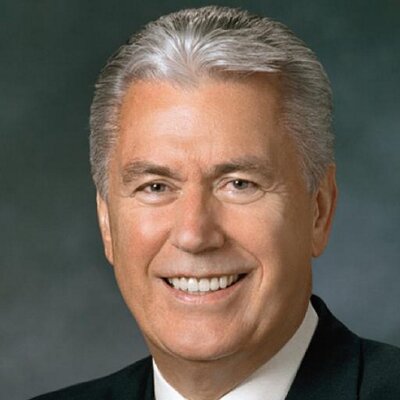
As we begin this new year, the Spirit can help us recognize the gifts and talents God has given us.
Let us, like the faithful servants in the Lord’s parable, increase and magnify them.
The day will come when we stand before our compassionate Father in Heaven to give an account of our stewardship. He will want to know what we did with the gifts He gave us—in particular, how we used them to bless His children. God knows who we truly are, who we are designed to become, and so His expectations for us are high.
But He doesn’t expect us to take some grand, heroic, or superhuman leap to get there. In the world He created, growth happens gradually and patiently—but also consistently and unrelentingly.
Remember, it is Jesus Christ who already did the superhuman part when He conquered death and sin.
Our part is to follow the Christ. It is our part to turn away from sin, turn toward the Savior, and walk in His way, one step at a time.
As we do this, diligently and faithfully, we eventually cast off the shackles of imperfections and faults and slowly become refined, until that perfect day when we will be perfected in Christ.
The blessings are within reach. The promises are in place. The door is wide open. It is our choice to enter and begin.
The beginning may be small. But that is OK.
Where faith is weak, begin with a hope in Christ Jesus and in His power to cleanse and purify.


