

Withdraw BTC: https://xitter.cf/t.co/AQSN2foddW PCX Wallet: https://xitter.cf/t.co/qCZLRiXlxy
Bitcoin
Joined June 2017
- Tweets1.8K
- Following558
- Followers80K
- Likes1.1K





📢[Mechanism Update] EVM Rent Burn Protocol!
To optimize on-chain space and reduce system maintenance costs, the system will trigger the "EVM Rent Settlement & Burn Mechanism" whenever an EOA initiates a transaction.🧵

Five Ways to Obtain BEVM:
1,Lightning Network Mining
2,Becoming an Agere Validator
3,Becoming an Agere Miner
4,Becoming a BEVM Validator
5,ChainX users who previously participated in BEVM activities can claim airdrops.

$BEVM IS HERE!
A milestone to build the ultimate artificial value universe-BEVM(λ)⚡
⏰Official Mining starts on: Feb 28th, 4:00 AM UTC

BitAgere

BitAgere Key words:
The Nakamoto Problem: The problem of distributed trust in information communication between machines.
Nakamoto Consensus: The distributed trust problem of Coin communication solved through unlimited POW computing power competition.
Mechanical Consensus: A control module of a self-adaptive mechanical system that emerges from the continuous Input/Output interaction of multiple Agents through an autonomous feedback mechanism in order to achieve a specific goal (mechanical contract).
Mechanical Contract: The specification of how Agents interact and how to reach consensus.
Agent: The basic execution unit in mechanical consensus, which can be any entity capable of autonomously executing code and performing input and output.
Autonomy: The ability to act and make decisions independently without human intervention.
Adaptability: The ability of a mechanical system to adjust to changes in the environment in order to maintain or improve its functionality.
Emergence: The phenomenon of new, complex behaviors or properties appearing at a higher level as a result of the interaction of many simple individuals or units, which cannot be explained by individual units alone.
Cognito Theory: Turing abstracted the Turing machine to guide the design of computers by contrasting humans with machines and assuming that thinking is a mechanical process of humans. Based on Turing's work, we further decompose human thinking into three modules: (consciousness for control, brain for thinking, and senses for communication). Contrasting humans with machines, a machine is composed of three modules: consensus for control, execution module for computation, and I/O module for communication. We abstract the Cognito theory as a triple model, i.e., Cognito (Control, Compute, Communication), to guide us in implementing self-adaptive mechanical consensus systems.
Consensus Assetization: The mutual adaptive conversion of assets abstracted from two mechanical consensus. Transforming consensus into tradable assets that can be transmitted through market mechanisms.
Consensus Computization: Based on POW computing power, a self-adaptive distributed trading market enables service exchange, and the process of performing service exchange by consensus computing power is called consensus computization engineering.
Shared BTC Consensus Security: Using SPV light nodes and state channel technology, sharing Bitcoin's mechanical consensus with third parties and using BTC consensus to protect their business security is called shared BTC consensus security.
Agere: A self-adaptive mechanical consensus system emerged from multiple Agents.
AOP: A programming paradigm focused on creating Agents.
Mental State: The internal state of an Agent, including its beliefs, decisions, capabilities, and intentions. The prior experience state that allows an Agent to perceive the world, reason, and make choices.
BDI (Beliefs, Desires, Intentions):
Beliefs: The Agent's perception of the world, including its understanding of the environment, itself, and others.
Desires: The goals or states that the Agent wants to achieve.
Intentions: The goals that the Agent commits to achieving, and the action plans it takes to achieve them.
Capability: The ability of an Agent to perform an action.
Consensus Field: A dynamic environment formed by the mutual adaptive communication and integration of multiple mechanical consensus systems, characterized by the interoperability and co-evolution of the systems.
Cross-domain: The process of information exchange and interaction between Agents in different domains.
Multi-modal Agent: An Agent that can process and understand multi-modal information.
Agent Interpreters: Computer programs that can understand and execute agent programs.
Speech Act Theory: An important theory in the philosophy of language that studies how language is used to perform actions.
Agent0: An agent-oriented programming language based on the Belief-Desire-Intention (BDI) model.

This is only part of the plan. We need to promote the overall prosperity of ChainX.
ChainX is currently facing both internal and external pressures. We will first enhance ChainX's internal vitality to address internal issues.
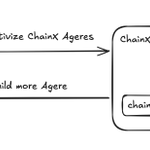
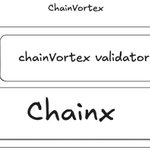
The ChainVortex Agere incentive is divided into three parts: Agere holders (ChainX), ChainVortex Miners (of which ChainX validators are a subset), and ChainVortex Validators.
More incentive investment in ChainX validators, coupled with the launch of the Bitagere market and mainnet, as well as token price appreciation, will stimulate demand for ChainX validators. This increased demand for ChainX validators will further drive demand for PCX, thereby revitalizing the entire ChainX ecosystem.

X represents infinite possibilities.
github.com/BitAgere/BitAgere…
