

El gran desconocido entre todos los riesgos que pueden afectar al ser humano llevándolo a la sombra de su sociedad tecnológica.
Joined August 2016
- Tweets14.4K
- Following109
- Followers7.2K
- Likes10.1K




Pinned Tweet
Escala de cielo oscuro de #Bortle
#ContaminaciónLumínica
Esta escala mide el brillo del cielo nocturno y fue creada por John E. Bortle
Tiene 9 niveles, siendo el 1 el de los cielos más oscuros existentes en la Tierra y el 9 el del cielo visto desde el centro de una ciudad
👇👇👇

Clima Espacial GCE 🌞 🌑 🌌 🌠 retweeted

Tal día como hoy, hace 49 años, se lanzó #Voyager1. El 18 de noviembre estará #AUnDíaLuz de la Tierra, y en la sección Ciencia+Arte de #Condeduque lo vamos a celebrar a lo grande, con exploración espacial y mucha música 😊 Id reservando esa tarde!
CC: @joseedelstein @pedro_leon

Launched on Sept. 5, 1977—16 days after Voyager 2—Voyager 1 quickly overtook its twin as they journeyed to explore the outer solar system.
Today Voyager 1 is the most distant human-made object, and on Nov. 18, it will reach another historic milestone: one light-day from Earth. At that distance, a signal from Earth will take 24 hours to reach the spacecraft—and another 24 hours to return.

ALT Black and white photo of the Voyager 1 Titan Centaur 6 spacecraft lifting off from NASA's Kennedy Space Center on September 5, 1977. Credit: NASA
Clima Espacial GCE 🌞 🌑 🌌 🌠 retweeted

Nuevas imágenes de la misión china de retorno de muestras de Marte Tianwen 3, que debe despegar en 2028. Recogerá muestras mediante taladro, brazo robot y drones.
Clima Espacial GCE 🌞 🌑 🌌 🌠 retweeted

Magnifique passage de l'ISS filmé par Charline Giroud le 30 août 2026 lors d'un passage quasi vertical.
Matériel: Télescope CPC1100, filtre orange, Barlow 3x, caméra ASI174MM, SharpCap + SkyTrack.
Clima Espacial GCE 🌞 🌑 🌌 🌠 retweeted

Three generations of telescopes, each seeing what the last couldn’t: Hubble, Webb, and Roman. 🛰️🪐
Clima Espacial GCE 🌞 🌑 🌌 🌠 retweeted

La NASA ha publicado este vídeo de las corrientes marinas. Parece que ha copiado los cielos de Van Gogh de su cuadro "La noche estrellada"
Clima Espacial GCE 🌞 🌑 🌌 🌠 retweeted
Separación del telescopio Nancy Grace Roman de la segunda etapa. El lanzamiento ha sido un éxito total.

Clima Espacial GCE 🌞 🌑 🌌 🌠 retweeted

In Case You Missed It: This morning's launch of @NASA's Nancy Grace Roman Telescope.
[7:26am ET, August 30, 2026].
Will arrive at Sun-Earth L2 in Early December, to discover Exoplanets and observe the effects of Dark Matter & Dark Energy on the Universe.
Clima Espacial GCE 🌞 🌑 🌌 🌠 retweeted
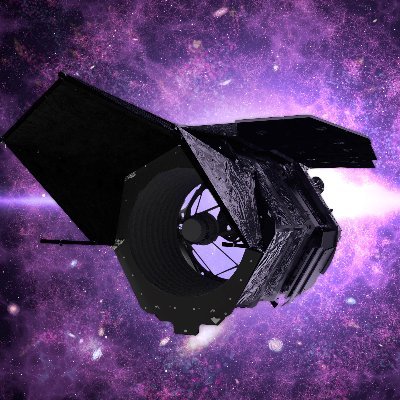
Shades on and batteries charging! 😎 🔋
Roman’s Solar Array Sun Shield and Lower Instrument Sun Shade have successfully deployed, powering the observatory and shading its instruments!
go.nasa.gov/4gw2rqc

#LiftOff
El Nancy Grace Roman parte para el punto L2 junto a sus hermanos el James Webb, Euclid y Gaia
Clima Espacial GCE 🌞 🌑 🌌 🌠 retweeted
This time tomorrow, Roman will be on its way to L-2!
Make sure to tune into the launch broadcast starting at 6:20 am ET from @NASAKennedy.

Ready for launch, ready to change how we view the cosmos.
After years of careful planning, testing, and construction, @NASARoman is ready for liftoff tomorrow, Aug. 30.
Clima Espacial GCE 🌞 🌑 🌌 🌠 retweeted

Estamos en el máximo del eclipse de Luna, si os asomais al oeste la veréis roja cerca del horizonte.


Clima Espacial GCE 🌞 🌑 🌌 🌠 retweeted

On Earth, solar eclipses happen when the Moon passes in front of the Sun as seen from the ground. On Mars, sometimes one of its moons does the same thing…but they’re too small to fully cover the Sun’s disc. Perseverance captured this look at Phobos transiting the Sun in 2024.
Simulación del #EclipseTotaldeSol
Podéis observar los 3 fenómenos visuales clave que ocurren durante la fase final y el punto máximo de un eclipse solar total
1º- Perlas de Baily (Baily's Beads)
2º- Anillo de diamantes (Diamond Ring)
3º- Corona solar (al 100% de totalidad)
Clima Espacial GCE 🌞 🌑 🌌 🌠 retweeted

Un eclipse también puede escucharse 🎧
En el taller “Eclipse inclusivo” de @esa_cesar_es conocerás herramientas de sonificación y LightSound, un dispositivo que convierte la luz en sonido para hacer más accesible la observación del eclipse.
Para que te hagas una idea, en este vídeo puedes escuchar tres años de erupciones solares basado en datos de nuestra misión Solar Orbiter.
#Eclipse2026
Las Joyas de un #EclipseSolarTotal
Tres fenómenos visuales clave que ocurren durante la fase final y el punto máximo de un eclipse solar total
1º- Anillo de diamantes (Diamond Ring)
2º- Perlas de Baily (Baily's Beads)
3º- Corona solar (al 100% de totalidad)
