

🎇
L'iverns gelatz arriba
Joined February 2011
- Tweets32.9K
- Following4.9K
- Followers1.8K
- Likes32.7K




Pinned Tweet
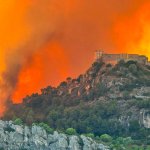
El castell de Queralt assetjat pel foc i envoltat de fum. Un desastre. És bé cultural d'interès nacional. Un dels castells del temps de Guifré i Borrell II. Límits de la Marca #IFSantaColomadeQueralt

Bernat Roca retweeted

"La nena obrera" / "La teixidora". El quadre representa una nena treballant a un teler a una fàbrica tèxtil de la Barcelona del sXIX. Aquest quadre va esdevenir un veritable símbol de la Catalunya industrialitzada.

Bernat Roca retweeted

El Secreto de la pirámide la vi en cines de peque con mis padres
Sin duda una precursora de Harry Potter. Esa escuela, ese internado el grupo de amigos, es Hogwarts antes de Hogwarts. Dentro de la pirámide es puro Indiana Jones y el templo maldito. El fuego la secta la lámpara 👇🏽


Bernat Roca retweeted

Entre las "formas" y las "experiencias de vida" ha pasado más de un siglo, pero la historia permanece.

Bernat Roca retweeted

youtube.com/shorts/zwG7JKVMA… stunning Lamine Yamal

Bernat Roca retweeted

Now that we can post more than four photos on Twitter…
Enjoy these photographs promoting HARRY POTTER, taken by Annie Leibovitz for the October 2001 issue of Vanity Fair and by Mark Seliger for the October 2002 issue


Bernat Roca retweeted

Hobbes believed that without rules, people turn on each other almost instantly.
Strip away law and consequence, and life becomes “nasty, brutish and short.” Not because people are evil, but because fear runs deeper than morality.
Hobbes, in 5 minutes on Deepstash.
Bernat Roca retweeted

Fenerbahçe'nin eski kalecisi Enke'nin, intihar etmeden önce 2 yaşında hayatını kaybeden kızının mezarına bıraktığı not 17 yıl sonra ortaya çıktı:
"Canım kızım, baban yanına geliyor."


Bernat Roca retweeted

Se’ns ha mort la tieta Carme.
Ja us n’havia parlat més d’una vegada per aquí. Us vull agrair totes les vegades que m’heu respost, que us n’heu recordat i que l’heu tingut present. Per a mi ha estat molt bonic compartir-la amb vosaltres. Gràcies de tot cor.
La tieta Carme ha estat sempre un referent per a mi. M’ha ensenyat moltes coses, però sobretot que tot és temporal. Avui se me’n va l’última de les persones grans de la meva línia familiar, i això et fa sentir, de cop, molt a primera fila davant la vida i el pas del temps.
Em sento molt afortunada d’haver-la tingut, d’haver compartit tants anys amb ella i de tot el que m’ha ensenyat. Ja la trobo a faltar, però sé que continuarà sent un referent per a mi, sempre.
El teu amor, la teva bondat, la teva humilitat i la teva saviesa continuaran presents en nosaltres.
T’estimaré cada dia de la meva vida, tieta Carme. ❤️
Descansa en pau. 🤍


Bernat Roca retweeted

In 53 BC, the richest man in Rome led an army of around 40,000 men into the desert to conquer Parthia. Within days, most of them were dead or captured, his son's head was on a spear, and a legend would later claim the Parthians poured molten gold down his throat.
Marcus Licinius Crassus had everything a Roman could want except one thing. He was the wealthiest man in the Republic and one third of the alliance that ran it, along with Pompey and Julius Caesar. But Pompey had conquered the East and Caesar was conquering Gaul. Crassus's biggest military claim to fame was crushing Spartacus, and even that Pompey had partly stolen credit for. He was in his sixties and wanted a war of his own.
Parthia had done nothing to Rome. Plenty of Romans opposed the war. As Crassus left the city, a tribune reportedly stood at the gate and called down curses on him.
Chance one: take the Armenian offer. The king of Armenia, Artavasdes, showed up with thousands of cavalry and offered many more, along with infantry. He gave Crassus one piece of advice. Come through Armenia. The country was hilly and rough, terrible ground for Parthian horsemen. Crassus said no, thanks, and chose the direct route through the flat plains of Mesopotamia.
Chance two: stay by the river. One of his officers, Gaius Cassius Longinus, urged him to march along the Euphrates. The river would keep the army supplied with water and protect a flank. Crassus instead trusted a local Arab chieftain who guided the army away from the river and out into open, waterless country. Plutarch says the man was working for the Parthians the whole time. Once the trap was set, he rode off.
Waiting near the town of Carrhae was Surena, a young Parthian noble who showed up with a force built for exactly this ground: around 10,000 mounted archers and about 1,000 cataphracts, heavy cavalry in armor down to their horses. He also brought something Crassus never imagined. A camel train loaded with arrows.
The Romans formed a giant square. The Parthians rode around it and shot into it. The legionaries locked shields and waited for the enemy to run out of arrows. They didn't. Every time the archers emptied their quivers, they rode back to the camels and came back full. Men were pinned to the ground through their feet. Hands were nailed to shields.
Chance three: don't take the bait. Crassus sent his son Publius, a talented officer who'd served under Caesar in Gaul, with cavalry and infantry to break out. The Parthians fled. Publius chased. It was a feigned retreat. Once he was far enough from the main army, the Parthians turned and surrounded him. Publius died, and the Parthians rode back past the Roman square with his head on a spear.
That night the army abandoned around 4,000 wounded men and slipped away to Carrhae. The Parthians killed the wounded the next morning.
Surena then offered to talk. Crassus didn't trust him, but his own exhausted soldiers threatened him until he agreed to go. At the meeting, a fight broke out and Crassus was killed.
Around 20,000 Romans died and another 10,000 were taken prisoner. Many of the captives were reportedly marched to the far eastern edge of the Parthian empire and settled there as frontier troops. Plutarch says Crassus's head was used as a prop in a performance of a Greek tragedy at the Parthian court. The molten gold story comes later, from Cassius Dio, and he reports it as something that was said, not something he could confirm. It stuck anyway, because it fit too well.
Rome lost its eagle standards too. It took more than thirty years and a diplomatic deal under Augustus to get them back.
And Crassus's death broke the triumvirate. With him gone, there was nothing standing between Caesar and Pompey but each other. A few years later, Caesar crossed the Rubicon. The officer who got out of Carrhae alive, Cassius, would end up one of the men who stabbed Caesar to death on the Ides of March.
The richest man in Rome went looking for glory and ended up helping kill the Republic instead.

Bernat Roca retweeted

Once every ten days, a bright canary-yellow bullet train glides into Tokyo Station at full speed, yet not a single passenger is allowed to step on board.
Its windows are mostly covered from the inside, its timetable is never published for the public, and there are no ticketed seats in any of its seven cars.
In Japan, every child and every commuter knows this train by two English words: Doctor Yellow.
Since the Tokaido Shinkansen began running between Tokyo and Osaka in October 1964, Japanese bullet trains have carried more than seven billion passengers at speeds up to one hundred and eighty-five miles per hour with zero passenger fatalities from derailments or collisions.
Critics sometimes assume that kind of sixty-year safety record is a miracle of luck.
It is not luck; it is what happens when a nation builds a high-speed hospital train whose only patient is the steel track itself.
Why does Japan run a seven-car bullet train painted bright yellow with zero paying customers on board?
In the early days of high-speed rail, engineers realized that checking hundreds of miles of track on foot at night with hand gauges was too slow, and that tracks behave differently when a three-hundred-ton train slams over them at one hundred and sixty-eight miles per hour.
So Japanese railway engineers took a seven-car Class 923 Shinkansen trainset and packed every car from nose to tail with laser-optical sensors, gyroscopes, accelerometers, and high-speed cameras.
Running in the middle of the regular passenger schedule at a full one hundred and sixty-eight miles per hour, Doctor Yellow fires laser beams onto the left and right rails to measure track width, vertical dip, and curvature alignment down to one-tenth of a millimeter, about the thickness of a single human hair.
At the same time, two special observation domes built into the roof and laser pantographs check the overhead high-voltage copper wire for microscopic wear before a single spark can cause a power outage.
The instant Doctor Yellow detects a rail that has shifted by even a fraction of an inch, it beams the exact GPS coordinates to maintenance crews waiting along the line so they can fix the spot that very night after the last passenger train goes to sleep.
Because its schedule is kept secret so crowds do not pack the platforms, Japanese commuters treat spotting Doctor Yellow by chance as a genuine good-luck charm that brings happiness for the rest of the week.
Safety is never an accident when engineers check their work down to the width of a hair.
(Note: Every photograph-style illustration on my feed is created by AI.)
🤖 Made with AI

Bernat Roca retweeted

Cuando se empieza a estudiar filosofía, a Platón se lo suele ridiculizar mientras que a Nietzsche se lo suele ensalzar. Luego pasan los años y volviendo a ambos fácilmente se cae en la cuenta de lo grande que es Platón y de lo grande (pero menos) que es Nietzsche.


Bernat Roca retweeted

If you are having a good day, let's listen to metal to celebrate. If you are having a bad day, let's listen to metal to make you feel better. Metal is always there for you.
Iron Maiden - Run To The Hills (Rock In Rio)
Bernat Roca retweeted

A player who can lose without killing the vibe is worth more than three players who always win.

Bernat Roca retweeted

Mötley Crüe, per fi a Barcelona després de 45 anys de carrera. Al Rock Fest.
elperiodico.com/es/ocio-y-cu… @elperiodico


