

Web3 Dude || A Researcher || A Gamer🎮 •• & everything in between. NFA • https://teapawt.org/t.co/wAPy4G6kj9 • 📩
Joined January 2011
- Tweets23.3K
- Following2.1K
- Followers26.2K
- Likes63K





Sky_Run ♟️ retweeted

There’s a difference between having an interesting market idea and knowing how to turn that idea into an actual trading strategy.
Think about seeing an opportunity in AI, healthcare, technology or even a major global event. You have the idea, but figuring out which assets to pick and how to distribute your position takes another level of research.
This is one reason @Ulys_AI caught my attention.
Instead of making you start from scratch, Ulys lets you describe your market thesis in everyday language. Its AI helps turn that idea into a basket of supported assets, which you can review, adjust and decide whether to execute.
The chat-first approach and Smart Orders also add an interesting dimension to the experience.
And now, the team has raised $17M, backed by StreamlinedVC, Tom Lee, BitMine and XBTO Ventures. That’s serious backing. 👀
Personally, I’m more interested in what comes next. The idea of moving from a simple market observation to a structured investment basket through a conversation is worth watching.
Big congratulations to the team.
Looking forward to seeing what @Ulys_AI builds from here. 🤝

We’ve raised $17M to turn your ideas into investments.
Backed by StreamlinedVC, Tom Lee, BitMine and XBTO Ventures.
Thank you all for the support. We're just getting started.
theblock.co/press-releases/a…

Sky_Run ♟️ retweeted

Stake boosting Caio Borralho to win in Round 2 at UFC 334 is nasty work 😭 ROUND 2 RUMBLE got me tempted… R2 finish or decision? 👇

ROUND 2 RUMBLE is LIVE on Stake for UFC334! We’re boosting @BorralhoCaio's odds to win in Round 2. T&Cs Apply.
Bitcoin has become one of crypto’s largest stores of capital, but owning BTC and putting it to work are two different things.
A holder can sit on a substantial Bitcoin position and still need to sell some of it to access liquidity. Institutions face an even bigger challenge: they may want to borrow against their BTC, but custody requirements, operational controls and counterparty risk make many existing DeFi options difficult to use.
This is the problem Hashi is designed to address.
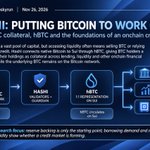
Hashi is @SuiNetwork’s native Bitcoin collateralization infrastructure, developed by @Mysten_Labs. It went live on Sui mainnet with more than 20 participants across custody, trading and DeFi.
Its central asset is hBTC, a representation of native Bitcoin that can be used across Sui applications while the underlying BTC remains on the Bitcoin network.
Before mainnet, Sui announced more than $500 million in capital commitments from the Hashi launch coalition.
That is a sizeable commitment, but what I find more interesting is what is being built around hBTC: lending markets, stablecoin liquidity, trading venues, managed vaults and institutional access.
Here’s what is actually being built.
—
● The problem Hashi is trying to solve
Bitcoin has a massive capital base, but its native network was not designed to support the same range of financial applications found on programmable chains.
This leaves a gap between holding BTC and using it as collateral in lending markets, liquidity pools or structured financial products.
There are already several ways to bring Bitcoin exposure into DeFi.
Wrapped BTC products, custodial bridges, signer networks and Bitcoin staking protocols all take different approaches. Each comes with its own custody arrangements, trust assumptions, redemption processes and risks.
@Anchorage said institutions and publicly traded companies hold more than $1 trillion in Bitcoin, much of which remains underused in programmable financial markets.
That figure is Anchorage’s industry estimate, not capital immediately available to Hashi. Still, it gives an idea of the market infrastructure providers are trying to reach.
Hashi’s approach is to connect native BTC to Sui’s financial applications without placing control of the entire Bitcoin pool in the hands of one centralized custodian.
—
● How Hashi works: from native BTC to hBTC
The process is relatively straightforward, although the security architecture behind it is worth understanding.
➟ Step 1: Generate a Bitcoin deposit address
A user connects a Sui address and generates a Bitcoin deposit address associated with it.
The address is derived from Hashi’s committee public key and the independent Guardian key.
➟ Step 2: Deposit native BTC
The user sends BTC to that address.
Hashi does not issue hBTC immediately. The Bitcoin transaction first needs to receive the required confirmations.
The default mainnet confirmation threshold is six Bitcoin blocks
➟ Step 3: Committee approval and minting
The user records the deposit on Sui.
The Hashi committee verifies the Bitcoin transaction.
The result is a 1:1 representation:
1 BTC deposited = 1 hBTC minted.
➟ Step 4: Use hBTC across Sui
hBTC is a fungible coin on Sui.
This allows applications to integrate it into their financial products without building a separate Bitcoin representation from scratch.
It can be used as collateral, traded on decentralized exchanges and included in supported vault strategies.
➟ Step 5: Redeem native BTC
When a user wants to withdraw, they submit hBTC for redemption and specify a Bitcoin destination address.
Hashi burns the corresponding hBTC, constructs a Bitcoin transaction and obtains the required signatures before sending the BTC back to the user.
—
● The security model: validators, MPC and an independent Guardian
The security model is one of the areas I would pay close attention to.
Hashi uses threshold Multi Party Computation (MPC) to distribute control of the Bitcoin signing key across a committee drawn from Sui validators.
No single committee member holds the complete signing key or can independently authorize a Bitcoin withdrawal.
Hashi also has a second security component: the Guardian.
In practical terms, this creates a 2-of-2 spending arrangement:
❖ The validator committee provides the MPC signature.
❖ The Guardian provides the second signature.
❖ Both are required before the Bitcoin can leave the pool.
This means a compromised committee cannot independently drain the Bitcoin reserve.
Hashi also includes a Guardian withdrawal rate limiter.
This is worth noting because security is not just about preventing unauthorized withdrawals. It also involves controlling how quickly funds can leave if something goes wrong.
Sui also reported formal verification work by @Certora and a cryptographic security review of the MPC protocol by @CommonPrefix.
—
● The ecosystem: who is building around Hashi?
Hashi is infrastructure, not a complete financial product. Its success will depend on the applications that make hBTC useful.
The launch coalition covers several parts of the ecosystem.
➟ Lending and borrowing
@0xfluid is the first major lending integration, offering hBTC-backed stablecoin borrowing, beginning with USDC.
@suilendprotocol also announced hBTC availability in its Main Market. Users can supply hBTC and use it as collateral to borrow against their Bitcoin.
➟ Trading and liquidity
@CetusProtocol announced that hBTC is live for trading and liquidity provision.
@bluefinapp is also part of the launch coalition, but its Bitcoin-backed markets were announced as a planned development rather than an already live product.
➟ Vault infrastructure and asset management
@upshift_fi provides vault infrastructure connecting institutions, exchanges and wallets to managed strategies.
@HoneyB_BTC is working with Upshift on managed strategies. Their launch included hBTC and USDC vaults, giving users access to different Bitcoin and stablecoin strategies.
@EmberProtocol is another vault provider named by Sui, but its Hashi vaults were described as coming later.
➟ Incentives and distribution
@merkl_xyz supports the incentive layer.
Merkl announced Sui support alongside Hashi’s launch, with its first Sui campaign rewarding USDC lending on Fluid.
➟ Institutional custody and access
@Anchorage is a major institutional launch partner
Access hBTC or stablecoin strategies today from qualified custody using Anchorage Digital's self custody wallet, Porto.
@BitGo is expected to offer hBTC and stablecoin strategies to eligible clients in 2027.
—
● Where the economic opportunity could emerge
Hashi itself is built as an infrastructure layer. Third party applications create and offer the financial products around it.
That matters when looking at where revenue could actually come from.
Lending protocols can earn through borrowing activity and interest spreads.
Liquidity providers can earn trading fees and, depending on the pool, incentives.
Vault managers can charge for strategy execution and management, subject to their product terms.
Custodians and institutional infrastructure providers can earn from custody, settlement and related financial services.
Oracle providers supply the pricing information lending markets need to manage collateral and liquidations.
So hBTC has the potential to generate activity across several different sectors.
NOTE: Hashi’s documentation says it doesn’t charge a protocol fee. Deposits are free apart from Sui gas, while withdrawals pay the Bitcoin miner fee and Sui gas.
There is also no HASHI governance, utility or airdrop token.
hBTC is the asset Hashi creates.
So the investment thesis shouldn’t depend on an assumed Hashi token or speculative tokenomics.
It comes down to whether the infrastructure attracts users and whether the applications built around it generate meaningful financial activity.
If hBTC becomes widely used, lending protocols, trading venues, vault managers and service providers could all benefit.
—
● My take
I think Hashi is worth watching because it is tackling Bitcoin finance from the infrastructure side.
Sui isn’t just adding another Bitcoin backed asset. It is bringing together different sections around one collateral asset.
I want to see sustained borrowing demand, deeper liquidity, reliable redemptions and capital being deployed into strategies that can stand on their own without relying entirely on incentives.
If Hashi can make native BTC reliable collateral for lending, liquidity and institutional financial products, it could become an important part of Sui’s financial infrastructure.
NFA. DYOR.

Tokenized stocks now have 5 million holders, up 8.5% over the past month, even as the broader crypto market remains under selling pressure.
While much of CT is focused on falling prices and weak market sentiment, something else is happening quietly.
Traditional equities are moving onchain. Shares of companies like Apple and NVIDIA are now available through tokenized products on crypto platforms, giving eligible users access through their wallets, with some platforms offering trading beyond traditional market hours.
U.S. equities are gradually moving onto blockchain rails, opening traditional financial markets to a global audience. Two major gateways are driving this shift:
➟ Stablecoins
➟ Tokenized stocks.
Together, they’re creating new channels for capital to enter the ecosystem.
More assets, deeper liquidity and increased onchain activity can create opportunities across DeFi and crypto markets.
The current market situation is tough. Liquidity is tight and interest rates remain high but yet the infrastructure keeps growing.
While the market is distracted by short term price action, everything is gradually moving onchain.
Traditional finance is steadily adopting blockchain infrastructure.

💙 One thing I'm genuinely grateful for in crypto is the lessons I've learned from my own mistakes and the people I've met along the way.
I remember blowing up my account because I kept chasing losses with the mindset that "I must make it back." Instead of stepping back, I kept forcing trades, and it only got worse.
That experience taught me to be patient with myself, stay disciplined, and stick to my strategy regardless of how the market makes me feel.
Revenge trading never fixes a bad day. Sometimes, the best trade is walking away.
I'm grateful for that lesson because it changed how I approach the market and reminded me that protecting my mental state and capital matters just as much as making profits.
I'm also grateful for people who share what they know without expecting anything in return. Sometimes, a single explanation, useful post, or conversation can save you weeks of figuring things out alone.
In a space where everyone is chasing the next opportunity, I appreciate those who take the time to help others grow. That kind of contribution stays with you.
What lesson in crypto are you grateful for, even if it came the hard way? 💙


A little thank-you has washed ashore. 🌊
💌 A note from #MEXC to you. A chance to thank someone who made your journey better.
🎁 Share your message below! 40 users split $1,000. Ends Nov 30. #MEXCThanksgiving
Pass the love on: mexc-thanksgiving.mexc-commu…

DeFi lending is moving beyond crypto collateral.
For years, the model was relatively straightforward: deposit ETH, BTC or stablecoins, borrow against your position and pay interest.
But a different market is developing.
Tokenized equities are becoming usable collateral. Fixed rate credit is moving onchain. Financial platforms are integrating lending infrastructure into their products and businesses could eventually borrow against unpaid invoices instead of waiting for customers to pay.
@Morpho is positioning itself at the centre of this transition but I don’t think the most interesting opportunity is limited to $MORPHO.
The bigger development is the financial infrastructure forming around asset backed credit: issuers, curators, risk managers, oracles, liquidity providers and distribution platforms.
Here’s how the pieces fit together.
—
● What exactly is asset backed credit?
Asset backed credit means borrowing against an asset you own instead of selling it to raise money.
Consider someone holding $10,000 worth of eligible tokenized shares. They need $4,000 in liquidity but don’t want to sell their position. They can pledge those shares as collateral in a lending market and borrow USDC against them.
The lender earns interest. The borrower receives liquidity. The pledged shares remain locked as collateral until the loan is repaid. If the collateral loses too much value relative to the outstanding debt, the position can be liquidated.
This is not a new financial concept. Traditional finance already uses securities backed lending, mortgages, inventory financing and receivables financing.
The opportunity in DeFi is making more of these credit relationships programmable and accessible through onchain infrastructure.
NOTE: tokenizing an asset does not automatically make it acceptable collateral. Legal ownership, custody, pricing, liquidity and enforceable liquidation arrangements still matter.
—
● Tokenized equities are moving beyond representation
One of Morpho’s most interesting developments is the integration of tokenized stocks into lending markets.
@Coinbase Tokenized Stocks and @RobinhoodApp Stock Tokens are now live on Morpho, on Base and Robinhood Chain respectively.
Another development came through @okx and @XLayerOfficial.
Eligible xStocks and xBTC can be used as collateral for USDC borrowing on X Layer, with @gauntlet_xyz curated USDC vault supplying lending liquidity.
The infrastructure chain is important:
❖ @xStocksFi supplies tokenized equity products.
❖ @XLayerOfficial provides the blockchain environment.
❖ @okx provides wallet distribution.
❖ @Morpho supplies the lending markets.
❖ @gauntlet_xyz manages the vault’s allocation and risk strategy.
❖ USDC provides borrowing liquidity.
A tokenized asset is no longer just something users can hold or trade. It can potentially become collateral that unlocks another financial service. Other tokenization platforms worth tracking include @OndoFinance, @Securitize, @Paxos, @MidasRWA, @SuperstateInc and @BackedFi.
These are broader ecosystem projects, not all confirmed Morpho collateral integrations. The opportunity is whether their assets can gain access to credible lending markets as the sector develops.
—
● The curator economy could be an overlooked opportunity
This is where I see some of the strongest alpha. A lending protocol needs more than borrowers and depositors. Someone must determine which assets are acceptable collateral, how much capital can be allocated, which markets deserve liquidity and how risk should be managed when conditions change.
That’s the role of vault curators.
Morpho’s official curation dashboard showed the following snapshot:
❖ $6.46B in assets under curation.
❖ 41 registered curators.
❖ Approximately $21M in annualised curation fees.
Some of the largest curators were:
❖ @SteakhouseFi — $2.5B
❖ @gauntlet_xyz — $1B
❖ @SentoraHQ — $989M
❖ @galaxyhq — $129M
❖ @Rockaway_X — $106.7M
❖ @Wintermute_t — $99.4M
❖ @Keyrock — $83.2M
Curators decide where billions in deposits are deployed. They influence collateral exposure, vault strategy and liquidity allocation. As lending expands into tokenized securities and more complex financial assets, those decisions become increasingly important.
The $21M annualised fee figure is especially interesting because it points to an economic layer forming around the protocol itself. It is an annualised dashboard estimate, not a guarantee of realised future earnings.
—
● Morpho Midnight introduces another credit structure
Variable rate lending is not suitable for every borrower. Businesses and institutions often need predictable interest costs and repayment dates.
That’s where Morpho Midnight comes in.
Midnight supports fixed rate, fixed term credit markets, allowing lenders and borrowers to agree on rates and maturities through onchain market based pricing.
In September, @Coinbase launched fixed rate BTC backed borrowing powered by Midnight where users can borrow USDC against BTC with the borrowing rate and repayment date established upfront. This sits alongside Coinbase’s existing variable rate Morpho powered lending.
The Active Midnight loans is at approximately $128M. That’s a useful adoption signal because it measures actual outstanding borrowing, rather than simply counting deposits.
NOTE: deposits indicate available capital, while active loans show capital that borrowers are actually using.
Midnight is also designed to support more complex collateral arrangements, including tokenized stocks and other real world assets.
—
● Receivables financing could open a much larger market
This is one of the most interesting longer term developments. A business can deliver goods, complete a service or issue an invoice and still wait 10, 15 or 20 days for payment.
That unpaid invoice represents money the business has earned but cannot yet use.
Receivables backed financing allows the business to borrow against those expected payments rather than wait for the customer to settle the invoice.
Morpho says global receivables financing exceeds $4T annually, including turnover. It is developing this model through Morpho Midnight, with the first use cases still to be announced.
That $4T figure is the size of the broader annual financing market, not an existing onchain lending balance or Morpho revenue opportunity.
—
● Distribution could be the biggest advantage
Morpho doesn’t have to build every customer-facing financial product itself. It can provide the infrastructure while established platforms bring users and capital.
Look at the wider ecosystem:
@Coinbase: Variable rate and fixed rate crypto backed borrowing powered by Morpho.
@RobinhoodApp: Stock Tokens and lending integrations on Robinhood Chain.
@Ledger: BTC backed loans and Morpho powered vault products through Ledger Wallet.
@okx: Tokenized asset lending access through X Layer.
@Circle: Morpho infrastructure on Arc, including a planned Digital Asset Backed Borrow product through Circle Mint.
@SafePal: Morpho curated USDC and EURC vaults through SafePal Earn on Arc.
@PulsarFinance: USDC and EURC Earn products powered by Morpho on Arc.
@AbraGlobal: BTCaf, a tokenized BTC yield strategy powered by Morpho.
@Zama: Confidentiality infrastructure supporting more than $100M in assets earning yield through Morpho Vaults, according to Morpho.
@Tempo: Deel users can access private yield through Tempo Zones.
@SoSoValueCrypto: SoDEX Wealth Earn, offering Morpho-powered yield curated by Unified Labs.
@Paxos: USDG lending activity on Morpho.
These are not all the same type of integration. Some are live lending products, others are yield distribution, infrastructure or announced product developments. But together they demonstrate a valuable distribution strategy.
The opportunity is that Morpho can become the lending infrastructure behind products that users access through platforms they already trust.
—
● The onchain numbers reveal another layer of alpha
Morpho’s own homepage showed approximately:
$14B in total deposits.
$5.4B in outstanding loans.
These figures should not be confused with tokenized stock lending alone. They measure the wider Morpho credit network and its fixed term lending segment.
The official curation dashboard also showed $6.46B under curation and approximately $21M in annualised curation fees.
NOTE: the interest borrowers pay is distributed through the lending markets according to their terms. It does not automatically become protocol revenue or accrue to MORPHO token holders.
The growth of the credit network, the economics of curators and the value captured by the protocol are three separate things.
That is worth keeping in mind when evaluating the investment opportunity.
—
● My conclusion
I don’t see this development as simply another lending expansion.
I see an emerging onchain credit market with several layers:
Asset issuers bring financial assets onchain ➟ Curators decide where capital should go ➟ Risk managers assess collateral and exposure ➟ Oracle providers supply reliable pricing ➟ Lenders provide liquidity ➟ Protocols facilitate borrowing ➟ Fintechs, exchanges and wallets distribute credit products ➟ Businesses and asset holders gain access to financing without necessarily selling their assets.
This is the foundation of a broader onchain credit economy, and Morpho is positioning itself to play a major role in it.

The average memecoin holder is down bad but still calculating how rich they’ll be when it does a 100x
DeFi has a transparency problem that doesn’t get discussed enough.
Every transaction on a public blockchain leaves a trail. Anyone can inspect balances, transfers and wallet activity.
That’s part of what makes public blockchains useful, but it’s not always ideal for institutions that don’t want their financial positions exposed to everyone.
@zama is working on this with its latest confidential vault deployments.
On November 18, Zama announced five new confidential vaults across four platforms:
➟ @Morpho: @Re7Labs’s confidential @Ondo equity linked strategy and Saturn’s digital credit strategy.
➟ Saturn Confidential USDC: digital credit and Ondo Stocks, by @saturn_credit and @hyperithm, live on @Morpho as well
➟ @plumenetwork: BlackOpal LiquidStone II, backed by Brazilian receivables.
➟ @NUVAFinance: HOME, an actively managed U.S. residential housing-loan strategy.
➟ @YuzuMoneyX: A diversified USDC yield strategy.
What's interesting is that these vaults aren't all approaching confidentiality in the same way.
Two bring confidential access to existing strategies, while three are designed specifically for confidential deposits.
The mechanism behind this is Zama's ERC-7984 confidential token standard (cUSDC), which encrypts token balances and transfer amounts while allowing authorized parties to access information when necessary.
In practice, users can participate in onchain financial strategies without exposing every detail of their positions to the public and this isn't just an idea being tested at a small scale.
Zama reported that confidential vault TVL exceeded $110 million at its October peak. That's the project's reported figure, not a fresh November snapshot.
—
● Why this matters
Institutional adoption of DeFi isn't just about bringing more assets onchain. It's also about making the infrastructure compatible with how institutions actually manage capital.
A fund may be comfortable using onchain lending, yield or tokenized asset strategies but unwilling to expose its deposits, balances and withdrawals to competitors.
Confidentiality could remove some of that friction without abandoning public blockchain infrastructure.
Of course, this doesn’t remove the risks attached to the underlying assets, vault curators or smart contracts. Zama provides the confidentiality layer; it doesn’t manage the vaults or guarantee their returns.
My take: Public verification and financial privacy can coexist and I think that’s an important piece of DeFi’s next stage of development.

GTA 6 is now officially launched world wide but honestly, I’m more interested in what comes next.
There’s been plenty of talk about crypto potentially making its way into GTA 6, especially when multiplayer got integrated.
If @RockstarGames actually opens that door, things could get interesting.
Millions of gamers who have never touched crypto could suddenly have a reason to explore it.
And that kind of exposure could be huge for Web3 as a whole.
I’m keeping my eyes on Q1 2027.
If the rumours turn out to be true, we might be looking at one of the biggest moments for crypto adoption.

GTA VI is starting to have an impact before most people have even played the game…
…and it’s not just the gaming industry feeling it.
Some of the numbers coming out ahead of its release are pretty interesting.
Let’s start with something most people probably wouldn’t expect.
In the UK, an estimated 83,000 working days off have been requested around GTA VI’s release, according to BrightHR, which analysed absence records covering more than 1.2 million employees across 70,000 businesses.
The estimated cost to employers is £12.4 million in annual leave, with £3.14 million attributed to launch day alone.
In the US, BambooHR also reported that PTO requests for November 19 are nearly 13% higher than on comparable days in previous years.
People are literally planning their work schedules around a video game.
But that’s only one part of the story.
The money involved is on another level.
Newzoo estimates that GTA VI could generate between $3.25 billion and $5.2 billion in cumulative global sales by the end of its launch week.
That’s a projection, but it shows just how much commercial attention is surrounding this release.
Even the console market is getting a boost.
Following Rockstar’s GTA VI Extended Look broadcast, UK PS5 sales increased by 33%, while Xbox Series X|S sales rose by 34%, according to data reported by The Game Business.
And there’s an interesting connection to the music industry too.
Artists featured in the game’s Extended Look reportedly recorded an average 670% increase in weekly Spotify listeners. Their Instagram followings also grew by an average of 976%.
Think about that for a moment. Being featured in a video game can put an artist in front of an entirely new audience.
GTA VI is much bigger than a game release at this point.
People are adjusting their schedules for it, consoles are benefiting from the hype, artists are getting more exposure, and analysts are projecting billions in sales.
That’s the kind of reach very few entertainment franchises can command.
@RockstarGames isn’t just releasing another game. It’s bringing an entire cultural moment with it.

Think about the last time you used USDT or USDC.
You sent it, received it or moved it between wallets. Everything happened with just a few taps.
But have you ever stopped to think about where the money backing those stablecoins is kept?
Stablecoin issuers need reserves behind every token they put into circulation. Managing those reserves is a big part of what keeps the system working.
@InvescoUS is now building a product around that need.
On November 17, Invesco launched its Stablecoin Reserves Onchain Fund, known as IROXX, in partnership with @SuperstateInc.
And no, this isn’t another stablecoin.
IROXX is a regulated government money market fund designed to invest in eligible reserve assets, including cash and short dated US Treasury securities.
The interesting part is that its shares are tokenized. Payment stablecoin issuers can hold those shares as part of their reserves, provided they meet the relevant regulatory requirements.
This also ties into the GENIUS Act, which requires permitted payment stablecoin issuers to maintain reserves at least equal to their outstanding stablecoins. Qualifying government money market fund shares are among the assets the law recognizes.
A few details worth noting:
➟ Managed by Invesco’s Global Liquidity team.
➟ Superstate provides the tokenization infrastructure.
➟ It launched on Ethereum.
➟ The minimum initial investment is $1 million.
➟ Net annual expenses are currently 0.20% under a fee waiver that runs through December 31, 2027.
What I find interesting here is the market Invesco is positioning itself for.
Stablecoin infrastructure is expanding beyond issuance, wallets and payment rails. There is now a growing need for institutional products that help manage the assets sitting behind those digital dollars.
IROXX is designed to serve that purpose.
NOTE: Holding tokenized shares doesn’t mean you can redeem them at any time of day. The fund still operates with business day dealing and redemption procedures. Its $1 target NAV is also not guaranteed, and stablecoin issuers remain responsible for determining whether their holdings meet applicable reserve requirements.
For me, this is a meaningful development because the connection between traditional finance and crypto is becoming more practical.
We’re seeing established financial firms build products for the needs of an onchain economy and that goes beyond simply putting traditional assets on a blockchain.


GTA VI is starting to have an impact before most people have even played the game…
…and it’s not just the gaming industry feeling it.
Some of the numbers coming out ahead of its release are pretty interesting.
Let’s start with something most people probably wouldn’t expect.
In the UK, an estimated 83,000 working days off have been requested around GTA VI’s release, according to BrightHR, which analysed absence records covering more than 1.2 million employees across 70,000 businesses.
The estimated cost to employers is £12.4 million in annual leave, with £3.14 million attributed to launch day alone.
In the US, BambooHR also reported that PTO requests for November 19 are nearly 13% higher than on comparable days in previous years.
People are literally planning their work schedules around a video game.
But that’s only one part of the story.
The money involved is on another level.
Newzoo estimates that GTA VI could generate between $3.25 billion and $5.2 billion in cumulative global sales by the end of its launch week.
That’s a projection, but it shows just how much commercial attention is surrounding this release.
Even the console market is getting a boost.
Following Rockstar’s GTA VI Extended Look broadcast, UK PS5 sales increased by 33%, while Xbox Series X|S sales rose by 34%, according to data reported by The Game Business.
And there’s an interesting connection to the music industry too.
Artists featured in the game’s Extended Look reportedly recorded an average 670% increase in weekly Spotify listeners. Their Instagram followings also grew by an average of 976%.
Think about that for a moment. Being featured in a video game can put an artist in front of an entirely new audience.
GTA VI is much bigger than a game release at this point.
People are adjusting their schedules for it, consoles are benefiting from the hype, artists are getting more exposure, and analysts are projecting billions in sales.
That’s the kind of reach very few entertainment franchises can command.
@RockstarGames isn’t just releasing another game. It’s bringing an entire cultural moment with it.


One of the more interesting developments in tokenized equities is happening through @Payward’s expansion of @xStocksFi.
On November 11, xStock added more than 200 UK and European listed companies to its tokenization framework, taking the total number of supported assets beyond 1,500 across stocks, ETFs and IPOs.
But the interesting part isn’t just the number of new equities. It’s how the infrastructure behind xStocks works.
Payward is working with @GTNGlobal, which provides the brokerage, execution and custody infrastructure for the traditional shares backing these tokens.
Each xStock is issued by Backed Assets (JE) Limited as a tracker certificate, backed 1:1 by the corresponding underlying share held through regulated custody arrangements.
Once issued, these tokens can be distributed through @krakenfx and supporting platforms, while also circulating across blockchain networks such as Solana, Ethereum, TON, Ink and X Layer.
There are two important parts to this model:
➟ The primary market handles issuance and redemption against the underlying assets.
➟ The secondary market allows existing tokens to move between exchanges, wallets and supported DeFi applications.
This means an equity linked asset can move beyond the traditional brokerage environment and potentially become usable across onchain financial applications.
And xStocks is already showing some traction.
As of November 2026, Payward reported:
➟ Over $1.1B in assets under management.
➟ More than $45B in cumulative transaction volume.
➟ Over 550,000 unique holders.
➟ More than $100M in xStocks deployed across DeFi.
The DeFi figure is particularly interesting because it shows that these assets are beginning to find uses beyond simply tracking stock prices.
There is an important thing to note, though.
xStocks provides economic exposure to the underlying shares. Holders do not directly own the companies or receive ordinary shareholder voting rights. Also, despite adding UK listed equities, the product remains unavailable to UK residents.
My take: Payward is building more than a tokenized stock catalogue.
It’s creating a distribution layer that connects traditional equities with exchanges, self-custody wallets and onchain financial applications.

I know how frustrating it can be to put time into a post, watch it get a handful of views, and then see bigger accounts dominate.
That's why this caught my attention.
Smaller creators deserve a fair shot too and that's what makes @Canborsa_DEX's Road to 1 Million interesting.
It's a 30 day creator challenge on here, and success isn't measured by views alone.
There are two separate leagues:
➟ Rising Creators: smaller accounts compete against each other.
➟ Open League: established creators have their own competition.
The Impact Score also looks beyond views. Referrals and creativity contribute to your ranking too.
I like that. A good creator should be recognised not just for having a big audience, but for creating useful content, staying consistent and contributing to the ecosystem.
With up to $10,000 in Canborsa's prize pool, it's worth a look if you're serious about building on X.
Sometimes, the opportunity isn't about having the biggest audience. It's about making the most of the one you have.
➥ canborsa.com/r/UVRX8TM5


Creating content on X? Get paid for it 💵
We’re launching Road to 1 Million, a Creator Program where anyone can create content about Canborsa and earn rewards as their views grow!
The prize pool goes up to $10,000 and grows with every 200K views the community brings in together.
✰ Prizes for 32 top creators in two leagues
✰ Weekly Lucky Drop with 5 x $50
✰ $500 Creative Award for the best work
✰ Ticket to #TOKEN2049 Dubai
No follower minimum and no deposit required. Just create content and compete.
Join now→points.canborsa.com/creators
One of the more important infrastructure challenges emerging from the AI agent economy is how autonomous software gets access to money without compromising wallet security.
An agent can identify DeFi opportunities, execute trades, purchase data and make payments. But giving software the ability to sign transactions raises another question:
How do you let an agent act independently while retaining control over what it can do?
This is the problem @turnkeyhq is working to solve.
Rather than leaving wallet security to individual developers, Turnkey provides infrastructure for key management, transaction authorization and policy enforcement.
Its approach is built around a simple idea: AI agents should be able to transact independently, but they shouldn't have unrestricted control over the assets they manage.
Here's how the infrastructure works and why I think it's worth watching.
—
● The problem with giving AI agents wallets
Traditional wallets were designed around users or applications initiating transactions.
Autonomous agents change that.
An agent managing a trading strategy needs to monitor markets and execute transactions without waiting for human approval every time.
Giving it direct access to a private key might seem like the easiest solution, but it creates serious risks.
If the agent is compromised or manipulated, an attacker could potentially move funds.
The challenge isn’t enabling agents to transact. It’s giving them permissions without granting unrestricted control.
Turnkey addresses this by separating transaction requests from signing authority.
—
● How Turnkey’s infrastructure works
Its architecture revolves around three components: secure enclaves, policy enforcement and cryptographic signing.
➤ Secure enclave key management
Turnkey uses AWS Nitro Enclaves, a hardware isolated Trusted Execution Environment (TEE).
Wallet keys are generated and protected inside this environment. When an application requests a signature, the operation happens within the enclave rather than exposing the private key to the application or agent.
This helps protect key material even if surrounding application infrastructure is compromised.
➤ The policy engine
This is arguably the most important part.
Before signing, transactions are checked against predefined rules, including:
❖ Approved wallet addresses and smart contracts.
❖ Spending limits.
❖ Permitted transaction types.
❖ Additional approval requirements.
For example, a trading agent could interact with approved DeFi contracts but be prevented from sending funds to unknown addresses.
The agent can request transactions, but it cannot independently override the policies governing its wallet.
➤ Scoped permissions and human approval
Turnkey also supports delegated access and separate permissions for different agents.
One agent could monitor balances, another prepare transactions, while a human operator or risk service approves larger transfers.
Permissions can also be revoked when necessary.
The goal isn’t to eliminate human oversight. It’s to make that oversight enforceable at the infrastructure level.
—
● Infrastructure growth and ecosystem traction
Turnkey's approach to wallet security is attracting significant investment and adoption across the broader Web3 ecosystem.
On May 14, 2026, the company announced a $12.5M strategic investment involving from @circle_ventures @archetypevc and existing investors @BainCapCrypto @FactionVC @galaxyhq @sequoia and @variantfund, bringing its disclosed funding to more than $65M.
Its infrastructure has also recorded substantial usage. On August 26, 2026, Turnkey reported that more than 100M policies had been created on its platform over three years.
The company's documentation advertises signing latency of 50–100ms and 99.9% uptime, highlighting the performance requirements it targets for applications that depend on reliable transaction execution.
Its customer ecosystem includes @Polymarket, @worldmoney, @theflutterwave and @moonshot, demonstrating the broader demand for secure wallet infrastructure across trading, consumer applications and financial services.
Importantly, these figures reflect Turnkey's broader infrastructure rather than exclusively AI agent activity. The policy count is also company reported.
—
● Agentic payments: beyond wallet creation
On June 25, 2026, Turnkey introduced its Agentic Payments solution.
It brings together dedicated agent wallets, transaction permissions, balance monitoring, signing and gas sponsorship.
This matters because autonomous payments involve more than creating a wallet.
Applications also need to handle transaction construction, authorization, network fees, broadcasting and transaction tracking.
Turnkey aims to provide these capabilities through an integrated infrastructure developers can build on.
The broader opportunity is to make it easier for developers to build applications where AI agents can manage financial activities without having unrestricted access to funds.
—
● Business model and competitive position
Turnkey operates as a B2B infrastructure provider.
Developers integrate its APIs and SDKs for wallet creation, key management, transaction permissions and signing.
Its competitors include:
❖ Privy: Embedded wallets and onboarding infrastructure, now part of Stripe.
❖ Coinbase Developer Platform: Wallet infrastructure and developer services.
❖ Fireblocks: Institutional custody and transaction infrastructure.
❖ Dynamic: Wallet onboarding and authentication, acquired by Fireblocks in 2025.
Turnkey differentiates itself through hardware isolated signing, programmable policies and controlled execution.
However, competitors also offer sophisticated security and transaction controls.
—
● Why I think Turnkey is worth watching
The next stage of the agent economy will require more than AI models capable of reasoning and executing instructions.
It will need infrastructure that lets agents interact with financial systems without giving them unrestricted control over assets.
Turnkey is approaching this through secure key management, programmable policies and controlled signing permissions.
I think the bigger opportunity is making autonomous financial activity secure enough for businesses to actually rely on.
Wallet infrastructure may not be the most visible part of the AI agent narrative, but it could become one of its most important dependencies.
The value isn’t simply giving an AI agent a wallet. It’s allowing that agent to transact within rules it cannot independently override.

One thing that matters in onchain market research is understanding how activity evolves across different token markets, not just where prices are moving.
That’s part of why I’ve been using @GeckoTerminal to organise the assets I follow.
My Watchlist geckoterminal.com/watchlist?… brings together tokens across different narratives, giving me one place to monitor their market activity and revisit them when something changes.
When researching a token, I pay attention to more than its price.
Liquidity, trading volume, transaction activity and holder distribution all help provide a better picture of what’s happening beneath the surface.
I also find value in following the same markets consistently. It helps me recognise changes in activity, distinguish unusual movements from normal trading behaviour and identify which assets deserve a deeper look.
Not every increase in activity signals a meaningful shift, and not every trending token deserves my attention.
Having a structured way to follow these markets makes that research process easier.
That’s how I’m using GeckoTerminal: not just to discover tokens, but to keep track of the onchain activity that helps me understand them better.

Not every token I keep an eye on is a token I’m looking to buy.
Sometimes I just want to follow the market and see how things develop.
That’s the idea behind my Watchlist on @GeckoTerminal.
Right now, I’ve got three pools on my radar:
• CASHCAT
• ANSEM
• DacityCoin
What I like about this setup is that I can see more than just price changes.
Liquidity, trading volume, transaction activity, holders and net buys are all there when I check these pools.
I find that useful because there’s a lot happening across DEX markets, and I don’t need to trade every token to be interested in what’s happening around it.
GeckoTerminal makes it easier to keep the markets I’m following within reach.
Here’s my Watchlist:
geckoterminal.com/watchlist?…
Drop your GT Watchlist below. I’m interested in seeing what has caught your attention lately.

Sky_Run ♟️ retweeted

FHE has long struggled with performance. and @primus_labs is making real progress on it.
autohog combines multiple operations into a single bootstrapping.
- 64-bit confidential transfer in 90 ms
- above 210 transfers per second
- tested on 8 consumer rtx 5090s
getting encrypted operations this close to real time on regular hardware makes me think we are finally moving past the theoretical stage.


Sky_Run ♟️ retweeted

Finding new tokens is easy. Keeping track of them without losing focus is the real challenge.
That’s why I find @GeckoTerminal useful.
It brings onchain market research into one place, covering 200+ blockchain networks, 2,000+ DEXs and 50M+ tokens.
One feature I particularly like is the mobile app’s Watchlist.
→ Add tokens and pools worth monitoring
→ Track price movements and trading volume
→ Check liquidity and pool activity
→ Stay updated without jumping between platforms
For me, a Watchlist isn't just about finding the next opportunity. It's about staying organized and knowing what deserves attention.
Of course, tracking a token doesn't make it a good investment. Always DYOR and check the risks.
Better research starts with better organization
🤝 Paid partnership


Sky_Run ♟️ retweeted

One thing I genuinely appreciate about $SOEI is the idea that not every account should automatically get a voice on a social platform.
what's the value of having thousands of followers, likes and comments if you can't even tell whether the people behind those interactions are real?
That's where @heysoei human verification caught my attention.
I find it interesting that being human is something you have to establish before becoming part of the community.
To me, that creates a different kind of starting point.
it's not just about keeping fake accounts away.
It's about making interactions feel more meaningful.
When I share an opinion, contribute to a discussion or engage with someone's post, I'd rather know there's a genuine person on the other side than wonder whether I'm interacting with automated activity.
I also like the fact that SOEI AI bouncer works behind the scenes to help identify suspicious activity without taking away the human side of conversations.
Personally, I think social media needs more of this.
We have become so used to measuring online presence through numbers that we've almost forgotten what makes a community valuable in the first place, the people in it.
Less focus on who can generate the most activity, and more focus on who is actually behind it.
That's the kind of social experience I'm interested in exploring.
If you're planning to join SOEI, here's how I'd approach it:
✓ Download SOEI from the App Store or Google Play.
✓ Complete the human verification process.
✓ Set up your profile properly.
✓ Start having genuine conversations.
✓ Focus on meaningful contributions rather than chasing likes or posting just for numbers.
Your SPS (SOEI Prestige Score) is built around your verified identity and genuine contributions.
you can also check my quoted post on how to position for the X campaign, rank up and unlock collectibles for future drops.
𝐘𝐨𝐮 𝐚𝐫𝐞 𝐞𝐚𝐫𝐥𝐲.


I tried signing in @heysoei last night, and one thing that caught my attention was the identity verification.
Before I could get in, I had to prove I was an actual human. Honestly you don't see that often.
What SOEI is trying to build is pretty interesting .
The idea is to use AI to filter out bots, fake engagement and AI generated content, keeping the community focused on real people.
They also have something called 𝐒𝐏𝐒(𝐒𝐨𝐞𝐢 𝐏𝐫𝐞𝐬𝐭𝐢𝐠𝐞 𝐒𝐜𝐨𝐫𝐞).
It's a public reputation score that looks at your verified identity, your contributions and how other real users interact with you. And no, you cant simply buy your way to a higher score.
There is also a planned $SOEI token, which is expected to share brand revenue with creators based on their SPS.
The Blockchain hasn't been decided yet.
The app is still in Beta phase, but I like the direction they are taking.
Maybe the internet could use more spaces where being real actually matters.
Check if out: proof.soei.io/?ref=93dvpcg
