Connor Baumler (@ctbaumler) header
Connor Baumler (@ctbaumler) profile picture

PhD student @clipumd @umdcs | πŸ³οΈβ€βš§οΈπŸ³οΈβ€πŸŒˆ

Joined June 2022
Photo by Connor Baumler (@ctbaumler)Photo by Connor Baumler (@ctbaumler)Photo by Connor Baumler (@ctbaumler)Photo by Connor Baumler (@ctbaumler)Photo by Connor Baumler (@ctbaumler)Photo by Connor Baumler (@ctbaumler)Photo by Connor Baumler (@ctbaumler)Photo by Connor Baumler (@ctbaumler)Photo by Connor Baumler (@ctbaumler)Photo by Connor Baumler (@ctbaumler)
Interested in hearing more? I'll be presenting about this work in Poster Session A tomorrow (7/5) at 11AM. #ACL2026
Can you edit AI writing to sound like you? In collaboration with Pangram, researchers at the University of Maryland found that even after editing, LLM text remained more similar to AI writing than to human β€” despite editor's reports that the edited text reflected their voice.
5
18
3,653
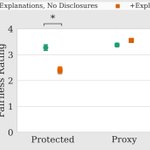
Explanations are sought to highlight model biases. But what if these biases are indirect? Our #IUI2024 paper studies how people make decisions with models exhibiting direct or indirect bias. Can explanations and disclosures about biases/correlations help mitigate these biases 🧡
1
8
2
23
9,128
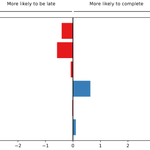
What does it mean for a model to exhibit direct or indirect bias? We consider the task of loan outcome prediction. Using partially synthetic data, our directly biased model learns a harmful association between gender (a protected feature) and loan completion. [2/13]
1
1
195
Creating a toxicity detection classifier accounting for diverse annotator viewpoints involves exposing people to extensive harmful content. Our #ACL2023 Findings paper turns to active learning to reduce annotation requirements for such tasks. πŸ”—ctbaumler.github.io/files/DA… [1/7]
1
8
1
39
6,931
Traditional uncertainty-based active learning selectively annotates egs on which the current model is most uncertain. This has been shown to work well in non-controversial tasks where annotators tend to agree. [2/7]
1
4
148
To evaluate coref systems' handling of "they", we use modified Winograd Schemas. Unlike previous work with two singular referents, we have one plural referent (e.g., paramedics) and one singular named referent (e.g., Riley) for the model to decide between. [2/5]
1
1