

Design that gets businesses understood in seconds. 15+ years • global brands to startups ($250m+ raised) • Red Cross, Reckitt, Ferrari • DMs open ⤵
Book a call →
Joined June 2010
- Tweets420
- Following95
- Followers798
- Likes4.4K




Pinned Tweet
Brand, web & product design for founders where the tech is better than the story.
→ Helped 100+ founders turn complex products into revenue-driving brands + websites
→ 15+ years of commercial design that actually drives results
Book a 20-min chat → firstflight.studio

2
5
1,113
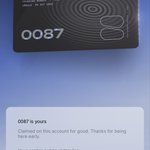
Beautiful + thoughtful animation aside. My effort over the last 2 years has been driving screen time down. I was hoping for an iPhone mini with LESS screen; not more screen.

1
1
194
I was asked to design an app concept for one of the most exclusive islands in the world - in 24 hours, as part of presenting the vision of what the island could become.
Case study coming soon as it's almost been long enough to be able to share it 🏝️
For me, the future of interface is anticipatory. Interfaces should change based on available context. Where you are, what you like, what you're doing and over time, start to learn the patterns within your behaviour.
The interface I designed leant on very proven UX patterns for navigation; but outside of that was incredibly fluid. Not only based on your behaviour but your guest profile, too.
At the same time, any two guests would experience totally different suggestions.
Executive who works across time zones? Wake up and the home screen lets you order breakfast, surfaced alongside news articles relevant to your business and a suggested afternoon dive.
Entertainer who's taking a break after a world tour? Morning yoga teacher is ready, just say yes or no. Surfaced alongside a morning massage to follow or the option to put everything in do not disturb.
It's this level of prediction that marries physical luxury to digital luxury, a concierge that learns, understands and treats each guest according to their needs.
96

Off to Bali in a few weeks to meet some friends from home. Honestly cannot wait to catch up on the last 18 months. So much has happened for all of us. MUCH needed.
57
Bit of an oldie throwback to when a global consumer goods giant handed me their venture arm and said: it must feel nothing like a corporate VC.
Which is a slightly odd brief when the corporate is right there in the room.
Bright, disruptive, built for founders all around pillars of capability the FMCPG parent opened up for them. All of it deliberately pushing away from the parent brand but doubling down on what it could enable for founders.
Founders it wants to back were choosing between them + other corporate VCs who looked like they'd never spoken to a startup in their life.
Always look fondly back at it. Fun use of colour.
53
When I sold my agency in the UK to move over to Australia/Asia, it has honestly felt like starting completely over again. Now, after grinding this past year and a bit, I'm currently in the running for a few huge projects that could be landmark case studies for me 🥹
1
2
64
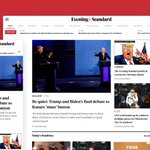
In the middle of the pandemic, I redesigned one of the UK's most-read news sites in six weeks.
Pivoting the business urgently from paper first to digital.
I was given one constraint that changed everything → the new design had to map onto the existing HTML. Not roughly. Exactly.
With only room for a handful of new components that I felt would make the biggest impact.
All whilst needing to
→ Launch a totally new look and feel
→ Accommodate 5 sub brands
→ Be 10x easier to navigate
→ Be 10x easier to read
Which sounds like a nightmare but was honestly the most useful brief I'd had in years.
Once structure is off the table, every other decision had to do a lot of heavy lifting. Type. Spacing. Colour. Contrast. Hierarchy.
It was a huge undertaking but one that proved sometimes the foundations that are laid are fine, they’ve just been under utilised.
In just six weeks, I redesigned the site, worked with engineers to implement it and QA’d it to get it live.
One hell of a race against the clock!

2
1
73
“In 2020, we were suddenly faced with the need for a much stronger digital offering. Dan helped us bring everyone’s goals together to deliver an entirely redesigned website in only 6 weeks. His ability to get to the heart of what we wanted was refreshing, helping us to clearly understand and prioritise our needs. Together, we’ve rapidly launched a digital first experience that carefully balances our commercial needs and editorial goals"
– Charles Yardley, CEO @ Evening Standard
29
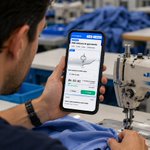
One of my fav projects recently → I designed the 0 to 1 wireframes for a SaaS platform that allows fashion buyers to manage orders end to end. Then manages the work in a factory.
This platform then connects with factories, using machine learning to work out who should be where and what they should be doing to make garment production as efficient as possible.
When you're designing a product as complex as this, it is pivotal that you find ways to see the whole picture AND each behaviour that drives the sum of the parts.
Working through it was an absolute delight (but intensive) because the product tackles three super interesting products/flows:
1. Clothing buyers (e.g if you chose what clothes ASOS sells), putting in the design files, communicating with the factory through sampling to final orders to approval. Mostly desktop.
2. The factory owners who organise the workload of their staff and need to keep efficiency and utilisation high. Mostly tablet.
3. The factory workers who need to understand what to work on, for how long and in what sequence to be most efficient. All mobile.
Jumping straight into prototyping allowed me to instantly get a feel for how these flows existed in silo but also how they interconnected.
Buyers are incredibly time poor, they often have many projects running concurrently, they're currently living in spreadsheets. The UX must be able to handle dense data whilst also feeling lightweight and intuitive.
Owners must be decisive but are currently data poor, they aren't used to having so much data to make decisions. The UX must be able to guide them and stop decision paralysis.
Workers are working repetitively and can be fatigued, their instructions must be clear, visual and progressed easily when busy at work. The UX must support one hand navigation and not rely too heavily on text.
That alone is a heavy burden of UX. Getting those ideas out into flows is a golden start to question my own assumptions.
Prototyping is magic for products like this, especially if you take the upfront time to really discovery, interrogate and build an incredibly solid design led brief for the LLM.
Prototyping acts as an opponent that forces you to confront your ideas at pace and then iterate your way to the best solution.
Within hours, I started to see how this product could come to life and challenge it alongside the founder.

74
Practicing a new set 🤓 haven't shared here before. Doing a transition with one hand, not recommended. Timed it early and couldn't single handedly reset starting position lol.
When I took a break from work after selling my agency, I finally took up something I'd been putting off forever. DJing.
Learned on vinyl while I was living in Bangkok. Now on cdjs, playing friends' birthday parties, which is exactly the level of fame I was after 😂
Refuse to use a laptop... just USB. Tbh I really hate when DJs have a laptop up, think it completely ruins the vibe.
Also, I don't use SYNC button so gotta get that starting position right bbbbby.
3
272
I started designing websites by downloading websites and playing around in Dreamweaver. I never really *loved* coding, so I stuck to my true passion of design.
It has been a constant career challenge that I can't physically just build what is in my head. I have never felt closer to the products I'm designing, it's actually so liberating.
Even though I spent at least a decade honing my skills of communicating with devs + becoming fluent in their language to hand things off, there was still always a friction.
I haven't spend this much time in years just CREATING things for no commercial reason. It's like back in the day of making silly flash sites.
I feel sooooo unlocked. Saying that, I do feel there is a knowledge gap ("how did it do that?") in what I create and that does worry me sometimes. Devs have always consciously decided what they're building, how it works and the architecture it sits within.
On both sides (dev → designer; designer → dev) there are thousands of micro decisions you've honed over the years that from make every day. You simply cannot distill those into a set of rules for AI, and that is where I feel the line blurs between true dev vs designer.

Depending on how you look at it, it's both a blessing or a curse.
The consolidation of roles (due to AI) means that Designers are Developers now. And Developers are Designers. In particular on front-end.
In fact, I'd argue the top 20% of designers are now better front-end devs than 80% of all devs before.
And in the opposite direction, 20% of the top developers are now BETTER Designers than 80% of the Designers before, with their new combined skillset.
For some people this is a godsend gift, for others its their nightmare come true.
For me personally, I am split here. It's both for me, because I've never wanted the role of a engineer, but at the same time I enjoy it, because I'm quite effective.
But I need to remember myself: I get my satisfaction from being a Designer first and foremost, not engineering, regardless of how easy or difficult it is.
When I dream, I dream of designing, not implementing my designs. I don't dream about fixing bugs, chasing edge cases. I dream of problems that are solved on the emotional spectrum. All of which still would need someone competent and skillful to implement it.
Even with the consolidation of roles, I still believe that towards the top (both in reality and aspirationally), the specialization will hold true and keep existing.
I don't know where I'm going, but we will find out. A have a hunch (:
85
A climate startup I worked with spent a ~year explaining their idea to people and watching investors nod politely. Literal definition of lukewarm reception.
When we got chatting, I could see the idea was genuinely category changing but the reality was, nobody really "got it".
So we stopped explaining it and made it something you could hold → a prototype that bought the idea to life and that you could put in investors hands.
People got it immediately.
There are some ideas that need a demo, a video, a prototype. You've just gotta show instead of tell.
If you've tried explaining an idea 100 different ways or been fiddling with your deck hoping for the best, it's probably better to just invest in a prototype.
If you get it right, you can sell an idea without being in the room, which is golden.
45
I designed the booking flow for a European slow travel platform about five years ago. All trips include zero air travel, just trains and buses across multiple countries with a lot of moving parts per booking.
That flow is still running with the same structure, albeit scaled up and without the teal that I was never a fan of (lol)
When I designed it, I built it around the thing that doesn't change → people are anxious AF about trips and they want to see that somebody has really thought it through. They need to feel CONFIDENT in what they're booking.
If you design and iterate based on behaviour, you can design UX that outlives trends you seeing on the timeline.

50
Spoke to a huge footy team this week and they are in the same position as so many huge businesses. They know their sales are super reliant on people's attachment to the brand, not because their experience is good.
The brand carries weight, the fans turn up, things sell and life goes on.
But they know they could easily 10x sales if they invest in the right consumer experience.
It's SO refreshing to hear a business actually admit that they're resting on their reputation. And It's even more refreshing to hear them want to do something about it.
My first step in any situation like this is to drill in + understand the consumer behaviour.
→ Why are they purchasing?
→ What's their world looking like?
→ What events trigger them?
→ When do they act now, when do they act later?
→ What other brands do they interact with?
→ What behaviour exists for the majority vs which is more nuanced?
If you really interrogate WHO is shopping and WHY they are shopping, you can start to map out how you build a user experience for THEM.
You MUST understand how your user behaves and actively work with them. I always think of it like a flowing river, you will either add rocks that make their journey harder or remove rocks and make it smooth sailing.
The difference between a consumer experience which is ~fine~ and a consumer experience that is ~exceptional~ is that one is totally dialled in with the type of consumer it's for.
SO many businesses stop at fine.
But, there is a whole world of magical uplift that exists when you obsess over creating an exceptional experience that works because it totally understands, mirrors and delivers for YOUR customer, not every type of customer.
59
A few years back, I built a fertility platform's website as about 26 blocks so their marketing team could build hundreds of landing pages without needing me again.
I'm a huge believer in enabling teams, rather than locking them in.
When it comes to fertility, it's a super complex emotional decision for a lot of couples. And, trying to find the right a-ha moment was never going to happen with a few core pages.
Giving their team access to clean, approved and beautiful blocks meant they could test hypothesis against paid track at a pace that really matched their learnings.
Not only that, we learned most people researching fertility treatment were doing it on their phone, so these mobile pages needed to work on every device. Getting those blocks right ONCE, meant they didn't have to worry about testing every single page they spun up.
I will die on the hill that a system + site a client can run themselves beats a all bells + whistles site they feel trapped by.


1
59
This last few weeks, I've been working with one of my old clients, helping to dive inside their supplement brand's funnel to see how we can scale up production.
It's taken a lot of refinement, but finally got a v. brand safe flow to go from brief → ad angles + copy written + static visual prompt written → landing page spun up → 30+ brand safe statics output.
Didn't expect to enjoy it as much as I have. It's a very different to the brand, product + web sprints I've been doing more recently. But, it has been so fun.
If you're a D2C team producing at volume and it's starting to look like it, drop me a DM. Would love to hear how other teams are doing this and get involved if I can help.
1
52
Over the years, I've designed flows, sites and landers for D2C brands valued at $100m+ but I have NEVER seen brands producing as much as they are producing right now.
Spend a day looking thru meta ad library and you'll see more ads / lander combos than ever. But also, more of it than ever looks cheap AF.
I understand everyone wants to scale their creative output right now but you have gotta protect your brand as well.
Customers can't always point their finger to it but if something looks shit + feels shit, they will associate you with shit.
Before scaling with AI, esp. statics/landers, you need to have a brand safe foundation.
Across all of of your tools, you need to set what "amazing" looks like, where you're willing to experiment/drift and what's non negotiable.
Without that, your team will produce MORE than ever and it'll be WORSE than ever.
46
100%. when i'm designing, I tend to think in a quadrant (motives, beliefs, excitements, fears) as levers you can pull to shape experience.

73
I've tried to spend more time with friends who also like to be active / workout together / hike together. Fitness doesn't always have to be a group activity.
Barrys/Group Class → Brunch together after
Hike → Chat the whole time, there + back
I'll always make time to workout, so it's even better if you can make that time into watering relationships too 🌷🚿

the impossible triangle for every founder:
> work + fitness = no social life
> social life + work = no fitness
> fitness + social life = no business growth
122