

@dariquima
🇩🇰Account based in
About this account
- Account based in
- Denmark
- Connected via
- Denmark Android App
Account-level information from X, not a live location or the device used for a specific post.
Imagination, neuroscience, audition, music, MEG, (i)EEG. Postdoc at @UCBerkeley and @UCPH_Research. Born and raised in Colombia
Joined March 2010
- Tweets556
- Following1.5K
- Followers895
- Likes3.2K




Pinned Tweet
Have you ever had a song stuck in your head?
Then you might be interested in our new #musicscience work just published in @PLOSBiology
doi.org/10.1371/journal.pbio…
We used decoding to investigate how the brain represents perceived and imagined musical sounds.
TL;DR below 1/


Did you ever have a melody stuck in your head?
Then you may be interested in our new #musicscience work.
We used decoding techniques to investigate how the brain represents held and manipulated musical thoughts:
doi.org/10.1101/2023.08.15.5…
Check it out! Feedback is welcome.


David Quiroga🧠👂🎵 🇨🇴 @dquiroga.bsky.social retweeted

Publicar 120 papers en los últimos 2 años no es una hazaña científica.
Es un síntoma.
Un síntoma de cómo la autoría académica se ha convertido en una industria del nombre propio.
Abro hilo 🧵 sobre las malas prácticas de autoría que suelen sostener esta ficción 👇

Congratulations @Yoshua_Bengio!! Possibly the first scientist with one million citations in the world. Crazy how fast the field has grown 🤯

David Quiroga🧠👂🎵 🇨🇴 @dquiroga.bsky.social retweeted
What happens in the brain when we manipulate our thoughts?
We asked 30 epilepsy patients to mentally invert short melodies.
Intracerebral #iEEG recordings suggest brain synchrony and sensory inhibition are key for mental manipulation:
doi.org/10.1101/2025.10.20.6…
#musicscience
What happens in the brain when we manipulate our thoughts?
We asked 30 epilepsy patients to mentally invert short melodies.
Intracerebral #iEEG recordings suggest brain synchrony and sensory inhibition are key for mental manipulation:
doi.org/10.1101/2025.10.20.6…
#musicscience
David Quiroga🧠👂🎵 🇨🇴 @dquiroga.bsky.social retweeted

Brain Dynamics of Mental Manipulation biorxiv.org/content/10.1101/… #biorxiv_neursci

Both #musicscience and #metascience taking off in the place where the sky is blue.
Worth giving it a go
The proof corrected version of our paper on neural representations of perceived and imagined musical sounds is out in @PLOSBiology. Check it out! #musicscience #Neuroscience
Link to the article: doi.org/10.1371/journal.pbio…

Have you ever had a song stuck in your head?
Then you might be interested in our new #musicscience work just published in @PLOSBiology
doi.org/10.1371/journal.pbio…
We used decoding to investigate how the brain represents perceived and imagined musical sounds.
TL;DR below 1/
David Quiroga🧠👂🎵 🇨🇴 @dquiroga.bsky.social retweeted

I will present a poster (#19) "Novel tools for the anatomical registration of intracranial electrodes" at @CuttingEeg today and tomorrow at 1 pm CET. Pass by if you want to know more or have questions on how to use it :-)

David Quiroga🧠👂🎵 🇨🇴 @dquiroga.bsky.social retweeted

While we have learned a lot from MEG/EEG on alpha and gamma modulations by the allocation of spatial attention, much less is known about these effects intracranially ... see our new paper on alpha and gamma/HFA cross-frequency interactions in ECoG data
pnas.org/doi/10.1073/pnas.23…
David Quiroga🧠👂🎵 🇨🇴 @dquiroga.bsky.social retweeted

Thinking of #music... @dariquima &co show that mental manipulation of a melody systematically changes its neural representation in #auditory, association, #sensorimotor & #subcortical areas, reflecting volitional control of auditory images #PLOSBiology plos.io/3NBg7lV

David Quiroga🧠👂🎵 🇨🇴 @dquiroga.bsky.social retweeted

Decoding reveals the neural representation of perceived and imagined musical sounds biorxiv.org/content/10.1101/…

David Quiroga🧠👂🎵 🇨🇴 @dquiroga.bsky.social retweeted

Decoding reveals the neural representation of perceived and imagined musical sounds
doi.org/10.1371/journal.pbio…
#neuroscience
David Quiroga🧠👂🎵 🇨🇴 @dquiroga.bsky.social retweeted

How does background music help sustain attention? Our longstanding #musicscience collaboration w/ Kevin Woods @brainfmapp is finally out nature.com/articles/s42003-0… 🧵

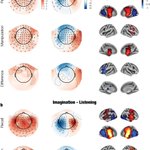
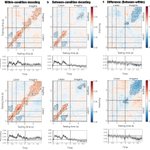
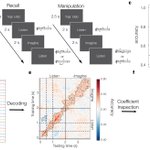
Examining the models, we found that auditory areas distinguish individual sounds while non-auditory areas hold the melody as a unit and that representations changed during manipulation in frontal cortex, suggesting its importance for the control of imagined sound sequences5/

Special thanks to @LeonardoBo92 @gemmaferu and Francesco Carlomagno for collecting such a high-quality and large dataset!
David Quiroga🧠👂🎵 🇨🇴 @dquiroga.bsky.social retweeted

academia is just making mental notes on how you don’t want to behave when you become a professor and then never becoming a professor
Does learning music improve cognitive abilities?
According to this new #musicscience meta-analysis, the answer is yes!
During chilhood and for a specific capacity: Inhibitory control.
sciencedirect.com/science/ar…
First solid evidence of far-transfer effects of music learning!
