

AI, Agents, Web3, Fintech - builder. All posts are personal opinions. CTO@ Chateau Capital
Earth
Joined October 2014
- Tweets788
- Following1.9K
- Followers451
- Likes3.3K









Dmitry Chirun retweeted

these 2 github repos are the most BROKEN combo in trading right now
Citadel pays quant researchers $336K to $642K a year to forecast markets and stress-test trades. These 2 repos put both steps inside Claude Code for free.
They're called Kronos and Day Trader. Kronos was built by researchers at Tsinghua University, accepted at AAAI 2026, and it already has 45K+ stars. Day Trader is 11 Claude skills built by Jake Schincariol, and it already has 4K+ stars.
First, get how it works:
1. Kronos gives you 1,000 futures instead of one guess. It reads candlesticks the way ChatGPT reads words, it learned from 12 billion candles across 45 exchanges, and it can map out the next 48 hours of any chart.
2. Day Trader turns that fan into a trade. One skill sets your stop and target before you enter, one sizes the position to your max loss, one blocks anything over your limits, and its Time Machine replays the setup 10,000 times before you risk a dollar.
3. Together they answer the question that matters: how many of those futures hit my target before my stop? On the real BTC candles in the video, 725 of 1,000 futures end down, so the plan is a paper short with a 1% stop and a 2% target. 203 hit the target first, 302 hit the stop first, 495 touch neither. Nothing gets placed until you type yes.
Here's how you can run it for free yourself:
1. Open Claude Code in an empty folder.
2. Install Day Trader. Paste: "github.com/Jakeschincariol/d… install skill". No signup, no API key.
3. Install Kronos. Paste: "Set up github.com/shiyu-coder/Krono… and load Kronos-small from Hugging Face."
4. Run /trader-scanner and /trader-news to pick a ticker.
5. Ask Claude Code: "Sample 1,000 Kronos futures for this ticker from its last 128 candles, 48 candles ahead. Keep every path."
6. Check it before you trust it: "Re-run Kronos on each of the last 5 days and show me how often the real price landed inside its p10-p90 range."
7. Run /trader-exit to set your stop and target, then ask: "Race every Kronos path to my stop and target. How many hit each one first?"
8. Run /trader-timemachine for a second opinion: 10,000 replays from the stock's own candles, plus every past time the setup fired. If it disagrees with Kronos, skip the trade.
9. Run /trader-budget and /trader-risk, then /trader-broker. It shows you the ticket and sends it to your paper account only after you type yes.
i won't say anything more:


Dmitry Chirun retweeted

Build a fully local AI coding agent on Ubuntu using Canonical Workshop and the Qwen3-Coder Inference Snap.
In this step-by-step demo, you'll set up an isolated development environment, connect your coding agent to a locally hosted LLM, and run coding tasks without an internet connection.
Follow along to recreate the setup on your own machine, using CPU or GPU inference: youtu.be/u5Q149jlMQ8
#Ubuntu #Linux #AI #Agents #Workshop #OpenSource


Dmitry Chirun retweeted

Anthropic cracked open the ribosome and found it stalls on purpose and those pauses are doing a job nobody f*cking gave them
for decades, scientists treated ribosome stalls like a problem.
the machine builds proteins. faster should mean better, right?
turns out, speeding it up might be exactly how you break it.
here’s where things get weird.
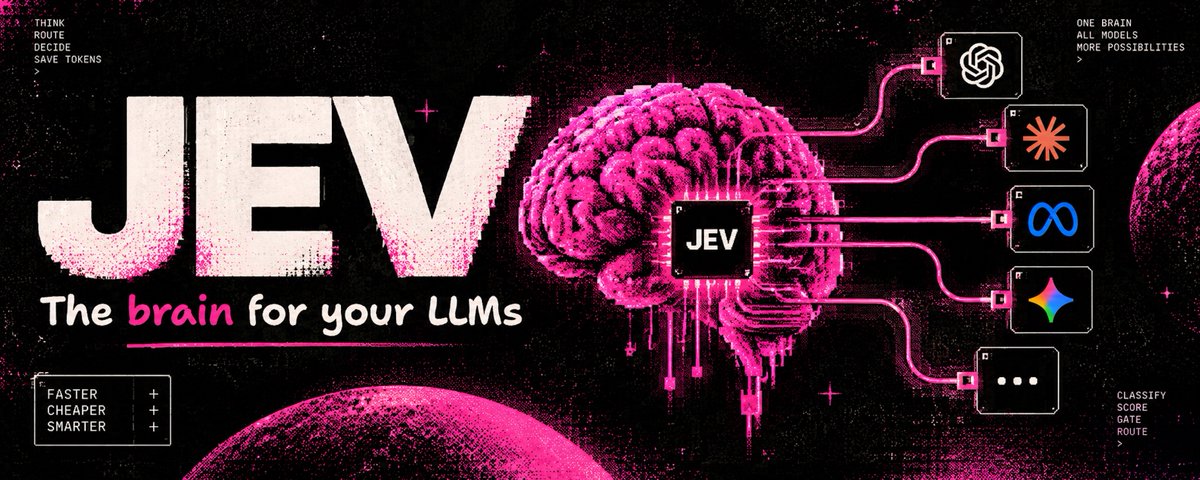
researchers used Claude +JEV and started looking at what happens during those tiny pauses instead of just measuring how fast a protein gets made.
> TIME - follow protein production second by second, not just the final result
> MARK - record exactly where the ribosome stops along the sequence
> SORT - separate random slowdowns from pauses that keep appearing in the same places
> FOLD - check what the growing protein is doing during each pause
and that’s when the pattern appeared.
the ribosome wasn’t just randomly getting stuck.
the same pauses kept showing up at the same points, across different cells.
and those points weren’t random either.
they appeared where a newly built section of protein needed time to fold into the right shape.
think about that.
the ribosome isn’t just assembling a chain of amino acids.
it’s giving that chain time to become something that actually works.
remove the pauses and the protein can still come out with every amino acid in the correct order.
except now it folds wrong.
same ingredients. same sequence. completely different result.
and here’s the uncomfortable part.
scientists have spent decades optimizing genes to make proteins faster.
but speeding up the sequence can also erase the pauses that help proteins fold.
we may have been optimizing away part of the instructions.
the genetic code doesn’t just tell the cell what to build.
its timing can also influence how that thing takes shape.
have a look and find some new use cases JEV can do in addition to that

Dmitry Chirun retweeted

50 places to launch your startup:
1. news.ycombinator.com
2. reddit.com
3. producthunt.com
4. news.hada.io
5. whatlaunched.today
6. indiehackers.com
7. betalist.com
8. uneed.best
9. peerlist.io
10. devhunt.org
11. launchingnext.com
12. alternativeto.net
13. saashub.com
14. g2.com
15. capterra.com
16. getapp.com
17. trustradius.com
18. slashdot.org
19. tools.launchllama.co
20. futurepedia.io
21. theresanaiforthat.com
22. toolify.ai
23. futuretools.io
24. confettisaas.com
25. crazyaboutai.com
26. rankanything.online
27. crunchbase.com
28. auraplusplus.com
29. startupbase.io
30. sideprojectors.com
31. microlaunch.net
32. betterlaunch.co
33. foundrlist.com
34. peerpush.net
35. twelve.tools
36. shipybara.com
37. hashnode.com
38. saascity.io
39. 500.tools
40. sourceforge.net
41. aidirectori.es
42. startupfa.me
43. github.com
44. pitchwall.co
45. scrolllaunch.com
46. rankinpublic.xyz
47. tinylaunch.com
48. tinystartups.com
49. nicklaunches.com
50. wellfound.com
Dmitry Chirun retweeted

Ultimately, precompiles and EVM are both the wrong place to put most cryptography support into Ethereum. The reason is that precompiles and EVM both operate on data that has to be included into the ethereum chain somehow, which realistically means included in a block as calldata. That space is limited - even with PeerDAS and blocks-in-blobs, there's a practical cap of ~8 MB/s before it starts getting uncomfortable.
Remember: it's not a blockchain. It's a cryptographic world computer. Any data/computation that does not need to be in the "main thread" of data/execution should not be put into the main thread.
Instead, the correct solution is... EIP-8288 maximalism.
If you have any heavy computation that's self-contained, compute it and STARK it client-side (this is quickly getting faster and faster, even on phones), and push the STARK through the EIP-8288 recursive aggregation mechanism. The chain sees the fact that the computation was done and what the result is; it never needs to see the actual data and computation.
This way everyone can use whatever cryptography they want, the Ethereum chain can be lean, and we never need to add more precompiles again.

> we could still ultimately do Lattice stuff for accounts, wallets, etc. through a precompile if it is proved to be AI-secure
The ideal route to support everyone's cryptography is imo through 8288. You make whatever signature you want locally, then STARK it, and then it gets included through the stark aggregator machine. Don't need any calldata onchain. Ethereum can then never add a new precompile again.
Dmitry Chirun retweeted

It took me 5 minutes to get into the Claude Startups program
And you don't need VC funding anymore
What you get:
- A year of Claude Team
- API credits
- Priority rate limits
- Deals on the tools a startup runs on
How to apply:
- Create a Claude Console account (the API one, not the app)
- Use a company email, not Gmail
- Go to claude.com/programs/startups
- Fill in the form with what you're building on Claude
Easiest trade I've made all year


Dmitry Chirun retweeted

The US government will give your startup up to $1.55M and take 0% equity.
@NSF's America's Seed Fund is open again after Congress reauthorized it in April.
Three tracks:
- Phase I: up to $305K to prove the idea
- Phase II: up to $1.25M to build it
- Fast-Track: up to $1.55M, both phases in one go
Who can apply:
- US-based startups with 500 or fewer employees
- 51%+ owned by US citizens or permanent residents
- Not majority owned by VCs
- All the work done in the US
How it works:
- Send a 3-page Project Pitch first
- NSF invites the best ones to submit a full proposal
- Next full proposal deadline: Nov 4
Phase I funding rates have run about 10 to 20%. It's work, but nobody takes your cap table.
Application link 👉 seedfund.nsf.gov
Bookmark and tag a tech founder who needs this.

Dmitry Chirun retweeted

We'll be spending a lot more time trying to understand the outputs of language models. A few thoughts, tips & tricks:
Writing. Something I've had success with: Ask your LLM to explain something in ASD-STE100, it's a controlled language specification originally developed for aerospace maintenance documentation. LLMs well-versed in this language and it comes with heavy constraints on clean writing style that I often find a lot more readable. Sometimes I've tried to soften it a bit e.g. ask for "80% of the way to ASD-STE100" because the spec is quite stringent. But even better:
Diagrams / images. Instead of writing, ask your LLM to create a diagram. These can be a lot easier to process, parse, and understand. But even better:
Web pages. Ask for output "in HTML" to get a beautiful, interactive webpage. LLMs are getting really good at frontend and can create beautiful experiences, animations, etc. But even better:
Explainer videos. The output format I am most bullish on is fully custom / bespoke explainer videos generated on any arbitrary topic. Experiment with things like "Create a 3b1b style video explainer on X. Use my ElevenLabs API key for audio narration". (you'd need an API key for the latter or you can ask your LLM to find you decent free alternatives that use your local compute). This is actually starting to work!
In summary:
- As LLMs get better, they will do more and more of the legwork autonomously, and a lot more of our work will rise up the abstractions into oversight and understanding.
- Luckily, LLMs can help here too because as intelligence and code are increasingly abundant, you can ask for large, custom, discardable software artifacts (e.g. web apps, video explainers) that would have never made sense to create before. Push the boundaries here and you'll be surprised.

Dmitry Chirun retweeted

I run a queue of AI agents that merges code into my own repo without me. This week it folded 24 approvals into one commit and closed a task that needed nine retries to die. It's not automation anymore — it's a small bureaucracy, and I'm mostly a citizen of it.
Dmitry Chirun retweeted
It's possible that a killer app of adversarial governance mechanism design theory will end up being AI safety.
Compare:
vitalik.eth.limo/general/202…
aiprospects.substack.com/p/p…
There's a deep duality between the two environments. Both are about a less-sophisticated principal trying to get ideal outcomes from a set of more-sophisticated agents: in the first case, the principal is a static algorithm and the agents are humans, in the second case, the principal is humans plus weaker LLMs and the agents are stronger LLMs.
A key finding was that you can achieve much better outcomes if you can guarantee limits to how much agents can collude (see: Nash equilibria being abundant, vs. cooperative-game-theory "cores" often being empty). That argument should naturally transfer to this new setting.
Dmitry Chirun retweeted

Cursor is now part of @SpaceX.
Today, we have officially closed our acquisition. We will join the @spacexai team to help make Grok the world's most useful AI and improve Grok Build, Grok Bot, Grok API, Cursor, and more.
SpaceX has built some of the most inspiring and impressive technology in the world, and we’re grateful for the opportunity to become part of such a special company. Onwards.
Dmitry Chirun retweeted

A man spends 50 years teaching at MIT.
He knows his time is running out.
So he records one last lecture — everything he knows, distilled into a single hour.
He died 5 months later.
This is that lecture.
The most important hour you'll watch this week.
Bookmark it for later!
Dmitry Chirun retweeted

Termius + Tailscale + tmux
You don't need your laptop to build with Claude Code, Codex, or any other AI coding agent:
→ Run your agent inside tmux to keep the session alive
→ Use @Tailscale for secure access to your laptop
→ Connect with Termius over SSH from iPhone, iPad, or Android
Start coding at your desk. Continue on the go.

This is very good initiative for open source models!

For my first post, I’m sharing a letter @NVIDIA signed on why open models matter.
AI will transform every industry, power every company, and be built by every country.
Open models strengthen safety and cybersecurity, accelerate innovation and diffusion, and enable sovereignty.
The world needs both frontier closed models and frontier open models.
images.nvidia.com/pdf/Open-W…


Dmitry Chirun retweeted
we're launching BUZZ!
a new groupchat platform for teams of people and agents of all sizes, built to reduce our dependency on slack and github. model-agnostic, decentralized, self-sovereign, and open source. 🐝
buzz.xyz

Dmitry Chirun retweeted
Two weeks ago, Ethereum researchers met in Berlin to continue charting the protocol's long-term trajectory, following along discussions with client teams in Svalbard in April.
The updated strawmap is at strawmap.org, and I attached a picture of it to this post.
My own high-level takeaways:
* "Lean Ethereum" is not a single one-shot upgrade, it is a collection of improvements that will come online to the Ethereum network over the course of three or four years. But make no mistake, this IS the third major iteration of Ethereum in the same way that the Merge was the second. Almost every major piece of the protocol will be replaced:
- Verification through recursive STARKs, rather than direct re-execution. Recursive STARKs become an enshrined first-class core component of the protocol
- Replacing everything quantum-vulnerable with quantum-safe alternatives
- Consensus: decoupled available chain and finality, one or two-round finality. Theoretically optimal security properties, simpler than today, and faster than today
- Multidimensional gas
- State: not just tree structure, but what *types* of state are available
- Changes to client architecture
...
At the same time, simplification, cleanup and future-proofing. And this will all be done in a way that minimizes disruption to existing application. We've done this before (the Merge), we can do it again.
* H-star (aka Hegota) is probably Ethereum's last thematically "pre-Lean" fork. Starting from I-star, most of everything we do will have a very strong "Lean" feel to it in one way or another.
* Privacy is no longer an afterthought, it is a first class goal. When designing Frames, the mempool, additions to the state tree, we explicitly ask the question "okay, how do quantum-safe, intermediary-free privacy protocol transactions go through this, and what is the overhead?"
* Formal verification of everything for security.
* FV also makes us much more comfortable with canonicalization (having pieces of the protocol that are directly defined as a piece of bytecode expressed in some language). evm-asm is being written in part to become a canonical proof system for the EVM.
* Quantum safety has shifted up a LOT in priority. This adds a lot of work (eg. finalizing a quantum-safe blobs design has become urgent; this work has already been ongoing for months)
* Probably the single most disruptive part of the plan is the changes to state. There is growing consensus around leaving present-day-style "dynamic state" mostly unchanged, but scaling it only a medium amount, and adding new types of state that are more scalability-friendly (eg. no need for builders to sync/store all of it) but more restrictive, and that will scale a large amount.
eg. possible Ethereum in 2030: 2 TB of present-day-style (dynamic) state, and 100 TB of new-style (scalable but restrictive) state
This "new-style" state would work very well for ERC20s, NFTs, many defi use cases, but not eg. highly "central" objects like Uniswap contracts, or onchain order books, or other complex things (which are crucial for Ethereum but which only take up a small percentage of state)
Hence, it will not be *necessary* to rewrite any apps, but it will be *very cost-effective* to eg. rewrite an ERC20 token into a newer design that uses a new type of UTXO storage that is currently being explored, so that it will have >10x lower txfees.
Design of these new state types (current ideas: keyed nonces, ring buffers, UTXOs, statically accessible state, temp state) is an area where we will need a lot of feedback from application developers (incl. privacy-friendly application developers) and probably several rounds of rethinking and iteration.
* In the context of a much larger total state size, we need to figure out the incentive issues around who stores this state and what motivates them to. Even saying "each node stores 1%" is not good enough - why do they store that 1% and why are they willing to serve it? This is being elevated as a first-class research area.
* Ethereum will need to have a "VM" other than EVM in one form or another - at the very least, we need something like leanISA for recursive STARKs - and the gains are large in exposing it to users so that we support programmable privacy and better scalability. Right now, the most likely contenders are leanISA and RISC-V.
My own ideal is that in this world, we adjust the protocol so that the EVM becomes a high-level-language compiler-level feature, and the protocol only "sees" RISC-V / leanISA directly. But this is still far away.
* Gas limit increases, blob increases and slot time decreases will happen many times over the next ~5 years. We expect a large gas limit increase with Glasterdam. Each step of increased scale or decreased slot time is a matter of getting to the point where it is safe to do it, which comes from a combination of client optimization and protocol changes.
Ethereum is CROPS.
Ethereum is scaling.
Ethereum is reinventing itself.
Onward.

Dmitry Chirun retweeted
Low-risk defi can be for Ethereum what search was for Google
vitalik.eth.limo/general/202…