

Macroeconomics, emerging and developed markets, FX, covered interest rate parity, and cross-currency basis swaps.
United States
Joined August 2019
- Tweets15.7K
- Following2.3K
- Followers33.5K
- Likes21.2K



Skew has moved higher, as bonds rally notes and long bond have all held above zero. Only exception is TY.
Prices hit the skids ahead of the CME open as a block buy of 5.5k FVZ at 104-14.5 helping to stall further lows. CTAs have been lined up to buy as yields have held support across the curve.


Recent swap spread and yield dynamics suggest MBS-related paying flows, potentially alongside futures hedging. However, with index-level MBS convexity near zero, further convexity-driven paying should be limited. The recent underperformance of 10s appears largely directional, amplified by MBS duration extension during the selloff.
@AQ_MND @iBladesi thoughts from the MBS guys?

Swap Spreads Snap Tighter
Swap spreads tighter across the curve beyond 2s, driven by directional receiving amid a tech-led equity selloff and Treasury rally. Elevated oil prices, however, continue to complicate the Fed outlook, leaving further tightening risk on the table. The move also appears to reflect an unwind of MBS convexity hedges as 10-year yields approach 5%. Previous pay-fixed swap positions and Treasury shorts are being reversed, reinforcing receiving flows and demand for intermediate-duration Treasuries.

France continues the sell-off in the curve, with 2 to 10 year rates rising 10bps to 14bps. Meltdown in French bonds coupled with swoon in tech stocks, further shown by an almost 4% dip in the Kospi has spurred a 7bps to almost 10bps rally in the red, green, and blue packs.

Swap spreads opening slightly tighter in a lag to pullback in treasuries, bigger impact on spreads has been from light IG supply.
We are seeing unwinding of deal-tied long positions dominating the overall light action during overnight trading as expectations for a big AI-related issuance onslaught turning more cautious.
The spread curve is tilted flatter, driven by the move up in money-market rates and SOFR futures dip.
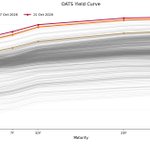
The below graph shows historic swap spread curve shows the curve from 2022 until today.

Capital expenditures among the nine largest cloud service providers (CSPs) are projected to double YoY to $960B in 2026, reaching $1.5T by 2027. Demand extends beyond hyperscalers, with firms such as Tesla and CoreWeave continuing to invest heavily in AI infrastructure.
AI server shipments are expected to increase roughly 30% YoY in 2026, generating nearly $500B in revenue and accounting for approximately 75% of the projected $640B global server market.
Against this backdrop, hyperscaler credit spreads have continued to widen, alongside roughly 15bp of broader IG widening. This appears to reflect growing compensation for capital intensity, elevated issuance, and lower-rated IG exposure rather than a deterioration in credit fundamentals.
Credit ratings remain broadly stable, while the rating composition of hyperscaler issuance has improved as higher-rated issuers account for a greater share of supply, with Oracle a notable exception.
Absent meaningful fundamental deterioration, the recent spread widening appears excessive, suggesting much of the repricing reflects supply pressures and a higher required premium for capital-intensive borrowers rather than worsening credit quality.

G7 10y10y xCcy should widen if risk off continues. Preferably 10y10y gbpusd receivers. Biggest risk retrace in credit vol/risk on. Carry relatively small for a risk off expression as well.

Duration with very little compensation. MBS looks attractive but once you strip out the optionality looking at around 30ish bps for duration without picking up much comp.

USD swap spreads compressed further, with the 2Y–3Y sector experiencing notable tightening as selling pressure across European sovereign debt markets extended into U.S. Treasuries. Weakness in French government bonds contributed to broader declines across EGBs and Gilts, with Treasuries subsequently underperforming swaps.
Despite a pronounced selloff in SOFR futures and upward pressure on short-term rates, front-end swaps remained comparatively resilient. Initial paying flows tied to rate-lock activity were met by receiving interest, particularly from speculative accounts responding to higher outright yields. The reversal of earlier front-end payer positioning provided an additional source of downward pressure on swap rates relative to Treasuries.
Primary market activity remained active, with four investment-grade issuers bringing transactions to market. However, none of the deals were expected to be swapped, limiting the potential for additional issuance-driven paying flows.
Today’s issuance pipeline:
BNY Mellon: Perpetual NC5, BBB+
Kimberly-Clark: 2Y, 3Y, 5Y, 10Y, A
TAQA: Long 5Y, AA
Walmart: 3Y, 5Y, 7Y, 10Y, AA

Legacy coupons (rolling off) vs new IG rolling in. As older legacy’s roll off and new legacy’s are added (at higher yields) which means more cash generation for investors. Keeping issuance steady we find net income supply vs coupon net income would decline from 302B to 201.5B a reduction of 33.28%. This could be a technical tailwind for IG.

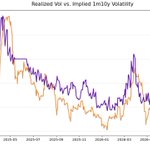
The sharp richening in 3Yx10Y payer skew has coincided with a substantial increase in realized vol-rate beta, suggesting that the repricing of upside rate protection is increasingly supported by underlying volatility dynamics. As higher yields become more closely associated with rising volatility, the relative premium for payer protection increases.
