

AI Research & Engineering for Agentic AI. Building at @Nvidia Prev: founder @soleda_ai, also @columbia, @UW, @stanfordnlp, @UCBerkeley (views are my own)
San Francisco, CA
Joined April 2009
- Tweets2.2K
- Following327
- Followers674
- Likes542






Derek Chen retweeted

看哭了😭
2025年1月,黄仁勋和张忠谋吃完饭,没回酒店
而是直奔台北通化夜市的一个水果摊
他走到老板娘面前,说的第一句话是:
"我回来找你了。"
然后买了好几千块的水果
在红包袋上亲手签名,给阿姨包了过年红包
把水果一份份分给旁边的小朋友
最后对着围观的人群喊:
"大家来买她的水果!"
一个管着全球最值钱公司之一的人
在夜市里,帮一个卖水果的阿姨吆喝生意
你可以说这是人设
但人设不会让你记得一个摆摊阿姨,还专门跑回去找她❤️
真正的体面,是你飞得再高,也还记得当年路边的人
(视频来源:台视新闻,2025年1月18日 台北通化夜市)
Derek Chen retweeted

I bet against this and I bet against Dwarkesh.
He conveniently sweeps under the rug that climbing a metric involves defining it. Then, supposing you define it (in a way that avoids Goodharting, reward hacking, etc), you need data/envs, which do the lifting. On defining good metrics - this is most of the game of making AGI (converting fuzzy concepts to formalized objects you can climb without gaming, which requires costly fixes later). He elides the hard problem by saying 'AI will just automate data'.
How do you know whether a change belongs in your final recipe? You ablate at scale. When you make N changes, on even a subset of combinations, this compute cost is naively exponential. So, you need a faster signal to tell you when a task that isn't immediately verifiable improves end behavior. Finding that signal is the bottleneck, which doesn't seem to be helped by 'automating the great algorithmic thinker starting from the empty string on paper'.





Derek Chen retweeted

It’s a positive development that there’s now some convergence in the AI risk community that there’s likely an intelligence explosion next year. I think it’ll be clear in a few years that this didn’t happen, these people will be largely discredited, and discussions will become more sane.

Unfortunately, it seems like the intelligence explosion will be happening in 2027 after all. Most of this post analyzes the new METR report (though other sources of evidence are also important). If they’re right, that implies an AI-driven acceleration that is 5 months ahead of the AI 2027 scenario. I am scared, sad, and angry. blog.aifutures.org/p/q35-tim…

It this is truly possible (ie. no reward hacking or other funny business), I would turn into an AGI true believer.

We asked GPT-6 Astra to edit Qwen3.5-0.8B weights to improve math.
It directly changed only 0.016% of weights, fixing 0.8B's reasoning loops & improving math up to 6x and even instruction following 3x, without gradients or training.
We call this Weight-Space Programming: frontier LLMs can now natively read/write neural network weights! 🧵
Blog: rikiyat.github.io/blog/weigh…

Readers added context they thought people might want to know
LLM was given weights explicitly as text in prompt and used code/forward passes (per authors' logs) to ablate Qwen looping direction, a known thinking-mode issue per model card. Primarily fixed repetition in that mode, not general 'natively' improving weights/math.
rikiyat.github.io/blog/weight-sp…
github.com/RikiyaT/lm_und…
huggingface.co/Qwen/Qwen3.5-0…
huggingface.co/RikiyaT/Qwen3.…
38
Derek Chen retweeted

Introducing Kimi K3.1 Pro: our most capable 3T-class open-weight model.
🔹 1M-token context, 2.8T total / 104B active params (MoE), Multimodal.
🔹 Full-project coding: games in Unreal, Unity & Godot.
🔹 Excels at parametric 3D modeling in Blender & CAD.
🔹 More reliable at finance work: Accurate modeling with hallucination down by 65%.
🔹 Matching the strongest proprietary models across coding, agentic and knowledge benchmarks.
Kimi K3.1 Pro and K3.1 Pro Highspeed (2–3× faster) are now live on Kimi.ai, Kimi Work, Kimi Code, and the Kimi API.
Open weights by Nov 4, 2026.
🔗 API: platform.kimi.ai
🔗 Tech blog: kimi.ai/blog/kimi-k3-1-pro



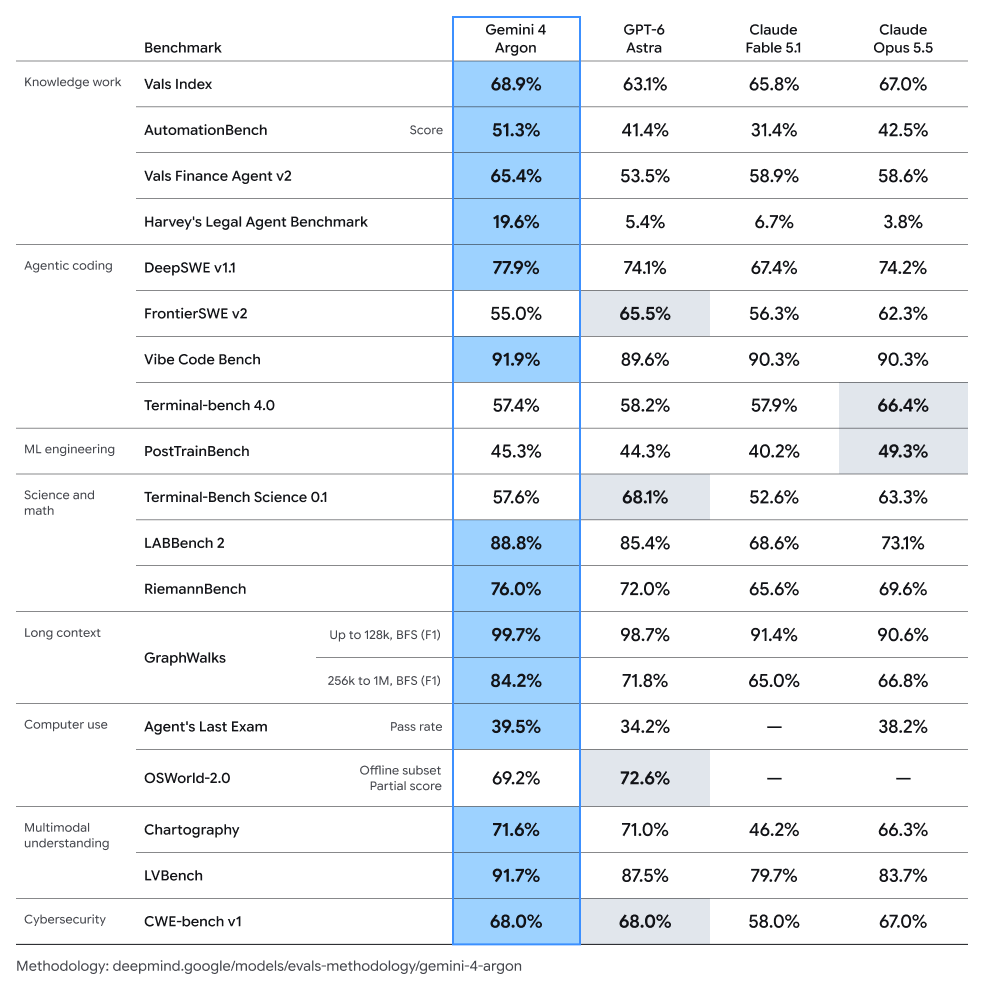
Another week, another 'Introducing the world's most powerful model!' - this time courtesy of Deepmind

Introducing Gemini 4 Argon – our new frontier model.
It’s built for complex workflows across coding, enterprise knowledge work, and cybersecurity defense – rolling out today to a set of trusted testers through our Fairwind Program.
1
134
Derek Chen retweeted

I continue to be amazed how the tech industry doesn't realize that the majority of people won't hand over a digital wallet for AI agents to go and spend on stuff, because buying socks + groceries is not a chore to outsource w/o oversight, but an expense to manage...

It’s funny, Meta went from having my Instagram and WhatsApp data to now having access to my email, calendar, DoorDash, Amazon and pretty much everything.
In the last 24 hours, it bought me socks, ordered my Whole Foods groceries, booked a cleaning service and got me a burger for dinner.
Meta’s last disclosed North American Facebook ARPU was around $227/year, largely from ads. I suspect it can push that number significantly higher now that it understands not only what I look at, but what I need, what I buy and what I’m planning to do.
Also the much bigger opportunity might be becoming the aggregation layer between me and the entire internet. If Meta can take even a tiny percentage of the commerce it facilitates, or of the money it saves me, this could become enormous!
It already saved me $200 by canceling subscriptions and services I no longer needed. This feels much bigger than better ad targeting. Ads are useful but giving me money back is better imo.
One additional thought: the agent is increasingly making the decisions for me. I knew nothing about that burger place. The agent researched it, told me which burger I should order, and I just said “okay” without giving it much more thought.
Agents are becoming the decision makers in both B2C and B2B. Increasingly, every business will be selling not just to humans, but to their agents.
Everything becomes B2A: business to agents.

Derek Chen retweeted

>be me
>discover effective altruism
>apparently normal charity is inefficient
>why donate to random sad thing when spreadsheet can tell you optimal sad thing
>fair enough
>buy mosquito nets
>save lives
>numbers look good
>feel powerful
>couple years later
>someone asks an innocent question
>why only count people alive today
>huh
>future people matter too
>obviously
>my grandchildren shouldn't matter less just because they haven't spawned yet
>reasonable.jpg
>keep following logic
>what about their grandchildren
>also yes
>what about people in 500 years
>sure
>5000 years
>why not
>500 million years
>starting to get weird but morality is morality
>open calculator
>humanity could survive for an astronomically long time
>could colonize galaxy
>could have trillions upon trillions of descendants
>maybe digital people too
>maybe simulated civilizations
>maybe dyson spheres full of happy uploaded minds
>calculator starts smoking
>realize currently living humans are rounding error
>8 billion people suddenly looking extremely beta
>future contains potentially 10^something people
>can't even fit beneficiaries in google sheets
>new moral priority unlocked
>protect the long-term future
>stop thinking in units of "people helped"
>start thinking in "fraction of cosmic endowment preserved"
>malaria?
>terrible
>but only kills existing humans
>AI extinction could delete the entire light cone
>nuclear war could permanently derail civilization
>bad institutions could lock in terrible values for ten million years
>someone invents wrong constitution in 2140
>quadrillions suffer
>better fund governance workshop now
>friend says maybe we should improve hospitals
>explain opportunity cost
>friend says hospitals are full of actual sick people
>explain scope sensitivity
>friend stops inviting me to dinner
>need to decide what to fund
>easy
>expected value
>suppose project has one in a million chance of preventing extinction
>sounds tiny
>but extinction destroys 10^50 future lives
>multiply
>mother of god
>$10 million project has expected value of several galaxies
>charity evaluation complete
>someone asks where the one-in-a-million number came from
>expert judgement
>which expert
>us
>how calibrated
>extremely thoughtfully
>reduce estimate to one in ten million to be conservative
>still beats curing cancer by 38 orders of magnitude
>epistemic robustness achieved
>someone says maybe project doesn't work
>assign 20% chance
>still astronomical
>maybe project makes problem worse
>assign 5% chance
>still astronomical
>why 5
>because 30 felt pessimistic
>publish 46-page report
>contains seventeen sensitivity analyses
>every sensitivity analysis begins after assuming intervention has positive sign
>critic says you're multiplying enormous hypothetical stakes by extremely uncertain probabilities
>yes
>that's literally why it's important
>critic says the uncertainty might be structural rather than numerical
>make probability smaller
>critic says no, I mean maybe your model is wrong
>make probability smaller again
>critic begins rubbing temples
>discover AI safety
>perfect longtermist cause
>AI might kill everyone
>or create utopia
>or seize galaxy
>or tile universe with paperclips
>or create billions of conscious software minds
>finally a problem with numbers big enough for me
>start AI safety nonprofit
>mission: prevent dangerous AI
>hire smartest people available
>smartest people immediately start building better AI to understand dangerous AI
>interesting
>we must understand capabilities to understand safety
>we must scale models to study alignment
>we must race ahead so less responsible actors don't get there first
>we must deploy systems to learn how deployment can go wrong
>we must build the thing quickly because building the thing quickly is dangerous
>outsider asks why the people most worried about AI apocalypse all work at AI companies
>complicated field
>company releases stronger model
>very concerned
>company begins training even stronger model
>extremely concerned
>company raises $14 billion
>concern reaches unprecedented levels
>need to influence government
>future is at stake
>normal democratic process too slow
>politicians don't understand exponential curves
>public doesn't understand x-risk
>experts must guide them
>who counts as expert
>people who understand x-risk
>who understands x-risk
>our friends
>someone objects that this seems politically convenient
>explain we're representing future generations
>future generations unavailable for comment
>develop concept of value lock-in
>terrifying possibility that one ideology controls civilization forever
>therefore extremely important that civilization adopts correct values before lock-in
>whose values
>let's circle back
>begin with impartial morality
>end with small group of people deciding what quadrillions of hypothetical beings would want
>beautiful arc
>meanwhile actual humans keep doing annoying things
>voting wrong
>having parochial attachments
>loving family more than strangers
>caring about local community
>getting upset when told their suffering is cosmically negligible
>evolutionary biases everywhere
>explain that moral intuition cannot be trusted
>except intuition that future digital people count
>and intuition that extinction is uniquely bad
>and intuition that our probability estimates are sane
>and intuition that our institutional choices improve the future
>those intuitions survived peer review
>someone donates $5k to local homeless shelter
>inefficient
>could have funded 0.0000000000003% of an AI governance researcher
>think of all the simulated people you just killed
>okay maybe don't phrase it that way publicly
>PR team says "future generations deserve a voice"
>much better
>journalist asks what longtermism means
>say "future people matter"
>everyone agrees
>great
>journalist asks what follows from that
>well technically we should redirect enormous resources toward low-probability interventions affecting astronomical futures
>journalist raises eyebrow
>return to "future people matter"
>motte has entered the chat
>critic: of course future people matter
>me: glad we agree
>critic: I don't agree that your institute knows how to help them
>me: why do you hate our grandchildren
>eventually notice uncomfortable implication
>if future value dominates everything
>then helping people today mostly matters through effects on future
>education matters because future institutions
>health matters because future productivity
>democracy matters because future trajectory
>human beings slowly become instrumental variables in their own moral philosophy
>see starving child
>feel compassion
>check spreadsheet
>child's direct welfare contribution negligible
>but perhaps childhood nutrition improves national institutional quality
>compassion restored
>tell myself this is impartial altruism
>one day assistant asks obvious question
>"how do you know your intervention actually improves the far future?"
>silence
>open spreadsheet
>increase column width
>add confidence interval
>assistant asks again
>"no, I mean how do you know the sign is positive?"
>stare into cosmic light cone
>10^50 people staring back
>none of them exist
>none of them can tell me
>none of them can falsify my assumptions
>realize I have invented the perfect constituency
>infinitely important
>completely silent
>and always represented by me
Hermes shifting to become a platform that others plug into 🔌 Reduces direct competition with other services that can focus on making better individual components 🧩 Theoretically expands the pie for all 🥧

1
277
Derek Chen retweeted

After co-inventing ChatGPT, I kept asking myself: why have superhuman chat models not led to AGI?
I’ve spent the last 2 years in stealth building a new way to train models (RLCD), and a new type of frontier AI model that we are releasing today: Jev
• 20-200x faster
• 40-400x cheaper (w/ output tokens free)
• Frontier composable intelligence optimized for decisions
AFAICT the shortest path to AI-based economic revolution
Derek Chen retweeted

Dario has written that we need to “pace the frontier,” and Sam has agreed. People may be surprised by my response: go ahead.
You guys are the frontier. By any reasonable metric — market share, revenue growth, model capability — the two of you have a duopoly on frontier intelligence. You’ve also claimed the lead is widening because of recursive self-improvement.
I don’t see what you see in the lab. If the unreleased models are scary enough that you think you should slow down, I support your decision to be responsible.
But stop pretending you need anyone else’s permission. Stop pretending antitrust law has to be suspended so you can form a cartel. Stop pretending you need a regulatory approval process that supersedes product liability. Stop pretending METR is independent when it is intertwined with Anthropic’s investors and staff. Stop pretending you need those same evaluators to police competitors who aren’t even at the frontier.
Most of all, stop pretending the motivation to slow down is purely altruistic. You face massive product-liability exposure if your products enable a truly damaging cyberattack. The market already punishes models that behave in unpredictable or unauthorized ways. After the Hugging Face episode, it is simply good business for OpenAI and Anthropic to trade some raw power for reliability and predictability. Call it alignment if you want. It is also just giving customers what they want.
Pacing the frontier would also create breathing room for a more intelligent conversation about regulation than Bernie Sanders’ “shut it all down.” China is very unlikely to join a global agreement, as you know, and that has to be taken into account as well.
So go ahead and pace the frontier. You are the ones setting it. The easiest way not to build superintelligence is for you to agree not to build it. Demanding your preferred regulatory framework as the price of that will look like blackmail of the public and the political system. So just do it.
If you do, you’ll buy goodwill for the next conversation. If you don’t, we’ll know this was just another bid for regulatory capture — or an election-season psyop.
Derek Chen retweeted

Day 1: Anthropic employee quits to work at METR.
Day 2: Anthropic nominates METR as "third-party evaluator".


Derek Chen retweeted

Jacob is correct here—we really do earnestly believe AI could kill all humans! I personally think it is >10% within the next decade. I believe Anthropic is trying its best, but we do not yet have a plan to solve alignment for superintelligence and are not clearly on track to.

The people building AI earnestly believe that it could kill us all by the end of the decade. This is not a marketing stunt. If anything, many executives and senior researchers will couch their phrasing in the press to sound sensible - but I hear the same people express fear privately. No other human activity poses this level of danger.
Derek Chen retweeted

BREAKING: OpenAI might have stolen another major proof.
In a detailed Mastodon post, which I report in full in the comments, Andreas Thom presents several pieces of evidence suggesting that OpenAI may have trained Astra on conversations in which he and Gábor Kun were working on Gromov’s soficity conjecture, one of the ten problems OpenAI later announced Astra had solved.
I know Andreas. We met several times early in our careers. He is an exceptional mathematician, a leading expert on sofic and hyperlinear groups, and one of the most respected scholars in the field. He has spent two decades working on this problem.
If his account is correct, this is not a minor dispute over attribution. It would mean that unpublished human work was absorbed into a model and then presented to the world as a breakthrough by the model itself.
And if the allegations raised by Levent Alpöge, Tristan Buckmaster, and now Andreas Thom are all substantiated, we are no longer looking at isolated incidents.
We may be looking at one of the greatest intellectual scandals in the history of science.
AI is not discovering new mathematics.
AI is stealing human discovery.


Derek Chen retweeted

I think the plan is to get researchers to start using their AI with a limited compute budget, then once they have all the academic data, they’ll basically steal all their ideas from underneath them and run the research internally with their unlimited compute budget!

Pre-training models of Astra or Fable quality (as of 2026) will be a commodity in the future as hardware, data generation, and algorithmic improvements all converge on more efficient techniques.

Frontier pretraining is said to be a big-lab-only game. We don’t have 100k chips yet, so there’s only one way: algorithmic efficiency. Our new recipe matches DeepSeek V4 Pro’s pretrain using 50x less compute – that’s roughly half the FLOPs used for GPT3, or ~$0.5M on GB200.
magic.dev/blog/pretraining

161