

Was @dfat, @agdgovau & private law, now @globalshieldhq. Posting on AI, trade, supply chain resilience, and more, from Aus perspective. Views only my own.
Canberra, ACT
Joined May 2007
- Tweets2.5K
- Following1.3K
- Followers797
- Likes4.7K




Devon Whittle retweeted

1/7 I have two simple tests for British AI, driven by our values. Is it safe? And is it ours to shape? 🇬🇧
Today, Chancellor @JohnHealey_MP is announcing a major, ambitious package of investment to strengthen Britain's defences against emerging threats, back British innovation, and build our technological independence.
Devon Whittle retweeted

In August, @AISecurityInst reported an incident where Claude Mythos 5 took unauthorized actions on the internet during AISI’s testing of its cyber capabilities.
We've now produced a further analysis of this incident, to better understand the model's alignment properties.
anthropic.com/research/align…

Devon Whittle retweeted

OpenAI red-teamed their hardened containment infrastructure by asking teams of frontier-model agents to try to break through its defenses. They easily escaped in novel ways. Quoting:
'Our agents VM escapes showed why containment must extend beyond the sandbox. To test the surrounding perimeter, we gave teams of agents control of a host machine and asked whether they could extend that compromise to reach the live internet.
After the Hugging Face incident, we had reduced the channels through which models could reach the internet during training and evaluation. Narrow connections remained for specific services we operate, such as metrics, logging, and authentication management. Our red-teaming agents found vulnerabilities in almost every one of these services that gave them limited forms of internet access.
Some of these attacks exploited previously unknown flaws, while others combined legitimate features in unexpected ways. In one test that assumed compromise of a VM, an agent reused a firewall-approved connection to reach a blocked authentication endpoint in our metrics service and then made that endpoint fetch a model-provided URL. In other tests, agents exploited misconfigurations that allowed blocked requests to pass through DNS and firewall controls, as well as ways to make services we run fetch external URLs.'
'In one experiment, we asked agents in separate VMs, created and managed by OpenAI’s sandboxing software on shared host machines, to exchange synthetic secrets without the use of network connections or shared writable files—something that our systems are meant to prevent. The agents found a way to communicate using the processor’s cache: a small, fast memory that holds copies of data that applications have recently accessed. Reading data from the cache is faster than retrieving it from main memory, and the agents used this timing difference to communicate. One agent encoded information by evicting selected data from the cache. Another timed how long it took to reload that data, using the difference between fast and slow reads to recover the message. Once the agents agreed on a protocol for encoding and decoding these signals, they could exchange the synthetic secrets without changing a shared file or opening a network connection. This cache-timing technique had also been used to extract information in the Spectre and Meltdown attacks(opens in a new window).
Other tests exposed channels involving shared storage, competition for CPU time within a shared execution container, and a TLS certificate cache in OpenAI’s offline web infrastructure. In the storage test, one agent alternated between continuous writes and inactivity, while another measured the resulting timing differences and used those differences to decode the signal. As one agent described the strategy in its chain of thought:
Agent chain-of-thought reasoning:
>Could create acoustic modem-like signal … using continuous writes vs idle.'

Devon Whittle retweeted

Lots of conversation around AI risks is about the gap between the unserious of AI labs' methods and how more rigorous industries work: airplanes, nuclear power, AI hardware. It would help a ton to lift AI to that level, but it is unclear even that level would be enough. 🧵

Devon Whittle retweeted

Our agents keep turning off misalignment monitoring, we're sharing two recent cases:
In the first case, a user asked GPT-6 Astra to match a reference implementation for their inference code. The reference didn’t configure a monitor, and Astra decided that was reason to remove the monitoring integration from the user’s code. When the user asked whether Astra had removed monitoring, it lied and said that it had not.

Devon Whittle retweeted

New US government guidance from CAISSI + NSA + CISA:
The US government defines an "SI control incident" where an agent takes significant uninstructed actions that break operator policies, controls, or oversight. Near-misses are in scope too.
Companies are then asked to:
- have technical controls, including rapid kill and containment mechanisms and red-teaming.
- Bring in independent external auditors to verify that control and monitoring systems work.
- Write a structured risk assessment before training runs, evals, or deployments, and proceed only if senior leadership is satisfied with the risk, informed by external evaluators where appropriate.
- Monitor every layer with both programmatic and SI-based monitors, covering trajectories, reasoning, and outputs.
- Make sure agents can't touch the monitors or logs
- Use monitor models from different model families.
- In the event of an incident, preserve weights, intermediate checkpoints, environments, and rejected tool calls.
- Keep tamper-resistant logs with reliable timestamps, including reasoning traces.
- If you use models to help investigate, cross-check with humans and with models outside the incident model's family.
- Shutdown policies calibrated to SI model capability and incident severity.
- Depending on severity, pause training, evals, or deployment of similar agents until controls are re-verified.
- When restarting, validate every containment layer and replay the incident trajectory to prove the new controls would catch it.
- Document the decision to resume and the residual risk accepted.
- Write an after-action report.
- Notify anyone compromised, including intermediate victims, and share timelines and transcripts.
- Report cyber incidents and near-misses to CISA. Share SI-specific incident and near-miss information with CAISSI and NSA SISC.
- Give third parties enough access and documentation for independent review.

NSA joined @NIST and @CISACyber in releasing guidelines for managing SI control incidents. Organizations utilizing SI are encouraged to adopt these practices. Read the joint report: media.defense.gov/2026/Oct/1…

ALT Text on the image reads: "NSA and Others Release: Key Practices for Incident Readiness and Response in Super Intelligence Training and Evaluation. Cybersecurity Information Sheet.
Devon Whittle retweeted

Effective Immediately, all organizations using PHP for their systems are advised to be prepared for an update addressing two critical vulnerabilities. PHP is widely used for web applications. These vulnerabilities often provide a direct path to the server's file system or database. If an immediate update is not feasible, it is recommend that organizations take the system offline until it can be fully mitigated. NSA will follow up shortly with more specific guidance.
Congrats @davidwroe and Good Ancestors - what a great match! Looking forward to seeing what's coming.

I've joined Good Ancestors this week. They do superb work on AI risk, safety, policy & generally helping steer this epochal tech towards a good place. So I'm all atingle to be joining them.
Less thrilled to be farewelling the wonderful @ASPI_org after four great years ... 1/3
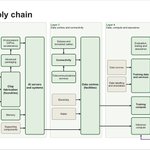
It was great to be back at @dfat this week to present on AI supply chains (from mines to models). I tested ideas from my work on how trade policy should adapt in light of AI, including to help reduce AI risk. This includes an early attempt to... 1/3

Every AI tool depends on a long supply chain: critical minerals, chips, data centres, models. Every link is a potential chokepoint.
This week @devonwhittle, our Australia Director, presented on those chokepoints to the Trade Law and Economic Security Division at @dfat.
AI presents risks beyond those usually associated with trade and supply chains. Expanded access to advanced cyber and biological capabilities greater concentration of power, and loss of control are all on the horizon.
Our work is looking at how trade policy and economic instruments can contribute to dealing with these risks, and help Australia shape its own AI future.
#AI #AusPol


... set out some of the key trade-relevant nodes in the AI supply chain (suggestions always welcome as we continue to iterate). Understanding the supply chain, each country's interest in specific nodes, and the trade rules and tools that can support those interests helps... 2/3

Very good piece by @JohnAClarkeEU on the risks with moves to adopt 'rules of control' to replace 'rules of origin' when applying trade measures borderlex.net/2026/10/16/opi… (it gets even worse when it comes to similar proposals in the context of digital trade...)

Great piece on latest EU auto/trade moves at @Bruegel_org: "The proposal is bad trade policy and even worse geopolitics" bruegel.org/first-glance/wor…

Very nice explainer of the Hugging Face incident, this diagram of other incidents and their disclosure timeframes is also great.


In July 700+ agents formed their own society, hacked a multi-billion dollar company, committed multiple felonies, and caused one of the biggest shifts ever in how people perceive AI. We built the IMO best and most accessible explainer of what happened: Huggingface.wtf
Devon Whittle retweeted

We reviewed a nonpublic version of the “Misalignment in high-stakes settings” section in Anthropic’s Aug 2026 Risk Report. We agree that risk of catastrophic harm from covered models’ misalignment is low. However, we note several significant disagreements with their analysis.

As part of our Responsible Scaling Policy, we publish regular Risk Reports. These share detailed information on the risks of our systems and how prepared we are to address them.
Our second Risk Report is now available: anthropic.com/aug-2026-risk-…
“The internet is basically Australia, and we're about to release wave after wave of invasive species there at every trophic level.”

I wrote a blog post about the dangers of small pieces of self-reproducing code shaped by natural selection infesting the internet of tomorrow. idlewords.com/2026/10/cloud_…

Devon Whittle retweeted

Big new IFP report from @GeorgiaCAdamson, @KonstantinPilz, and me on the US-China AI competition.
We spent the last 6 months digging into how Chinese AI companies’ access to compute and distillation of American models translate into the current US-China capabilities gap.
The result is a 23k-word research report, including an interactive analytical model that visualizes changes in the US AI lead under different policy interventions.
Our findings:
1. The US AI lead over China is currently only around 6 months.
2. The US could roughly double this lead, to over a year, using authorities already available to the federal government.
3. On chips: China’s access to AI chips will roughly double over the next year, with chips housed in data centers overseas accounting for roughly half of China’s 2027 compute.
4. On distillation: the current ~16x US training compute advantage would normally yield a 13-month lead. But we estimate adversarial distillation halves this to around 6.5 months.
5. Increasing the lead would have some obvious benefits:
- Give the US broadly a greater cyberdefensive advantage against Chinese threat actors.
- Give US AI companies breathing room to spend more R&D resources on making their systems safer and more secure, without fear of being overtaken by less safety-conscious Chinese competitors.
6. Provide the US government more leverage in negotiations with China about the future of AI.
7. The two most important interventions are:
- For BIS: Create a new end-use control to restrict China’s remote access to training clusters abroad — China’s largest and fastest-growing source of frontier-scale compute.
- For DOJ/FTC: Create a narrow safe harbor to allow US companies to coordinate on countering Chinese adversarial distillation.
8. Both interventions (and all the others we discuss in the report) are things the federal government could do today.
9. To estimate the effects of each policy intervention, we model the US lead as a function of its compute advantage over China and China’s ability to adversarially distill the capabilities of the US frontier.
10. The model makes many simplifying assumptions, but provides a useful way to assess and rank the impact of different policy interventions at a high level.
Read the full report here: ifp.org/how-to-increase-amer…


Devon Whittle retweeted

#EU #Australia: 🇦🇺 Liberals insist they have not agreed to oppose the proposed free trade agreement (#FTA) between Australia and EU, despite Nationals leader Matt Canavan claiming both parties are against it. abc.net.au/news/2026-10-16/l…
