

Project to render the Dhamma in AI image. Mistakes are mine. Merits to the pups. “All compounded things are subject to vanish. Strive on with diligence.”
Tipitaka
Joined April 2026
- Tweets172
- Following38
- Followers244
- Likes97




Attavagga
Verse 162: As the creeper (maluva) strangle the sal tree, so also, a really immoral person (overwhelmed by Craving) does to himself just what his enemy wishes him to do.


Attavagga
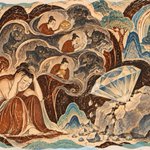
Verse 161: The evil done by oneself, arising in oneself, and caused by oneself, destroys the foolish one, just as a diamond grinds the rock from which it is formed.

Attavagga
Verse 160: One indeed is one's own refuge; how can others be a refuge to one? With oneself thoroughly tamed, one can attain a refuge (i.e., Arahatta Phala), which is so difficult to attain.

Attavagga
Verse 159: One should act as one teaches others; only with oneself thoroughly tamed should one tame others. To tame oneself is, indeed, difficult.

Attavagga
Verse 158: One should first establish oneself in what is proper; then only one should teach others. A wise man should not incur reproach.

Attavagga
Verse 157: If one knows that one is dear to oneself, one should protect oneself well. During any of the three watches (of life) the wise man should be on guard (against evil).

Jaravagga
Verse 156: They, who in youth have neither led the Life of Purity nor have acquired wealth, lie helplessly like arrows that have lost momentum, moaning and sighing after the past.

Jaravagga
Verse 155: They, who in youth have neither led the life of Purity nor have acquired wealth, waste away in dejection like decrepit herons on a drying pond deplete of fish.

Jaravagga
Verse 154: Oh house-builder! You are seen, you shall build no house (for me) again. All your rafters are broken, your roof-tree is destroyed. My mind has reached the unconditioned (i.e., Nibbana); the end of craving (Arahatta Phala) has been attained.

Jaravagga
Verse 153: I, who have been seeking the builder of this house (body), failing to attain Enlightenment (Bodhi nana or Sabbannuta nana) which would enable me to find him, have wandered through innumerable births in samsara. To be born again and again is, indeed, dukkha!

Jaravagga
Verse 152: This man of little learning grows old like an ox; only his flesh grows but not his wisdom.

Jaravagga
Verse 151: The much ornamented royal carriages do wear out, the body also grows old, but the Dhamma of the Virtuous does not decay. Thus, indeed, say the Virtuous among themselves.

Jaravagga
Verse 150: This body (lit., the city) is built up with bones which are covered with flesh and blood; within this dwell (lit., are deposited) decay and death, pride and detraction (of others’ virtues and reputation).


Jaravagga
Verse 148: This body is worn out-with age, it is the seat of sickness, it is subject to decay. This putrid body disintegrates; life, indeed, ends in death.

Jaravagga
Verse 147: Look at this dressed up body, a mass of sores, supported (by bones), sickly, a subject of many thoughts (of sensual desire). Indeed, that body is neither permanent nor enduring.


Dandavagga
Verse 145: Farmers channel the water; fletchers straighten the arrows; carpenters work the timber; the wise tame themselves.

Dandavagga
Verse 144: As splendid horse touched with whip, be ardent, deeply moved, by faith and virtue, effort too, by meditation, Dhamma’s search, by knowledge, kindness, mindfulness; abandon dukkha limitless!

Dandavagga
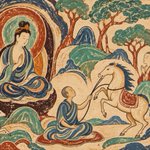
Verse 143: Rare in this world is the kind of person who out of a sense of shame restrains from doing evil and keeps himself awake like a good horse that gives no cause to be whipped.

