

Designer who got obsessed with how apps make money. ex-Voodoo, MYM · angel. Trail runner, home cook, still plays Magic and now WoW Forever
Paris, France
Joined January 2014
- Tweets5.1K
- Following378
- Followers633
- Likes3.8K






Pinned Tweet
Rejecting designers without telling them why always felt wrong to me. So yesterday I tried something 👉👈
Our last design role got 300+ applications. I try to give real feedback to people we turn down, a "here's why, here's what didn't work in your case". This time I offered a live session to 3 of them instead. Four of us, one hour, one question: what should a portfolio actually show? (it was super cool 😳)
What came out of it:
→ Show what you'd bring to the company. Not just visuals, unless the role is pure visual design (rare).
→ Deep design system work is great, but not for every team. We ship new products fast and iterate constantly. We need product-minded designers who can touch everything, including data, and follow how their product evolves.
→ Design thinking, UX thinking, design sprints… these methods helped design earn its seat at the table. Showcasing them doesn't carry much weight anymore. What matters: can you understand a problem, iterate fast, and fit what's already in place?
→ Yes, we need to know you use AI. Not as a buzzword: automated research to find data on your vertical, generating screen variations fast, and above all prototyping. I've pushed prototypes for years. With AI there's no excuse for static mockups only.
→ Don't lead with your tools. They change every 3-6 months (slight exaggeration, but barely).
→ Show who you are. We hire high-impact people, so we need to picture you on the team. What you're good at, where you've worked, which missions you loved and why.
→ Adapt to the role. Micro-interactions and details? Put them first. B2B or B2C? Frame your work so we can project you into the job.
👀 And if you really want (you want) to stand out with 200-300 people in the pile: dig into the company's business. Read what its leaders say publicly, the problems they've shared. Build a small use case just for them.
That's how you show you actually care about this company, not just about getting a job.
🤡 Do you want to improve your onboarding?
we asked users how they'd use the app. then ignored the answers.
latest app we launched at Quiet, scope is super small on purpose. we just want to check the core loop works.
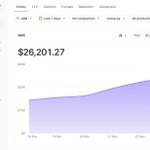
it's at $26k ARR now.
first thing we looked at: onboarding. big drop at the setup step.
why? we ask users about their usage, then we make them do the full setup anyway. from zero. like they never told us anything.
so we're fixing that first. if you ask, use it.
(new @adapty UI btw, really clean, nice to see the product moving, lets go team)

1
32
Day 1 on @higgsfield_ai @higgsfield . Zero experience in video, zero idea what I'm doing.
I'll share what I learn trying to make UGC that doesn't look fake. If you've done it, what's your #1 tip?
thankkkkks
1
62
ok health prevention is a topic i'm really into lately. not really related to my job currently, but i read a lot about it.
one key point: keep moving. we underestimate this so much.
this morning i tweeted about starting a walking club (probably a bad idea, i just had to drop it to get it out of my head haha).
especially in tech, we sit all day. and no, the standing desk is not the ultimate cure. it helps, but no.
and from what physios told me, one intense run a week won't save you either.
prevention = regularly. your legs, your back, your heart will thank you.
i find this topic both anxious and super important to care about.

I often have some pretty out-there ideas, so I figured if I wrote them down in a note, I could share them :p I don't know what to do with them. Feel free lol
been thinking a lot about prevention lately. and walking is so underrated. free, everyone can do it, and the health data on it is kind of crazy.
at the same time people are more and more isolated. you can live 5 years in a building and never talk to your neighbors.
so here's an idea I'd love someone to build (or steal, or make better):
👉 a neighborhood walk club 👈
same day, same time, same starting point every week. 45 min. you show up, you walk, you end up at a local café.
day 1 you don't need anyone. the app tracks your steps and shows you the next walk 400m from your place. the people come with the ritual.
then you level up:
walker → regular (4 walks) → host (you start your own loop) → captain (you run a few hosts in your area)
hosts get real local status. they know everyone. they get paid or walk for free.
why I like it:
- fights isolation without being "a loneliness app"
- brings life back to the neighborhood
- local shops get foot traffic
- people actually get to know each other
business side: small sub, the café at the finish pays to be the stop, and health insurers / employers who have every reason to want people moving and less alone.
how I'd start, no app at all:
pick one neighborhood. flyers at the bakery + a whatsapp group. every sunday 10am, same spot, same café at the end. do it for 6 weeks and only watch one thing: who comes back.
if people come back, the regulars become your first hosts. then you build the app.
if someone wants to take this and run with it, please do. and tell me how it goes ;)
(It's handy to just talk through your idea as you go, and Claude will write it up nicely for you!)
28
🚨 Unpopular opinion: stop benchmarking your competitors.
I just got off a call where we talked more about a competitor than about our own data
→ you study 10 apps
→ you copy their onboarding
→ you never check where YOUR users drop off
Result: you get lost, and your app looks like every other one.
Your data is the only benchmark that matters.
2
79
I often have some pretty out-there ideas, so I figured if I wrote them down in a note, I could share them :p I don't know what to do with them. Feel free lol
been thinking a lot about prevention lately. and walking is so underrated. free, everyone can do it, and the health data on it is kind of crazy.
at the same time people are more and more isolated. you can live 5 years in a building and never talk to your neighbors.
so here's an idea I'd love someone to build (or steal, or make better):
👉 a neighborhood walk club 👈
same day, same time, same starting point every week. 45 min. you show up, you walk, you end up at a local café.
day 1 you don't need anyone. the app tracks your steps and shows you the next walk 400m from your place. the people come with the ritual.
then you level up:
walker → regular (4 walks) → host (you start your own loop) → captain (you run a few hosts in your area)
hosts get real local status. they know everyone. they get paid or walk for free.
why I like it:
- fights isolation without being "a loneliness app"
- brings life back to the neighborhood
- local shops get foot traffic
- people actually get to know each other
business side: small sub, the café at the finish pays to be the stop, and health insurers / employers who have every reason to want people moving and less alone.
how I'd start, no app at all:
pick one neighborhood. flyers at the bakery + a whatsapp group. every sunday 10am, same spot, same café at the end. do it for 6 weeks and only watch one thing: who comes back.
if people come back, the regulars become your first hosts. then you build the app.
if someone wants to take this and run with it, please do. and tell me how it goes ;)
(It's handy to just talk through your idea as you go, and Claude will write it up nicely for you!)
Ads scale better when the product is aligned with UA, not a secret right?
On the product side, these are the mechanics we tested that moved LTV:
- Tease the value in onboarding without fully showing it. Users understand what they can get, but have to move forward to see it completely.
- Let them try the beginning of the core loop and project them onto the end game of the app. They see early where it can take them.
- Make them create something on a sample (not just watch). Once they produce a first result, engagement changes.
- My favorite : different flow tests between power users and total new users. What works for one group doesn’t always work for the other.
At the same time we ran 4-5 tests from launch on the volume of ads viewed (placement, frequency, timing), while watching churn and reviews so we wouldn’t degrade the experience.
The successive +2% LTV gains often come from this kind of iteration: less friction at the start, a clear projection, and a first act of creation.
When it’s aligned with acquisition, the profitable cost per acquisition becomes much more sustainable.

For the ones who follow our ad monetization story.
We crossed the $10k, $11'500 exactly.
(If you don't know, as a ex-gaming founder, I wanted to scale an ad-based app, not only sub. We started in June 26'.)
We crossed the $10k, $11'500 exactly.
- Product kept improving a lot with a lot of small wins. When you do 2% uplift on the LTV 5 times in a row, it start to be significant.
- We tried Unity ads again, and this time it seems to work
- Applovin keeps delivering crazy results.
- Google doing better. Our AM sent us a hack, which is working super well!
- Trying mintegral again, but so far not that great for this app!
Let see if we can push it to $15k 👀

2
109
Super interesting paper I read yesterday. Colgate and PyMC Labs showed LLMs playing consumers with a demographic persona can rank product concepts at ~90% of the reliability of a second human panel.
Curious what you think, or if you've already tried it 👀
I haven't on our apps. But I know how often our own bets are wrong, because they're built on our taste and habits, which look nothing like our users' (and Gen Z is a whole other planet 😅)
So this week I'm testing it: store page and paywall variants where I already know the winner, and I'll see if the personas pick the same one. Will share the method so your agent can build its own personas.
Paper: arxiv.org/abs/2510.08338

1
1
110
OK this topic is on fire this morning 🔥
Good, because honestly it's the one I'm most obsessed with right now. I've never been this excited to be a designer. And at the same time my feed is full of "design is dead", "we're done", "pivot or die".
I don't buy it. The job isn't dying, it's getting bigger. But you have to grow with it.
A few things I'd push any designer to do right now:
→ Ship something end to end. With AI there's no excuse anymore.
I'm shipping Sagas, my dark fantasy walking game, solo. Currently fighting App Review 🙃 Can't wait to see the first 10 players battle it out.
And at Quiet, almost our whole Studio team now ships to prod. We started with tiny things like everyone, then built a process that lets us ship high-impact features almost solo. With proper agent safety checks (shoutout @tryrevyl for helping us on that one).
→ Learn the numbers behind your screens. Conversion, retention, what a paywall actually does. That's where design decisions start to matter.
→ Use AI every day, for real. Not to generate pretty shots, but to understand what it's good at, where it breaks, and where your judgment still makes the difference.
→ Train your taste. When anyone can generate 50 options in a minute, picking the right one and knowing why becomes the skill.
→ Talk to users. AI has never had a coffee with your users. You can.
Designers who only pushed pixels should worry. Designers who think, build and decide have never had more leverage.
What are you doing to level up right now? Curious 👇

I think product design is over as we know it
The only design roles that will matter are brand and agent interaction design
1) In the age of abundance, brand design will become increasingly important. Look at companies like Ramp & Cog invest heavily into creative teams
2) Agent interaction design is still early. Remember content designers at FB? This role doesn’t really exist anymore but I think it’ll come back in the form of agent/model behavior design.
As model intelligence saturates benchmarks, the key differentiator will be agent behavior / vibes and designers will play a critical role here
tl;dr if you’re designing interfaces, you should pivot to brand or agent interaction design
3
212
Wang says raw intelligence is no longer the bottleneck. In any field. Here's what that looks like on the ground: designers watching Claude do their job in minutes. People whose whole scope was shipping artifacts, and that's it.
And honestly? If AI replaces disposable UI work, good. The value was never there.
The real problem is how we built these jobs.
Especially in France, we love silos. We split every role into narrower and narrower scopes, until we got ultra-specialists with zero view of the whole product.
Then, to fix the missing vision, we added people on top to "carry" it. Except they have no craft. They can't embody that vision in the actual work. So you get an endless back-and-forth between the people who think and the people who make.
Execution is exactly what AI does best. So the roles stuck at the end of that loop are the first exposed.
What creates value is the opposite: give people the vision, the ownership, and control over the whole chain, from the why to the shipped product. That's how you build a real value system.
So no, the answer isn't fearing AI. It's everyone using it, testing it, breaking it. Every day. You can't steer something you don't understand.
Alarming and exciting at the same time. We're already in the new era.
Where do you see silos breaking first in your org?

95
In Copenhagen this week 👀
Spent part of the weekend with a bunch of ex-Maxon (hey C4D ;)) and ex-Spoti folks (it was super cool 🫂), and I'd love to meet more people building here.
Designers, product people, builders, especially if you're working on mobile apps (consumer, subscriptions, the whole paywall rabbit hole). Up for a coffee? DMs are open 👉👈

2
2
129
Tom is right that side projects get designers hired. I'd just raise the bar a bit.
Shipping something pretty is cheap now, anyone can do it in a weekend with Claude Code. What I want to see is whether you got 10 strangers to care: how you found them, and what made the first one cancel (the part nobody screenshots 😅)
10 people paying for an ugly app tells me more than a beautiful one nobody opens. teapawt.org/tomscottv/status/21237…

As a designer, you have to keep reinventing yourself.
In this article, I share my thoughts from a hiring/careers POV and spoke with Eric Greene who went from being a manager at HubSpot to Staff IC at Fin. Not an easy place to get hired as a designer.

1
75

[Exploration for details]--[06|06]
Hold (uuuuuup) (Maintenir en Fr me termine à chaque fois)
It was cool to put together this mini series of details during my lunch break as a quick challenge ;)
78
#1 is the space I've always loved working in, and the market is real. For example, Timeleft (big fan) proved people will pay to have dinner with strangers and more like training together etc. The hard part is what comes after. Connecting people once is doable. Making them come back, and building an experience around it that doesn't feel fake or one-off, is where most of these products stall.
Loneliness apps also have a brutal time to value. The value is other people, and on day 1 there's nobody there yet. The ones that work give you something to do first (a dinner, a run, a game) and let the connection happen around it.
#35 is basically the same bet. Build the ritual, the people stick because of it 👀
Tech can be a huge lever to improve social things but the execution ... often bad.
teapawt.org/gregisenberg/status/21…

The biggest opportunities right now:
1. build for solving loneliness (the more AI floods everything, the more people crave real human connection, IRL and small social)
2. build for places with no cameras and no recording (being offline and unseen is turning into the new status symbol)
3. build for the crisis of young men. Millions of guys in their 20s feel completely lost with work, dating, and purpose. Whoever builds real brotherhood, mentorship, and an actual path forward wins a massive market (and helps a ton of people).
4. build for protecting people's brains (feeds are turning everyone's attention to mush, tools that protect your focus and mood are an easy sell)
5. build for the death of "everyone agrees" (you can find a chart or a podcast clip to prove any point now, people are starving for one source they actually trust)
6. build for day 2, not day 0. Anyone can launch an app in a weekend now. But how can you keep it running, fix the mess, and grow it for 3 years.
7. build for throwaway software (not everything needs to be a $20 a month subscription, tiny apps made for one trip, one wedding, or one group chat are coming)
8. build for people whose ego just got bruised by AI. Millions of smart people are realizing their job was mostly pattern matching. Help them figure out what they're good for next.
9. build for things that take effort on purpose (when everything is instant and free, nothing feels earned, people will pay for slowness and craft)
10. build for people who miss being told they're wrong. AI agrees with everything you say now. Real rooms where smart people actually push back on your ideas are becoming a luxury.
11. build for skin in the game. The internet is full of free takes and bots. Any platform where people have to put real money, real names, or real work behind what they say wins.
12. build for agents that need to spend money (they're getting virtual cards and budgets, someone builds the spend controls, fraud protection, receipts)
13. build for the end of fake email jobs (half of corporate America knows their job is theater, build the exit ramp for people who want to do real work)
14. build for the friend with great recommendations (nobody trusts Yelp reviews etc anymore because it's all bots and SEO, people will pay one obsessive person to just tell them where to eat and what to buy)
15. build for life after the chat box. Typing prompts already feels old. The best AI products won't look like chatbots at all, they'll just sit in the background and proactively handle things.
16. build for markets too small to matter before (500 lobster fishermen was never worth a team, now it's a real business if you can figure out what to build value to add to these fishermen lives!)
17. build for helpful without being creepy. AI is getting very personal very fast. Whoever figures out how to make it feel warm instead of weird owns consumer tech.
18. build for small private rooms (the public internet feels like an ad and a bot farm, all the good conversations and deals are moving into small invite-only groups)
19. build for someone taking the blame. AI can write the contract or read the scan, but a machine can't look you in the eye when it goes wrong. People still pay for a human on the hook.
20. build for learning that actually keeps up (a four year degree is way too slow for how fast things move now)
21. build for the anti-AI premium (as everything gets generated, human-made and unpolished become status symbols people pay up for)
note: more trends/ideas ideabrowser.com (free to sign up)
22. build for the return to the physical (screens fill with slop, people crave the real world, the hands on, the local, the analog)
23. build for the caregiving wave. The population is aging fast, tens of millions are caring for parents, and the whole burden is landing on families with no support.
24. build for finding things you didn't know to search for (algorithms just feed you more of what you clicked yesterday, people miss stumbling onto something totally different)
25. build for the housing and rootlessness problem (people can't afford to settle down, and the whole idea of a stable home base is up for grabs)
26. build for anti marketing (the slickest, most polished websites now look like AI slop or a scam, sometimes a plain text page from 1998 converts better because it feels like a real person built it)
27. build for agents that sit on hold for you (canceling a gym membership, fighting a medical bill, haggling with your internet provider, aint nobody got time for that)
28. build for software you actually own (people are exhausted from renting 30 different subscriptions every month, pay once and run it on your own machine is a massive wedge)
29. build for stuff that only works locally. The internet feels like one giant mall where every city has the exact same coffee shops and trends. Things that refuse to scale are suddenly cool again.
30. build for the 90% automated, 10% human sign-off model (clients don't actually care if AI did the heavy lifting, they just want one real expert to check the work and put their name on it)
31. build for infinite creative testing. Some brands are lighting money on fire on Meta because their ads die in 10 days. Build an automated pipeline that pumps out 100 fresh UGC and static ad variations a week based on what's actually converting in their ad account.
32. build for cold outreach that doesn't look like cold outreach. Mass blasting 50,000 people with "Hope this finds you well" is dead lol. Build an agent that watches for one specific trigger like a new VP hire or a broken checkout page, builds a custom teardown on the fly, and sends it before a human SDR even wakes up.
33. build for programmatic free tools instead of blog posts. Spin up 200 tiny, hyper-specific calculators, little apps and templates for one niche, rank them, and turn the traffic straight into conversions.
34. build for the food and toxin awakening (people are finally waking up to ultra processed food, microplastics, and why everyone feels sick and tired all the time)
35. build for the death of third places (there is almost nowhere left to just hang out without spending $50, which is why run clubs, saunas, and neighborhood clubs are blowing up)
36. build for people who can't retire at 65. Either they can't afford it or they're going to live to 95 and don't want to spend 30 years watching TV. The second act"market is huge.
37. build for the "undo" button for agents. Giving an AI access to your inbox, calendar, or bank account is still terrifying. Whoever makes it safe to let go of the wheel wins.
38. build for the sports betting and day trading hangover (a whole generation of young people are addicted to gambling on their phones and blowing up their bank accounts)
39. build for the death of the attention span. Smart adults can't even sit through a movie without checking their phone or finish a book anymore, and they're starting to hate themselves for it.
40. build for keeping marriages alive. Couples are stretched thin with work, kids, and money, and traditional therapy is $250 an hour with a waitlist. Anything that actually saves relationships is priceless.
41. build for people who don't own anything anymore. You rent your apartment, lease your car, stream your music, and subscribe to your software. Anything that helps regular people actually own an asset again wins.
KEEP BUILDING
70
Nikita is right about the data. On the pixels, my teams do pretty much the opposite.
Our designers ship straight to prod. Figma is for the final polish, the design system lives in the codebase and the AI gets it too. I haven't hired a PM in 5 years. So I delegate a lot of pixels (and honestly they're better at them than me 😅)
What I keep for myself is the data and the why. Every screen has to come with a reason I can explain in one sentence, to the team or to anyone outside. If I can't, that screen has a problem, whoever drew it.
That's also what makes decisions defensible when someone asks: the reasoning is shared by the whole team, so it doesn't depend on one founder's memory. teapawt.org/nikitabier/status/2124…

When you’re building a consumer app, you need near photographic memory of every decision, every pixel on the app, and every data trend.
If you delegate key design decisions, you will not be able to understand when new patterns emerge at a sufficient speed to iterate and react to user needs. And you also won’t be able to explain those decisions in any defensible way to regulators, users, and the media.
The world moves fast; you need to move faster.
1
53