

Championing evidence-based #CannabisMedicine as clinician, educator, & innovator | More: https://xitter.cf/t.co/HFRrDlfeFS
Boston, MA
Joined August 2009
- Tweets10.7K
- Following1K
- Followers8.7K
- Likes3.8K





Pinned Tweet
Massachusetts Question 8 would repeal the state’s legal, regulated adult-use cannabis retail system beginning in 2028. It would not eliminate cannabis use or the medical program, but it would end legal recreational sales and the regulatory and tax structure surrounding them. Whatever your view of cannabis, it’s worth understanding exactly what would change before November.
#Massachusetts #CannabisPolicy #CannabisRegulation #PublicHealth
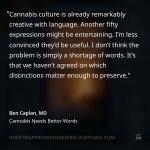
What if some of the misunderstanding surrounding cannabis begins with the way we talk about it?
👉doctorapprovedcannabis.subst…


Patients with #FocalDystonia or #Depression or #EhlersDanlos Syndrome, here's a video of patients sharing their powerful experiences.
youtube.com/watch?v=wfeRlw0O…
I’ve known Joanne Wilson (@thegothamgal) to be a force of nature. Fiercely determined, unafraid of difficult fights, and willing to challenge the status quo when she believes something needs fixing. What I’ve always admired most is that her toughness is matched by a genuine desire to do good. Cannabis needs more people with that combination of courage, conviction, and character.

New York cannabis founder on entering the industry in 2026: ‘Don’t do it’
Cannabis retail is broken. mjbizdaily.com/news/new-york…

True story. @CEDclinic has seen tons of patients using #medicalcannabis for nicotine replacement. Not ideal for everyone, but knowledge=power. A smoker who knows him/her self, armed with product knowledge (quell cravings or anxiety), the better the odds. marijuanamoment.net/marijuan…

Imagine being handed thousands of medication options and told to figure out your treatment yourself.
For too many cannabis patients, that's what passes for medical guidance.
Patients deserve better than guesswork.
cedclinic.com/the-cannabis-c…

Howard Kessler has one of the most original minds I’ve ever known: imaginative, perceptive, and remarkably persistent. He sees possibilities others miss and has the determination to pursue them.
Over the past decade, I’ve had the privilege of working with Howard and learning from him as a mentor. He thinks beyond the immediate moment, in terms of how cultures change, how ideas take hold, and what patient, purposeful work can accomplish for the greater good.
He has taught me the value of holding to a well-considered conviction before there is a crowd behind it, and staying the course long enough for others to see what you saw. His example has expanded my sense of what is possible and what it takes to turn an idea into something consequential.
Wonderful to see him receive this recognition. Congratulations, Howard.
themarijuanaherald.com/2026/…


When a bunch of public servant bureaucrats are spinning their wheels you bring in a private sector assassin to cross the finish line. $MSOS
themarijuanaherald.com/2026/…
Cannabis Has a Vocabulary Problem. And Medicine Is Paying for It.
Ask someone what cannabis does, and you’ll often hear the same answer:
“It gets you high.”
Well, yes. Sometimes. But imagine if that were the extent of our medical vocabulary for an entire class of therapeutic compounds.
What happens when a patient says cannabis helps them sleep, but doesn’t make them sleepy? Or that their pain is still there, but it bothers them less? Or that they feel better without experiencing anything they’d describe as a “high”?
Are those the same effect? Different effects? How would we measure them? And how would we know whether a treatment is actually accomplishing what the patient needs?
These aren’t semantic games. They’re questions that affect how we conduct research, interpret clinical outcomes, communicate risks, and help patients make decisions.
For years, cannabis has occupied an awkward place in medicine. Part pharmacology, part cultural baggage, part political argument, and somehow still expected to behave like a conventional pharmaceutical.
But perhaps the problem isn’t that cannabis refuses to fit our categories.
Perhaps some of our categories aren’t particularly good.
I’m interested in developing a better vocabulary for describing what cannabis does, what patients experience, and what we can reasonably claim to know.
Because “it gets you high” is a remarkably inadequate starting point for a serious medical conversation.
I’ve written more about what it means when cannabis actually works:
doctorapprovedcannabis.subst…
#CannabisMedicine #MedicalResearch

Another 2.56 million children studied. Another finding that does NOT support an MMR-autism link.
This U.S. study examined records through age 8. Science deserves scrutiny. It also deserves an honest reading.
Original paper: doi.org/10.1097/INF.00000000…
My analysis: cedclinic.com/mmr-vaccinatio…
#autism #AutismAwareness #MedX

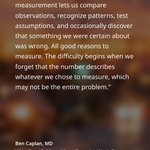
“We’ve simply accepted an answer before identifying the question it answers.”
When someone tells me cannabis helped them relax, I want to know what actually relaxed. Their muscles? Their worries? Their constant feeling of being on alert? These distinctions can make an enormous difference in clinical care, yet we routinely squeeze them into broad descriptions that tell us very little. I've been exploring how we might develop a more useful language for cannabis, one that begins with the experiences people actually have.
There's more to this story. Read along and join the community pushing cannabis medicine forward. ↗
👉 doctorapprovedcannabis.subst…

Massachusetts has roughly 85,000 cannabis product listings. Finding one that fits your needs shouldn't require a research degree.
So I built 2 FREE tools:
🔎 Search and filter products:
cedclinic.com/menu-data/
🎯 Start with your goals and find nearby options:
cedclinic.com/menu-data/meth…
Already getting requests for other states!
Which state should be next?


For the evidence nerds in this community 👇
I just opened up the full Doctor-Approved Cannabis archive for a week.
Hundreds of posts. Zero slogans. Lots of rabbit holes.
Free knowledge.
DoctorApprovedCannabis.Subst…

Cannabis information is everywhere. Good cannabis medicine is not.
That’s why I built my Substack, Doctor-Approved Cannabis: science, clinical reality, dosing, new research, myths, and the questions patients and clinicians actually ask.
Sign up for free today and get 1 week of complimentary access to hundreds of archived posts.
No obligation. No costs. Just come explore.
👉 DoctorApprovedCannabis.Subst…
The ECS is not a cannabis niche. In this new study, MAGL inhibition after cardiac arrest improved survival, neurologic recovery, and cerebral microcirculation in rats. Still an animal study, but good to see more of medicine recognizing how broadly relevant ECS biology may be. cedclinic.com/ced-magl-inhib…

@CEDclinic currently cares for hundreds of families living with autism at home.
Across 15 years of clinical practice, we’ve tracked the real-world experiences of over 500 pediatric patients. Traditional medical guidance often misses the lived reality of these families.
Here is what parents are teaching us across the developmental spectrum:
🔹 Toddlerhood (Ages 18m–4y): The explosive “meltdown” is often a gut emergency. Over 58% suffer chronic, unspoken constipation. Calming visceral inflammation calms behavior.
🔹 School-Age (Ages 5–8y): 84.6% battle the "2:00 AM crisis." Escalating melatonin doesn't fix midnight waking; extended-release phytocannabinoids support natural sleep architecture through dawn.
🔹 Preadolescence (Ages 9–12y): 65% discontinue Guanfacine/Clonidine due to severe weepiness or lethargy. Meanwhile, expressive speech shutdowns hide remarkably high receptive comprehension once the sensory noise floor is lowered.
🔹 Adolescence (Ages 13–17y): 68% face physical safety crises as meltdowns meet adult body size. High-ratio CBD/CBDA protocols provide a critical neurological buffer without the severe metabolic weight gain of antipsychotics.
🔹 Young Adulthood (18–21y+): 62% seek our guidance to safely de-prescribe decades-old psychiatric cocktails and restore personal clarity after aging off the pediatric special education "cliff."
We’ve compiled our complete chronological findings, parent quotes, and clinical insights into our new developmental gallery:
🔗 Explore the gallery: cedclinic.com/advisor/pediat…
To the autism families navigating this journey: your experience is real, and you are not alone.
#AutismAwareness #PediatricCare #CannabinoidMedicine #EndocannabinoidSystem #Neurodevelopment #CEDClinic

Nearly 85% of autistic children ages 5–8 experience "split-night" insomnia, falling asleep easily at 8:00 PM but waking wide awake at 2:00 AM for 3–4 hours.
A common clinical misstep is escalating melatonin doses (5mg–10mg+). In our cohort, supratherapeutic melatonin often saturates receptors prematurely, triggering vivid middle-of-the-night nightmares and worsening sleep fragmentation rather than fixing it.
In our toddler cohort (ages 18mo–4y), 58% presented with severe enteric distress and chronic constipation.
Because non-verbal or minimally verbal children cannot localize or verbalize visceral abdominal cramping, that internal physical agony frequently manifests as head-banging, aggression, or explosive meltdowns. Treating the enteric endocannabinoid system often resolves what schools and ABA programs misclassify as "pure behavioral defiance."