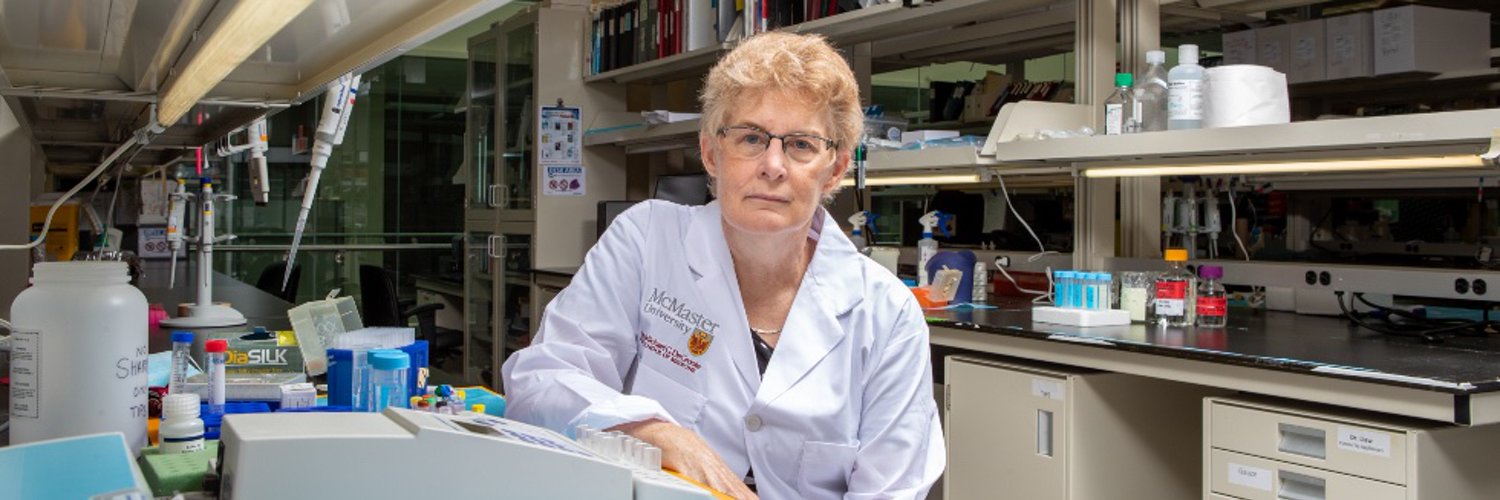

Prof @McMasterU @MacDeptMed #CCM Scientific Director @SepsisCanada @CanSepsisFdn, 2018 GSA award, HEWS Lead, Dir of #MedEd @HamHealthSci, Chair @WCICC2025
Hamilton, Ontario
Joined December 2016
- Tweets14.6K
- Following3.2K
- Followers2.9K
- Likes30.2K






Alison Fox-Robichaud, MD retweeted

How do we believe change happens in systems?
One of the most positive moves in change practice in our sector is a shift towards “systems change”. By this we mean identifying & addressing the causes of problems in the system rather than treating their symptoms.
Often, we start by identifying methods & approaches for our systems change initiatives. As we build our practices in this area, we should dig deeper. We need to reflect on our “mental models” about how we undertake systems change. This means the beliefs & assumptions we hold about how change happens, shaping what we notice, what we expect & how we act.
I’ve been thinking a lot about this recently, as a result of an international improvement initiative I’m involved in. If we want to make big, positive changes happen in the world, do we start by identifying areas for collective action & “leverage points” for change? Or do we start by building the relationships & connections that create the conditions for change to emerge? By being explicit about our mental models & assumptions, we avoid the risk of different partners in the change operating with conflicting, unspoken views about how systems change and can align all our change activities (strategy, methods, reporting etc) around agreed ways forward.
I have found an article by @JewlyaLynn & Julia Coffman very helpful for my own thinking (all links in comments). They describe two mental models in systems change. “Systems dynamics” assumes a system’s main patterns are predictable. Our change strategy here targets high-leverage points with a theory of change & defined outcomes. “Systems emergence” assumes new patterns grow from the relationships between people. Our change strategy here brings in new voices, builds trust & learns alongside partners.
Neither model is better. Some parts of a system are predictable & others are in flux, so many strategies use both. Problems can start when the models get mixed unnoticed. The most common mismatch is emergent work held to systems dynamics accountability. Boards tend to favour clear predictions & quantitative metrics.
Russ Gaskin sees the same pattern. Initiatives speak the language of co-creation while using consultation methods, & the people involved never come to own the work. Systems maps & theories of change keep their value when they become a starting point for conversation.
Three reflections from me:
1) Whose mental model sits at the centre matters. When leaders impose their own view or process of change on the people closest to the work, they reinforce the power dynamics they set out to shift.
2) Our reporting mechanisms carry a mental model. When the strategy is emergent & the Board asks for predictions, the reporting pulls the work back towards prediction.
3) Naming our mental models is part of the work. Teams that make their assumptions visible can align strategy, methods & reporting with the system for better outcomes.
Links:
Lynn J & Coffman J. Passing in the Dark: Making Visible Philanthropy’s Hidden and Conflicting Mental Models for Systems Change. The Foundation Review, 2024;16(1):142-60. doi.org/10.9707/1944-5660.17…
See also a shorter piece these authors wrote on the same topic: evaluationinnovation.org/pub…
Gaskin R. The Emergence of Dialogic Systems Change. Horizons of Change, January 2026. horizonsofchange.substack.co…

Alison Fox-Robichaud, MD retweeted

It’s #WorldPolioDay (24 October) | Read our informative factsheet | Polio: What you need to know | immunize.ca/sites/default/fi… #polio #VaccinesWork #VaccinesSaveLives #GetImmunized

Alison Fox-Robichaud, MD retweeted

"Why are we so sick?"
In 1800, about 43% of children died before their fifth birthday.
Today it's under 4%.
No seed oils, fluoride or vaccines back then.
Just a lot of very small graves.

Alison Fox-Robichaud, MD retweeted

The virus causing polio was discovered in 1908 by Karl Landsteiner and Erwin Popper. Landsteiner was later awarded a Nobel Prize for another discovery, that of human blood groups.
Today polio is almost eradicated thanks to a safe and effective vaccine.
#endpolio

ALT A black and white photo of child getting a polio vaccine. A doctor is to her left and a nurse to the right.
Alison Fox-Robichaud, MD retweeted

Today is World Polio Day.
Canada's Connaught Labs played a critical role in the development of the polio vaccine by Dr. Jonas Salk.
📸 Winnipeg Tribune
Learn more in my Deep Dive 👇
canadaehx.com/2021/01/16/can…

ALT A man reads a children's book to a child patient seated in a medical chair while a large teddy bear is attached to nearby medical equipment, creating a comforting bedside scene.
Alison Fox-Robichaud, MD retweeted

Let’s talk about the risks of Influenza and #Sepsis, it could save the life of someone you love.
Sepsis can take your family from zero to the impossible in a matter of hours.
pmc.ncbi.nlm.nih.gov/article…
#SepticShock #ViralSepsis #InfluenzaB #ChildrenandSepsis @4jude4everyone


Alison Fox-Robichaud, MD retweeted

Resident calling consult:
Me (on phone): CT shows a large lesion on her scalp. Does she have a large skin cancer?
Resident: I don’t think so
Me: Did you LOOK?
R: I don’t think so
Me: are you telling me you are not sure what you saw?
Or are you saying you are not sure if that you looked at her scalp?
R: I did not look at her scalp
Me: 🤦♂️
The next generation of doctors, folks …
Alison Fox-Robichaud, MD retweeted

FOR CANADIAN EYES ONLY. 🍁
DON’T EVEN THINK ABOUT READING THIS IF YOU’RE NOT CANADIAN.
A LOVE LETTER TO CANADA.
Dear Canada,
Sometimes, in all the noise, the arguments and the headlines, we forget just how extraordinary you are.
So today, this one’s for you.
You’re the country that gave the world hockey, basketball, insulin, IMAX and the Canadarm.
You’re Alexander Graham Bell experimenting with the telephone in Brantford. Frederick Banting and his colleagues helping bring insulin treatment to the world. Geoffrey Hinton and Yoshua Bengio helping lay the foundations of modern artificial intelligence.
You’re Donna Strickland revolutionizing laser technology and James Gosling creating Java.
You’re Wayne Gretzky, Bobby Orr, Gordie Howe and Sidney Crosby.
You’re Summer McIntosh making us leap off the couch and cheer.
And you’re Terry Fox, running down a lonely Canadian highway on one leg, showing the world that courage isn’t measured by how far you get, but by how far you’re willing to go.
You’re Gordon Lightfoot singing about the Edmund Fitzgerald and the Canadian Railroad Trilogy.
You’re Stompin’ Tom Connors, stomping his boot through The Hockey Song and singing about places most of the world had never heard of.
You’re The Tragically Hip, turning small towns, hockey heroes and Canadian history into the soundtrack of a generation.
You’re Leonard Cohen, Oscar Peterson, Céline Dion, Anne Murray and Neil Young.
You’re John Candy, Eugene Levy, Catherine O’Hara, Martin Short, Mike Myers and Jim Carrey, making the world laugh.
You’re Lorne Michaels creating Saturday Night Live and James Cameron taking audiences to worlds they’d never imagined.
You’re Lucy Maud Montgomery and Anne Shirley, that wonderfully imaginative red-haired girl who made a little farmhouse on Prince Edward Island famous around the world.
You’re the Group of Seven, who looked at crooked pines, rocky shorelines and windswept forests and showed us just how beautiful our country really is.
You’re Viola Desmond refusing to accept segregation.
Willie O’Ree breaking hockey’s colour barrier.
And generations of Canadians who stood up against injustice, opened doors and helped make this country better.
You’re the First Nations, Inuit and Métis peoples whose cultures, languages, knowledge and traditions have shaped these lands for thousands of years.
You’re Tanya Tagaq, Susan Aglukark, Kenojuak Ashevak and the countless Indigenous artists and storytellers whose voices continue to enrich this country.
You’re the powerful stories of the Wendigo, carried through generations of Algonquian-speaking peoples.
And you’re Sasquatch, who’s apparently still doing a remarkable job of avoiding a decent photograph.
You’re the Rocky Mountains rising above British Columbia and Alberta.
The endless prairie skies of Saskatchewan and Manitoba.
The lakes and forests of Ontario and Quebec.
The red soil and rolling hills of Prince Edward Island.
The rugged coastline of Newfoundland and Labrador.
The fishing villages, covered bridges and ocean breezes of New Brunswick and Nova Scotia.
You’re the northern lights dancing above Yukon, the Northwest Territories and Nunavut.
You’re the Atlantic crashing against the rocks, the Pacific stretching toward the horizon and the Arctic reminding us just how vast this country really is.
You’re canoeing across a still lake at sunrise, with nothing but the sound of a paddle dipping into the water.
You’re the haunting call of a loon across the lake.
The smell of pine trees after the rain.
The crunch of autumn leaves under your boots.
You’re cottage docks, swimming holes, fishing trips, portages and the sound of rain on a tent roof.
You’re campfires, s’mores, mosquito bites and someone insisting they know a shortcut back to the campsite.
You’re a marshmallow catching fire while three people shout conflicting instructions.
You’re Saturday mornings at the rink.
Skates drying by the door.
Frozen ponds, backyard hockey and road hockey games interrupted by someone yelling, “CAR!”
You’re snow days, snow forts, toboggan hills and the first warm afternoon in spring when everyone suddenly appears outside.
You’re poutine, butter tarts, Nanaimo bars, Montreal bagels, Halifax donairs and sirop d’érable poured generously over Sunday pancakes.
You’re maple trees turning brilliant red in October.
The first snowfall in November.
The last stubborn snowbank in April.
And the annual Canadian tradition of declaring winter officially over about six weeks too early.
You’re the neighbour who shovels your driveway without being asked.
The stranger who helps push your car out of a snowbank.
The person who holds the door for someone twenty feet away, leaving both of them in an awkward little race to be polite.
You’re communities that come together when someone loses a home, faces a tragedy or simply needs a hand.
You’re the people whose families have lived here for generations and those who arrived yesterday, carrying their hopes for a better life.
You’re English and French, Indigenous languages and hundreds of others spoken around kitchen tables across this enormous country.
You’re accents that change from one province to the next.
You’re kitchen parties, community rinks, summer festivals, farmers’ markets and neighbours gathering around a backyard fire.
You’re small towns where everybody knows everybody.
And big cities where people from every corner of the world have found a place to belong.
You’re not perfect, Canada.
There are painful chapters in your history, injustices that must be confronted and promises still waiting to be fulfilled.
We disagree. We argue. We complain about the weather, the government, the price of groceries and the Leafs.
But when something truly matters, we have an extraordinary capacity to come together.
We’ve given the world discoveries that saved lives.
Inventions that changed industries.
Music that moved generations.
Stories that travelled across oceans.
Athletes who inspired millions.
And ordinary people who accomplished extraordinary things.
Yet some of the best things about you aren’t famous at all.
They’re the little things.
A canoe on a quiet lake.
A familiar song on the radio.
The smell of a campfire.
A hockey game on a frozen pond.
Fresh snow falling beneath a streetlight.
A neighbour waving from across the street.
A loon calling somewhere in the distance.
The sound of laughter around a kitchen table.
The feeling of coming home.
Because that’s what you are, Canada.
Not just a country on a map.
Not just a flag, a border or a collection of provinces and territories.
You’re the memories we carry.
The stories we tell.
The people we love.
The places we miss when we’re away.
From coast to coast to coast, we’re different in a thousand ways.
And somehow, through all those differences, we share something that feels unmistakably like home.
So here’s to you, Canada.
Not because we’re better than anyone else.
Not because we’ve got everything figured out.
And certainly not because we’re perfect.
But because you’re ours.
Our landscapes. Our stories. Our laughter. Our memories.
Our home.
And sometimes, in a world that seems determined to remind us of everything that’s wrong, it’s worth remembering just how much there is to love.
With love, eh?
Canadians. 🍁
Alison Fox-Robichaud, MD retweeted

this one took >3 years. amazing how much evolved in this space during that time. thank you to my coauthors & @davidvanduin for being a real one & letting us publish >15K words. my heart & soul went into this, hope everyone loves metallos as much as we do! academic.oup.com/jacamr/arti…

Alison Fox-Robichaud, MD retweeted
Health care professionals: Check out our new guide | Reference Guide for Immunizers: Preventing Invasive Pneumococcal Disease (IPD) in Adults | immunize.ca/sites/default/fi… #pneumococcal #VaccinesWork #VaccinesSaveLives #GetImmunized

Alison Fox-Robichaud, MD retweeted

Poster abstracts are open for the 2026 AMR Symposium, hosted by our partner bioMérieux!
Students, postdocs, fellows, technicians, clinicians & faculty are invited to submit. Deadline: Fri, Oct 23, 11:59 p.m. ET. 👉amrsymposium.com

Alison Fox-Robichaud, MD retweeted

Congratulations to Laura Freeman (ON) - recipient of the CACCN ICU Week Spotlight Challenge Bursary!
L-R: Marley Gregorio, VP, Carmel Montgomery, President, Laura Freeman (recipient) and Ethan Whitehead, Director/Prof Development.
#awards #congratulations #nursingexcellence

Alison Fox-Robichaud, MD retweeted
Just off the coast of Deer Island, New Brunswick is Old Sow.
The largest whirlpool in the Western Hemisphere, it is the size of a football field and has existed for hundreds of years.
It also has quite an interesting history.
This is the story.
📸 Walter Baxter
🧵 1/6

ALT A swirling white-capped whirlpool churning in turquoise coastal waters with a rocky headland rising in the background under a pale sky.
Alison Fox-Robichaud, MD retweeted
On this day in 1986, Canadian author Robert Munsch released his book Love You Forever.
It is a book that originated from tragedy but from that tragedy came something wonderful and beloved around the world.
This is the story of one of Canada's most acclaimed books.
🧵1/10

Alison Fox-Robichaud, MD retweeted

In October, we observe Health Literacy Month by focusing on one critical truth: knowing about sepsis can save a life.
From recognizing early symptoms, to understanding discharge instructions, to knowing when and how to advocate for yourself or a loved one, health literacy is key to timely sepsis care.
This month, we’re raising awareness of how education, accessible resources, and clear communication can reduce risk, improve outcomes, and empower individuals to take control of their health.
Learn more at SepsisAwarenessMonth.org.
#sepsis #sepsisawareness #healthliteracy

Alison Fox-Robichaud, MD retweeted
Today Marks the National Day for Truth & Reconciliation. We remember. We listen. We learn & take action. We reflect.
The CSF is committed to equitable and culturally safe healthcare for everyone.
#EducationMatters #TruthAndReconciliation

Alison Fox-Robichaud, MD retweeted
Not being heard can have devastating consequences, and highlights an important distinction in the gender health equity gap conversation. There is a problem. #SepsisResearch #AwarenessSavesLives #SAM2026 #SepticShock #SepsisCanada #MedX #Sepsis

Alison Fox-Robichaud, MD retweeted
« What if we taught children to recognize #Sepsis the same way we teach them CPR? » @drfoxrob
#AwarenessSavesLives #ResearchMatters #Ssepticshock #RatiosMatter #SepsisReform #EveryMinuteMatters #SepsisAwarenessMonth #SAM2026 @SepsisCanada @GovCanHealth @CIHR_IRSC

Alison Fox-Robichaud, MD retweeted
What is shingles? | immunize.ca/sites/default/fi… #shingles #VaccinesWork #VaccinesSaveLives #GetImmunized

Alison Fox-Robichaud, MD retweeted
What is tetanus? | immunize.ca/sites/default/fi… #tetanus #VaccinesWork #VaccinesSaveLives #GetImmunized
