





Moses retweeted

Out now! Jenny Van Leeuwen Harrington ‘06 (Gilman Hill Asset Management) and Jennifer Wallace ‘94 (Summit Street Capital Management) discuss “Investment Wisdom For Our Friends And Loved Ones,” 25 essays for those who keep asking where to start. business.columbia.edu/heilbr…
Moses retweeted

1 DAY TO GO! ⏳ The 3rd Annual Nairobi Health Scientific Conference opens TOMORROW at Emara Ole Sereni. Follow #NBOHSC2026 for live updates. Last call to register 👉 bit.ly/4crcNGM
#OneHealth #UHC
@SilantoiSuzanne @maryamdahir @NairobiCityGov @kevinkibz @MOH_Kenya @PSofKenya @KEMRI_Wellcome @cscfkenya @cfkafrica @Ciheb_Kenya @SidianBank @Food4Education @SGHInstitute @PSKenya_ @icrhk_official @KNH_hospital @VIBRIAfrica @CBMKenya @HectaConsulting

Moses retweeted
📢 PARTNER ANNOUNCEMENT: We are delighted to welcome Roche as a Platinum Sponsor of the 3rd Annual Nairobi Health Scientific Conference. Opening TOMORROW at Emara Ole Sereni, 18–20 Nov. 👉 bit.ly/4crcNGM
#NBOHSC2026 #Roche #OneHealth #UHC
@SilantoiSuzanne @maryamdahir @NairobiCityGov @kevinkibz @MOH_Kenya @PSofKenya @KEMRI_Wellcome @cscfkenya @cfkafrica @Ciheb_Kenya @SidianBank @Food4Education @SGHInstitute @PSKenya_ @icrhk_official @KNH_hospital @VIBRIAfrica @CBMKenya @HectaConsulting

Moses retweeted
County Chief Officer, Public Health, Tom Michira Nyakaba invites you to the 3rd Nairobi Health Scientific Conference.
From our team to you: join us at NBOHSC2026! 🎉
We’ve spent months planning for the 3rd Nairobi Health Scientific Conference, and we can’t wait to welcome you.
📅 18–20 November 2026
📍 Emara Ole Sereni, Nairobi
One Health in Action: Building Resilient, Climate-Smart and Equitable Health Systems for Universal Health Coverage.
Last year, 850+ delegates joined us. This year we’re aiming for 1,000+, and we’d love you to be one of them. Come for the science, the innovation, the conversations and the connections that will shape health in Nairobi and beyond.
Bring your colleagues. Bring your questions. 🙌
hashtag#NBOHSC2026 hashtag#OneHealthInAction hashtag#UHC
4 days to go!
See you there!
@SilantoiSuzanne @maryamdahir @Michira_Nyakaba @NairobiCityGov @kevinkibz @MOH_Kenya @PSofKenya @KEMRI_Wellcome @cscfkenya @cfkafrica @Ciheb_Kenya @SidianBank @Food4Education @SGHInstitute @PSKenya_ @icrhk_official @KNH_hospital @VIBRIAfrica @CBMKenya @HectaConsulting
Moses retweeted

In this year’s Thanksgiving message, Buffett mentions three teachers from whom he received “beyond measurement costless benefits”:
Ben Graham.
Tom Murphy.
And Joe Rosenfield.
Rosenfield is a name you rarely hear.
Between 1968 and 2000, he helped grow Iowa’s Grinnell College endowment from $11 million to over $1 billion.
In June 2000, Jason Zweig profiled Rosenfield in Money magazine in an article titled “The Best Investor You’ve Never Heard Of.”
A great read…
“Buying for a short period is always going to hurt you in the end.” JR
“If you like a stock, you've got to be prepared to hold it and do nothing.” JR
“Sell is a four-letter word.” JZ
“There are too many people who are nervous Nellies and panic when a stock goes down a few percent. That's what stocks do!” JR
“There's all kinds of propaganda making people believe that impatience will pay off, but impatience is a sure way to lose money. I've always taken the long view. I've got nothing but time.” JR
“I wish we’d kept it (Intel). That was the biggest mistake we ever made.” JR
“If you find investments that you clearly understand, hold on. Since it was their long-term potential that made you buy them in the first place, you should never let a short-term disappointment spook you into selling. Patience - measured not just in years but in decades - is an investor's single most powerful
weapon.” JZ
jasonzweig.com/wp-content/up…
@jasonzweigwsj


Moses retweeted

Li Lu rarely speaks in public. When he does, I listen.
At Columbia’s Graham & Dodd event, he covered the “IPO of a god,” China’s hidden trade-off, why the global market won’t break, and the best definition of compounding I’ve heard.
My key takeaways 👇🏻

Moses retweeted
“It is a great opportunity for all of us to network, share ideas and participate in conversations that will build the One Health agenda that enables us to tackle emerging diseases across the different sectors.” 🎥
Director, Medical Services, Dr. Moses Owino invites you to the 3rd Nairobi Health Scientific Conference.
📅 18–20 November 2026
📍 Emara Ole Sereni, Nairobi
Meet participants from local and international organisations, academia, industry and practice, and take part in the conversations that will shape the One Health agenda.
Follow for more updates. 🌍
#NBOHSC2026 #OneHealth #UniversalHealthCoverage
@SilantoiSuzanne @maryamdahir @NairobiCityGov @kevinkibz @MOH_Kenya @PSofKenya @KEMRI_Wellcome @cscfkenya @cfkafrica @Ciheb_Kenya @SidianBank @Food4Education @SGHInstitute @PSKenya_ @icrhk_official @KNH_hospital @VIBRIAfrica @CBMKenya @HectaConsulting @drowino
Moses retweeted
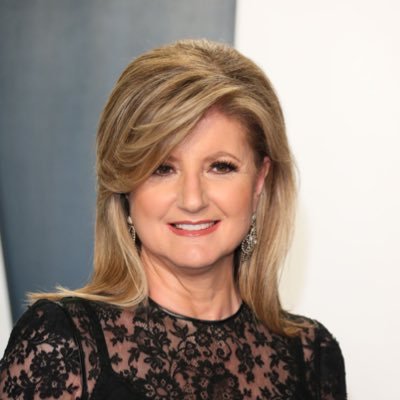
The Odyssey. Emma. Hamlet. The Wealth of Nations. Ulysses. The Iliad.
This isn’t just a list of books I’ve read and love (though I have). They’re on the reading list for Harvard’s Humanities 10. In the @WSJ, Pamela Paul writes about the surge in demand for the class: applications are up 40% this fall, with 180 first-years competing for 90 spots.
Students read a book a week, frequently write essays, have their attendance tracked, and put their devices away during class. As classics professor David Elmer says, “I did have the sense that a lot of students feel that the culture at large is not hospitable to deep reading, deep thinking or deep engagement with writing.”
I've been writing about the question AI is forcing on universities: is higher education about information or formation? If it’s only the former, universities are competing with the machines. The students lining up for a phone-free room, the great books, and people to argue with seem to be asking for the latter.
As one student put it: “A lot of what we get out of this class is the human experience, and you can’t get that out of AI.”
So let AI keep intelligence and humans keep wisdom. This class is one way to build it.
What should colleges prioritize most in the age of AI?
Read the piece here: wsj.com/lifestyle/harvard-cl…

Moses retweeted
“We are, in part, engaged in the business of trying to invest in the lengthened shadows of the right sort of people.”
- Charlie Munger
Latest post…
mastersinvest.com/newblog/20…

Moses retweeted

Links:
1/ Alex Sloane & Matt Perelman – youtu.be/Mghlp0xzqA4
2/ Chase Koch – youtu.be/AQpqTXvyekE
3/ Ramtin Naimi – youtu.be/r95bEutZUN4
4/ Scott Malpass – youtu.be/bc4MVylXKZY
5/ Andrew Huberman – youtu.be/Ezi-nwe6LlY
Moses retweeted
Seth Klarman’s Margin of Safety was printed in a small run in 1991, never reprinted, and today a used copy will set you back somewhere between $1,500 and $3,000 – a book about never overpaying for an asset has become one of the most overpriced assets in investing, so I read it and pulled out the ideas that are worth the price.
Key takeaways in six slides 👇🏻
1/2


Moses retweeted

Charlie Munger literally explained where his fortune really started, and it was nowhere near Wall Street. It is not a genius IQ. It is not a lucky stock. It is a grandfather who bought the meat nobody else would eat.
Redlands, 2020. Munger, 96, was asked what set him on his path. His grandfather was born in extreme poverty, and as a boy he took a nickel to the butcher shop and bought the parts of the animal nobody else wanted.
That start is a bigger advantage than it sounds. The boy became a federal judge for more than three decades, and Munger said he “always lived way below his income and was able to help other people when they needed help.”
Munger named the habit with his grandfather’s own line on drinking. “Why would I take money out of my pocket and put something in my mouth that would make my head work less well?”
When Munger died in 2023, his fortune was put at about $2.6 billion. He called himself “way short of prodigy.”
Back in that talk, he gave the rule he learned from that same man. Munger’s fix came from a swimming lesson. “Swim as long as you want,” his grandfather told him, “but stay near the shore.”
The same thing runs your spending. Living right at the edge of your paycheck is swimming far from shore. You keep the gap on purpose, one subtraction and one division, and you never get caught out where you cannot stand.
His full 2020 Redlands talk is free online, and almost nobody sits through it.


Moses retweeted

Mohnish Pabrai explains how Warren Buffett borrowed about $5 billion at 0.5%, bought Japanese businesses paying roughly 8% in dividends, and watched the investment double. He found those businesses by reading a company handbook that cost less than $100.
In this 56-minute video, Pabrai walks through 30 mental models for investing, illustrated with actual decisions, missed fortunes and mistakes he’s made himself. He explains why you should be able to describe an investment to a 10-year-old, and why finding something worth buying can take years of doing seemingly unproductive work.
He tells the story of Nick Sleep, who closed his fund and put his own money into Amazon, Costco and Berkshire Hathaway. Amazon eventually became around 80% of his portfolio. Then he sold half his Amazon position to buy another business. Pabrai explains why that decision is worth remembering the next time you feel tempted to “rebalance” a winner.
There’s also a much less comfortable story: the financial crisis, when the assets Pabrai managed fell from roughly $600 million to $200 million. He describes the exercise that helped him stay focused on what his businesses were worth while their market prices collapsed.
Then comes IPSCO: a $40 stock with $15 per share in cash, no debt, and another $30 in earnings expected over the next two years. Pabrai explains why he bought it, how he thought about the uncertainty, and what happened when a takeover offer arrived at $160. Save this for tonight.
Especially if you’re constantly searching for the next investment but have never really thought through what would make you sell the ones you already own.
Moses retweeted
Charlie Munger literally explained why smart people get rich later than they should, at 93. It is not low pay. It is not bad luck. It is that the ideas they already hold block the better ones from getting in.
Michigan Ross, 2017. A student asked Munger for the hardest idea he had ever destroyed. “I’m very busy destroying bad ideas because I keep having them.”
An old idea is a bigger obstacle than it sounds. Every time you repeat it, Munger said, you are not convincing anyone else, you are pounding it deeper into your own head. The longer you hold it, the harder a better one has to fight.
Munger named it with an old German saying. “We’re too soon old and we’re too late smart.”
Berkshire lived it. He said the skill that carried it through one decade would not have carried it through the next. It bought Apple in 2016, a stock its old rules would have skipped, and by the end of 2023 that stake was worth about $174 billion.
Back in that talk, he gave the rule for fixing it. Munger’s fix came from rewarding himself. Every time he killed a much-loved idea, he said, he would pat himself on the back, “sometimes several times.”
The same thing runs your spending. “My savings rate is fine” is the best-loved idea most people never test. You check it on purpose, one subtraction and one division, and you kill the story before it costs you a decade.
His full 2017 Michigan Ross talk is free online, and almost nobody sits through it.
Moses retweeted

A billionaire sat in a room for 42 minutes and listed every psychological trick that makes people lose money. for free. the finance industry has spent thirty years pretending this recording does not exist.
he didn't sell a course. he didn't write a newsletter. he sat in a chair at 96 years old and explained why brilliant people do the dumbest things with their money. then he explained why they will keep doing it.
MBA programs charge $200,000 to teach behavioral finance. he covered 25 biases in one sitting. some of them are still not in any curriculum. he gave the entire framework away on camera.
the part nobody talks about: he called crypto antisocial. he said index funds will crush most managers. he said private equity is full of wretched excess. he said all of this in a room full of people who manage money for a living. nobody argued.
a hedge fund analyst at a top firm told me this is the first thing they send to anyone who joins the desk. not a book. not a model. a 42-minute video of a 96-year-old man explaining why you will be wrong and how to recognize it before it costs you everything.
40 million people have heard his name. almost none of them have watched him explain the 25 ways their own brain is working against them.
the lecture is free. he died the following year. it is in the video.
Moses retweeted
Charlie Munger literally explained why most people never feel safe with money. It is not low income. It is not bad investments. It is that they paddle as close to the whirlpool as they can.
Los Angeles, February 2019. Munger, 95, had just finished the Daily Journal annual meeting when CNBC's Becky Quick asked about money printing. He answered with a story about canoeists in Scandinavia who tried to run rapids full of giant whirlpools.
The danger only made them more eager. They wanted to get as close as possible without going in. The death rate, Munger said, was 100%.
Munger named his own rule. When something is big and dangerous, stay a long way away from it.
Later in the interview Quick asked for the secret to a long, happy life, and he listed it without pausing. No resentment. "You don't overspend your income." Stay cheerful, deal with reliable people, do what you are supposed to do. He said he figured it out at about seven, watching adults who were "a little bonkers."
Munger's fix was the same in both answers. Distance. A canoe far from the whirlpool, a life far from the edge of the paycheck.
The same thing runs your spending. A paycheck spent to the last dollar is a canoe sitting on the lip of the whirlpool. You keep a gap on purpose, one subtraction and one division, and the current never gets a grip.
His full 2019 CNBC interview is free online, and almost nobody sits through it.
Moses retweeted

Dangote Refinery and Job opportunities will be a lesson for Subsahara Africa SSA where traditional' Engineering Institutions like, EBK, IEK, NCA exist but on the wrong path and show no signs of reforming.
As I will show later in this post, there will be minimal Job opportunities at the Refinery for Engineers.
Not just the Refinery ( it is attracting attention because of Dangote's profile) but ALL Industries like Cement, Sugar, Processing, Manufacturing like Cars, Aeroplanes, Food, Energy including Power Stations etc are done 95% by Foreign EPCs.
Not because the Refinery is not offering opportunities but we don't have Capability. And we are NOT building it.
Understandably, SSA Engineering was mainly Building and Roads.
Where you had a Consultant who did Designs. Which were then passed to a Contractor who didn't need to be a Professional.
According to their understanding, anybody could start and run an Engineering Company. You didn't need Engineering knowledge.
That is a mistake.
That is how even today NCA, IEK, EBK look at things from that prism.
But what has been missed and not clearly understood even by Engineers ( and they are exclusive: they don't mention Technicians and Artisans) is that in Industry, Manufacturing as mentioned above, the Contractor does the Design, Procurement and Construction ( EPC).
The Consultant only does the Concept, Feasibility and represents the Owner ( Owners Engineer)
Now because of that mistake, SSA Engineering has led to Engineers going for Office Papers with requirements like Registration ( Reg. Eng), Project Management Professional PMP etc and
And shunning Construction and EPC
Other than Building and Roads, all the other Engineering is Turnkey ( EPC)
And SSA Engineering Institutions trying to force it's interpretation to serious Industry Engineering where it doesn't make sense.
And why we leave out Engineering which includes Technicians and Artisans.
To illustrate, let's look at Lamu Dangote Refinery.
The Designs will be done by the EPC. And Main Supervision, Project and Site Management will be by the EPC and Owners Engineer.
What will be left is only supervising actual construction works.
And Safety Officers.
I don't see much scope for Kenyan Engineers, going by the way we practice Engineering in Sub Sahara Africa.
Though I don't see how you will supervise any works eg Welding if you don't have experience.
Even Cabling, you must have experience on how to lay Cables, the arrangement, how to arrange them in the panel, how to make a neat job.
This calls for real experience.
Here, Reg Eng has no meaning.
It will be your Practical Experience' that will count.
When you hear the Refinery will cost Shs 2 Trillion, over 90% will go to the EPC in India.
Same thing that happened in Nigeria.
Just imagine if the EPC was Kenyan.
Dangote actually would bring US$ 15 Billion to Kenya and about 60% would remain here.
But now nothing will come here except Salaries for Labourers.
This is what makes the difference between rich 1st World and poor 3rd World.
We Engineers are not in the Fabrication business.
To be honest, the type of scope in a Factory like a Refinery is Design/Fabrication.
The type of Engineering we are NOT practising.
The only ' Kenyans ' who will benefit will be Indians or Whites with Fabrication Workshops for small components.
It is time SSA relooked at Engineering.
And stop this classifications like ' Technologists'.
And both Engineers and Technicians should enter Construction.
There are NO serious EPC Companies in SubSahara Africa.
